| XXXXX |
| XXXXX |
| Americans Convinced Rise in Gas Prices Is Permanent Seven in 10 say gas prices causing financial hardship by Frank Newport May 9, 2008 |
| PRINCETON, NJ -- Over three-quarters of Americans are now convinced that the rise in the price of gas is permanent, the highest such reading since Gallup began asking about gas prices in this way in 2000. Read more about this Gallup poll. |
Gulf Oil, Amoco and Humble Oil Company, which would later become an arm of
Exxon.
Now, people realized the true potential of oil - the vast resources that were, in fact,
there, and the vast potential that remained. Before Spindletop, oil was used many for
lamps and lubrication - after Spindletop, petroleum would be used as a major fuel for
such new inventions as the airplane and automobile. Ships and trains that had previously
run on the power of coal, now began to switch to oil, becoming convinced that there
would be no shortage of the fuel anytime soon. As an example, the Santa Fe Railroad
went from only one oil-driven locomotive in 1901 to two hundred and twenty-seven in
1905.
It is difficult to overstate the importance of Spindletop. From this point on, nothing in
the oil industry would ever be the same again, for this "gusher" ushered in the modern
age of petroleum.
Production began to decline rapidly after 1902, and the wells produced only 10,000
barrels per day (1,600 m3/d) by 1904. On November 14, 1925, the Yount-Lee Oil
Exxon.
Now, people realized the true potential of oil - the vast resources that were, in fact,
there, and the vast potential that remained. Before Spindletop, oil was used many for
lamps and lubrication - after Spindletop, petroleum would be used as a major fuel for
such new inventions as the airplane and automobile. Ships and trains that had previously
run on the power of coal, now began to switch to oil, becoming convinced that there
would be no shortage of the fuel anytime soon. As an example, the Santa Fe Railroad
went from only one oil-driven locomotive in 1901 to two hundred and twenty-seven in
1905.
It is difficult to overstate the importance of Spindletop. From this point on, nothing in
the oil industry would ever be the same again, for this "gusher" ushered in the modern
age of petroleum.
Production began to decline rapidly after 1902, and the wells produced only 10,000
barrels per day (1,600 m3/d) by 1904. On November 14, 1925, the Yount-Lee Oil
and then...nothing happened.
After a short time, the frustrated and confused drillers set about to clean up the mess
and see if anything could be salvaged. All of a sudden, a noise like a cannon shot came
from the hole, and mud came shooting out of the ground like a rocket. Within a few
seconds, natural gas, then oil followed. The oil "gusher" - greenish-black in color,
doubled the size of the drilling derrick, rising to a height of more than 150 feet (about
50 meters).
This was more oil than had ever been seen anywhere in the entire world. Captain Lucas
had been hopeful that this well might produce 5 barrels per day. In fact, this well,
"Lucas 1", flowed at an initial rate of nearly 100,000 barrels per day, more than all of
the other producing wells in the United States COMBINED! It took nine days before the
well was brought under control. Spindletop was the largest gusher the world had seen
and catapulted Beaumont into an oil-fueled boomtown. Beaumont's population of 10,000
tripled in three months and eventually rose to 50,000. Speculation led land prices to
increase rapidly.
There was much money to be made at Spindletop, but there was even more money to
lose. It is estimated that $50 million dollars was made from Spindletop, compared with
After a short time, the frustrated and confused drillers set about to clean up the mess
and see if anything could be salvaged. All of a sudden, a noise like a cannon shot came
from the hole, and mud came shooting out of the ground like a rocket. Within a few
seconds, natural gas, then oil followed. The oil "gusher" - greenish-black in color,
doubled the size of the drilling derrick, rising to a height of more than 150 feet (about
50 meters).
This was more oil than had ever been seen anywhere in the entire world. Captain Lucas
had been hopeful that this well might produce 5 barrels per day. In fact, this well,
"Lucas 1", flowed at an initial rate of nearly 100,000 barrels per day, more than all of
the other producing wells in the United States COMBINED! It took nine days before the
well was brought under control. Spindletop was the largest gusher the world had seen
and catapulted Beaumont into an oil-fueled boomtown. Beaumont's population of 10,000
tripled in three months and eventually rose to 50,000. Speculation led land prices to
increase rapidly.
There was much money to be made at Spindletop, but there was even more money to
lose. It is estimated that $50 million dollars was made from Spindletop, compared with
George W. Carroll, Pattillo Higgins and others formed the Gladys City Oil, Gas, and
Manufacturing Company to do exploratory drilling on Spindletop Hill. The company
drilled many dry holes and ran into trouble, as investors began to balk at pouring more
money into drilling with no oil to show for it.
Pattillo Higgins left the company and teamed with Captain Anthony F. Lucas, the
leading expert in the U.S. on salt dome formations. Lucas made a lease agreement in
1899 with the Gladys City Company and a later agreement with Higgins. Lucas drilled
to 575 feet (180 m) before running out of money. He secured additional funding from
John H. Galey and James M. Guffey of Pittsburgh, but the deal left Lucas with only a
small share of the lease and Higgins with nothing.
Drilling was difficult at first. Lucas and his men ran into the same problems that other
drillers had faced along the Texas coastal plain. There is little in the way of rock at the
surface in that part of the world. Instead, oil wildcatters had to drill through several
hundred feet of sand. This made the hole prone to cave in on them. To help solve this
problem, one of Lucas's drillers, Curt Hamill, came up with a solution that was
revolutionary at the time. Instead of pumping water down the hole to flush out the
cuttings produced by the action of the drill, he used mud. This proved to help not only
in retrieving the cuttings, but just as importantly, it was found that the mud stuck to the
sides of the hole and kept it from caving in. It was found there were even more
benefits, and mud has been used in almost every drillhole around the world ever since.
Exhausted after 2 months of strenuous drilling, the crew shut down for a week over
the Christmas holiday, 1900, having reached a depth of 880 feet. When they arrived
Manufacturing Company to do exploratory drilling on Spindletop Hill. The company
drilled many dry holes and ran into trouble, as investors began to balk at pouring more
money into drilling with no oil to show for it.
Pattillo Higgins left the company and teamed with Captain Anthony F. Lucas, the
leading expert in the U.S. on salt dome formations. Lucas made a lease agreement in
1899 with the Gladys City Company and a later agreement with Higgins. Lucas drilled
to 575 feet (180 m) before running out of money. He secured additional funding from
John H. Galey and James M. Guffey of Pittsburgh, but the deal left Lucas with only a
small share of the lease and Higgins with nothing.
Drilling was difficult at first. Lucas and his men ran into the same problems that other
drillers had faced along the Texas coastal plain. There is little in the way of rock at the
surface in that part of the world. Instead, oil wildcatters had to drill through several
hundred feet of sand. This made the hole prone to cave in on them. To help solve this
problem, one of Lucas's drillers, Curt Hamill, came up with a solution that was
revolutionary at the time. Instead of pumping water down the hole to flush out the
cuttings produced by the action of the drill, he used mud. This proved to help not only
in retrieving the cuttings, but just as importantly, it was found that the mud stuck to the
sides of the hole and kept it from caving in. It was found there were even more
benefits, and mud has been used in almost every drillhole around the world ever since.
Exhausted after 2 months of strenuous drilling, the crew shut down for a week over
the Christmas holiday, 1900, having reached a depth of 880 feet. When they arrived
exploration and the economic development it generated in the state became known as
the Texas Oil Boom. The United States soon became the leading oil producer in the
world.
Native American Indians in the area had been aware of oil seeps for centuries, and used
this tar they found at the surface to treat a variety of ailments. Some would even drink
the stuff in hopes that it could cure digestive problems. In 1543, Spanish explorers
discovered that black, sticky tar found washed up on the beaches along the Texas coast
could be used to waterproof their boots.
In the late 1800's, Texas had produced minor amounts of oil, starting with a well in
1866 drilled by Lyne T. Barret near the east Texas town of Nacogdoches. This field,
the Texas Oil Boom. The United States soon became the leading oil producer in the
world.
Native American Indians in the area had been aware of oil seeps for centuries, and used
this tar they found at the surface to treat a variety of ailments. Some would even drink
the stuff in hopes that it could cure digestive problems. In 1543, Spanish explorers
discovered that black, sticky tar found washed up on the beaches along the Texas coast
could be used to waterproof their boots.
In the late 1800's, Texas had produced minor amounts of oil, starting with a well in
1866 drilled by Lyne T. Barret near the east Texas town of Nacogdoches. This field,
greater than all of the oil wells in the United States combined in that day. For the next
nine days the well pumped 900,000 barrels. The Spindletop oilfield churned out over 3
million barrels (480,000 m3) the first year of operation, and over 17 million barrels
(2,700,000 m3) the following year. This effectively brought an end to John D.
Rockefeller’s world monopoly. Tow hundred more wells were drilled within a year.
In 1901 Higgins organized the Higgins Oil and Fuel Company, operating at Beaumont.
After legal and royalty suits were settled in 1902, he sold his shares for $3 million, but
shrewdly retained his leasing rights on his original acreage.
In 1911 he organized the Gulf Coast Oil Company of Houston, of which he became
president and general manager. The company became the vehicle for subsequent
explorations of Texas Gulf Coast salt-dome fields and controlled lands that produced
many more millions of barrels of oil. Over the next fifty years, he continued to be a
maverick in the oil and gas industry. One day he would be a millionaire and the next he
would be fighting with investors for more money to continue drilling. In addition to
being a self-taught geologist, he was also a draftsman, cartographer, inventor,
naturalist, industrial designer, artist, engineer and a very religious man. In addition to
residing in Beaumont, he owned estates in Houston and San Antonio. He remained a
bachelor until the age of 45. In 1905, he adopted a young woman named Annie Johns,
who at the time was fifteen. Three years later Higgins married her, and later had three
nine days the well pumped 900,000 barrels. The Spindletop oilfield churned out over 3
million barrels (480,000 m3) the first year of operation, and over 17 million barrels
(2,700,000 m3) the following year. This effectively brought an end to John D.
Rockefeller’s world monopoly. Tow hundred more wells were drilled within a year.
In 1901 Higgins organized the Higgins Oil and Fuel Company, operating at Beaumont.
After legal and royalty suits were settled in 1902, he sold his shares for $3 million, but
shrewdly retained his leasing rights on his original acreage.
In 1911 he organized the Gulf Coast Oil Company of Houston, of which he became
president and general manager. The company became the vehicle for subsequent
explorations of Texas Gulf Coast salt-dome fields and controlled lands that produced
many more millions of barrels of oil. Over the next fifty years, he continued to be a
maverick in the oil and gas industry. One day he would be a millionaire and the next he
would be fighting with investors for more money to continue drilling. In addition to
being a self-taught geologist, he was also a draftsman, cartographer, inventor,
naturalist, industrial designer, artist, engineer and a very religious man. In addition to
residing in Beaumont, he owned estates in Houston and San Antonio. He remained a
bachelor until the age of 45. In 1905, he adopted a young woman named Annie Johns,
who at the time was fifteen. Three years later Higgins married her, and later had three

 |  |  |  |
| If you have a picture you'd like us to feature a picture in a future quiz, please email it to us at CFitzp@aol.com. If we use it, you will receive a free analysis of your picture. You will also receive a free Forensic Genealogy CD or a 10% discount towards the purchase of the Forensic Genealogy book. |


 |  |  |  |
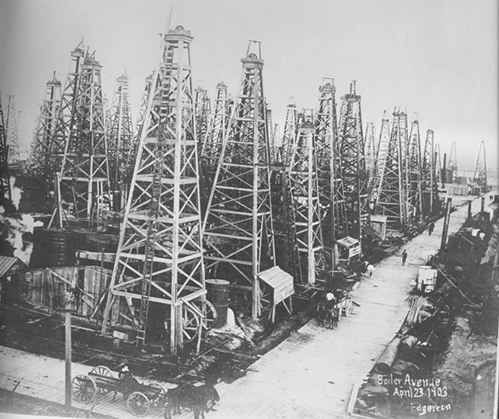
Spindletop is a salt dome oil field located in south
Beaumont, Texas in the United States. The
Spindletop dome was derived from the Louann
Salt evaporite layer of the Jurassic geologic
period. On January 10, 1901, a well at Spindletop
struck oil ("came in"). The new oil field soon
produced more than 100,000 barrels per day
(16,000 m3/d) of oil per day. Gulf Oil and
Texaco, now part of Chevron Corporation, were
formed to develop production at Spindletop.
The strike at Spindletop represented a turning
point for Texas and the nation. No
previously-discovered oil field in the world had
ever been so productive. The frenzy of oil
Beaumont, Texas in the United States. The
Spindletop dome was derived from the Louann
Salt evaporite layer of the Jurassic geologic
period. On January 10, 1901, a well at Spindletop
struck oil ("came in"). The new oil field soon
produced more than 100,000 barrels per day
(16,000 m3/d) of oil per day. Gulf Oil and
Texaco, now part of Chevron Corporation, were
formed to develop production at Spindletop.
The strike at Spindletop represented a turning
point for Texas and the nation. No
previously-discovered oil field in the world had
ever been so productive. The frenzy of oil
| ********** |
| ********** |

| If you enjoy our quizzes, don't forget to order our books! Click here. |

| Quiz #287 Results |
| Answers to Quiz #287 January 9, 2011 |

| Answers: 1. Spindletop, the first of the Texas Oil gushers, came in 2. Patillo Higgins was the motivating force behind drilling the well 3. Texaco, Chevron, Mobile, among others |
| 1. What historic event happened here 110 yrs ago this week? 2. What did a one-armed man have to do with it? 3. Name at least one company that has become a giant because of it. |
| See Results of Our Eighth Occasional PhotoQuiz Survey Click here! |
| ********** |

| Thanks to Quizmaster Emeritus Stan Read for submitting this puzzle. |
| Comments from Our Readers |
| Congratulations to Our Winners! Margaret Paxton Jim Bullock Mike Swierczewski Arthur Hartwell Kevin Beeson Judy Kiss Judy Pfaff Margaret Waterman Molly Collins Daniel E. Jolley JoLynn Pfeiffer Gary Sterne Cate Bloomquist Wayne Douglas Sharon Taber Jim Kiser Edward Vielmetti Robin Spence Susan E. Skidmore Carol Farrant John Chulick Joshua Kreitzer Maureen O'Connor Donna Jolley Herschel Browne Betty Chambers Carl Blessing Karen Kay Bunting Dennis Brann Debbie Sterbinsky Rebecca Bare Jim Baker Patty Kiker Alex Sissoev Karen Petrus Mike Dalton Peter Norton Vic Brabender Elaine C. Hebert Marcee Bradshaw Bill Hurley Terry A. Hollenstain Audrey Nicholson Collier Smith Marilyn Hamill Diane Burkett Nicole Blank Roberta Martin Robert W. Steinmann, Jr. Dave Town Theresa Kinney Milene Rawlinson Joe Ruffner Nelson Spickard Brad Potts |
I am sure there was a clue in the picture, but I cannot read it. I googled Jan 1901 and
worked from there. Now I see that "Beaumont" may be what is written on the signs of
the building. Maureen O'Connor
*****
I found this info by enlarging the picture and doing a search for one-armed man,
Beaumont 1901. Wendy Plew
N.B. I had a chuckle when I read this. I thought you were going to tell me about
Richard Kimball the Fugitive and his search for the one-armed man!
*****
As a former beaumont resident, and spouse to a 35+ year oil company engineer, i felt
honor bound to participate in this week's quiz -- cool quiz! Karen Petrus
*****
Being a Texas resident now, I really enjoyed learning something about my state!!
Thanks! Elaine C. Hebert
*****
The world would be very different without oil. The question is, would it be worse, or
better? Perhaps the development of oil as a relatively cheap energy source has had the
effect of suppressing or repressing some other, more benign, technologies. Without oil,
maybe we would now have universal solar power, or sea-water-based fusion, or
who-knows-what? All in all, it seems oil has proved to be scarcely better than coal in
its pernicious overall effects on humanity's environment, and you have to look long and
hard to find many defenders of coal, these days. Collier Smith
*****
Interesting quiz - I learned a little bit more history again. Had to laugh because I was
watching Jeopardy this week and the question was "In what city was Pres. McKinley
assassinated during the Pan-Am Exposition?" and I shouted out "Buffalo!" to the
surprise of my family because I remembered it from one of your quizzes last year. So
maybe the Beaumont oil question will come up sometime; I love to learn trivia and for
some reason despite my flighty nature, it stores well in my mind. Nicole Blank
N.B. Nicole is referring to Quiz #229, October 18, 2009, McK. - Q. Gen.
*****
In looking at the pics of the oil field I remembered, when I was young, we drove to LA
and there were still the large fields of oil derricks off in the distance. They might have
been in the Bakersfield area but I think they were probably around Long Beach or
thereabouts. I had forgotten until I looked at all the photos of Spindletop.
Milene Rawlinson
worked from there. Now I see that "Beaumont" may be what is written on the signs of
the building. Maureen O'Connor
*****
I found this info by enlarging the picture and doing a search for one-armed man,
Beaumont 1901. Wendy Plew
N.B. I had a chuckle when I read this. I thought you were going to tell me about
Richard Kimball the Fugitive and his search for the one-armed man!
*****
As a former beaumont resident, and spouse to a 35+ year oil company engineer, i felt
honor bound to participate in this week's quiz -- cool quiz! Karen Petrus
*****
Being a Texas resident now, I really enjoyed learning something about my state!!
Thanks! Elaine C. Hebert
*****
The world would be very different without oil. The question is, would it be worse, or
better? Perhaps the development of oil as a relatively cheap energy source has had the
effect of suppressing or repressing some other, more benign, technologies. Without oil,
maybe we would now have universal solar power, or sea-water-based fusion, or
who-knows-what? All in all, it seems oil has proved to be scarcely better than coal in
its pernicious overall effects on humanity's environment, and you have to look long and
hard to find many defenders of coal, these days. Collier Smith
*****
Interesting quiz - I learned a little bit more history again. Had to laugh because I was
watching Jeopardy this week and the question was "In what city was Pres. McKinley
assassinated during the Pan-Am Exposition?" and I shouted out "Buffalo!" to the
surprise of my family because I remembered it from one of your quizzes last year. So
maybe the Beaumont oil question will come up sometime; I love to learn trivia and for
some reason despite my flighty nature, it stores well in my mind. Nicole Blank
N.B. Nicole is referring to Quiz #229, October 18, 2009, McK. - Q. Gen.
*****
In looking at the pics of the oil field I remembered, when I was young, we drove to LA
and there were still the large fields of oil derricks off in the distance. They might have
been in the Bakersfield area but I think they were probably around Long Beach or
thereabouts. I had forgotten until I looked at all the photos of Spindletop.
Milene Rawlinson
Patillo Higgins, Texas Oil Pioneer, was known as, “The
prophet of Spindletop." As a young man, he was often in
trouble and wounds from one fight even caused him to lose
his left arm.
Higgins was born in Beaumont, Texas, on December 5, 1863,
the son of Richard J. and Sarah (Ray) Higgins. His father was
a mechanic by trade, who came to Texas from Georgia in the
year 1858 and settled at Sabine Pass. Later he moved to
prophet of Spindletop." As a young man, he was often in
trouble and wounds from one fight even caused him to lose
his left arm.
Higgins was born in Beaumont, Texas, on December 5, 1863,
the son of Richard J. and Sarah (Ray) Higgins. His father was
a mechanic by trade, who came to Texas from Georgia in the
year 1858 and settled at Sabine Pass. Later he moved to
| 'There is no reason for consumers of crude oil to fear the fuel problem. Nature has put great quantities of fuel right at our doors and the supply will not be exhausted. This will insure a perennial supply of oil at much lower prices than are now being paid.' Patillo Higgins 1914 |

Beaumont, and there he died in 1891. Higgins' mother lived until 1905, and witnessed
the first years of her son's phenomenal success.
As a boy Higgins enjoyed little schooling before he went to work for a sawmill
company. It was in 1884 when he owned a timber company, that he began to develop
an interest in local geology. In 1886, he started a company in Beaumont, Texas that
made bricks. He learned how some industries were using oil rather than wood as fuel
and thought he might be able to use oil to make bricks less expensively. For some years
he devoted his every spare moment to the study of petroleum, oil and gas, so that he
was well prepared to start his own oil business.
August 24, 1892, Higgins organized the Gladys City Oil, Gas and Manufacturing
the first years of her son's phenomenal success.
As a boy Higgins enjoyed little schooling before he went to work for a sawmill
company. It was in 1884 when he owned a timber company, that he began to develop
an interest in local geology. In 1886, he started a company in Beaumont, Texas that
made bricks. He learned how some industries were using oil rather than wood as fuel
and thought he might be able to use oil to make bricks less expensively. For some years
he devoted his every spare moment to the study of petroleum, oil and gas, so that he
was well prepared to start his own oil business.
August 24, 1892, Higgins organized the Gladys City Oil, Gas and Manufacturing
| Patillo Higgins December 5, 1863 - June 5, 1955 |



gushers, later known as the Lucas well,
was brought in. Six tons of four-inch
(102 mm) drilling pipe began to shoot up
out of the hole, sending the roughnecks
fleeing for safety. The geyser shot oil over
150 feet (46 m) high and flowed an
estimated 100,000 barrels per day (16,000
m3/d). The well was at a depth of 1,020
feet (310 m), and as it turns out, was at
the precise location as initially predicted
by Higgins. The well would not have
struck oil if it had been drilled just 50 feet
(15 m) to the south. The well, which was
dubbed "Lucas 1", had an initial flow rate
was brought in. Six tons of four-inch
(102 mm) drilling pipe began to shoot up
out of the hole, sending the roughnecks
fleeing for safety. The geyser shot oil over
150 feet (46 m) high and flowed an
estimated 100,000 barrels per day (16,000
m3/d). The well was at a depth of 1,020
feet (310 m), and as it turns out, was at
the precise location as initially predicted
by Higgins. The well would not have
struck oil if it had been drilled just 50 feet
(15 m) to the south. The well, which was
dubbed "Lucas 1", had an initial flow rate
who at the time was fifteen. Three years
later Higgins married her, and later had
three children with her, despite the
scandal. Higgins died in San Antonio,
Texas on June 5, 1955.
en.wikipedia.org/wiki/Patillo_Higgins
freepages.genealogy.rootsweb.ancestry.com/~mjhiggins/tx-archives.htm#pattillo
www.findagrave.com/cgi-bin/fg.cgi?page=gr&GRid=10633038
later Higgins married her, and later had
three children with her, despite the
scandal. Higgins died in San Antonio,
Texas on June 5, 1955.
en.wikipedia.org/wiki/Patillo_Higgins
freepages.genealogy.rootsweb.ancestry.com/~mjhiggins/tx-archives.htm#pattillo
www.findagrave.com/cgi-bin/fg.cgi?page=gr&GRid=10633038
| Mission Burial Park South San Antonio, TX |
| ********** |
| ********** |

Company at Beaumont, with an authorized
capital stock of $200,000. This was the
first oil company incorporated in the state
of Texas—a fact worthy of mention in the
light of subsequent developments. Higgins
solicited the interest of a number of
Beaumont businessmen in the enterprise in
order to raise enough funds to purchase
appropriate lands and make needed
improvements. He met with the usual
capital stock of $200,000. This was the
first oil company incorporated in the state
of Texas—a fact worthy of mention in the
light of subsequent developments. Higgins
solicited the interest of a number of
Beaumont businessmen in the enterprise in
order to raise enough funds to purchase
appropriate lands and make needed
improvements. He met with the usual
disappointment of an entrepreneur. Only a comparative few of those solicited could be
induced to invest in his company.
Yet Higgins was convinced of his ultimate success. Much of the failure he experienced
in gaining the ear of investors resulted from the interference of the State Geological
Department. Upon hearing about Higgin's enterprise, the organization sent one of its
experts to investigate the field. His report was distinctly adverse and the newspaper
articles he wrote did not tend to stimulate faith in Higgins and his work. The first well
contractor Higgins secured left after failure to encounter oil at three hundred feet, but
Higgins finally succeeded in making a contract with Captain A. F. Lucas to enter the
field.
The work was continued in 1900, and on January 10, 1901, the first of the Texas oil
induced to invest in his company.
Yet Higgins was convinced of his ultimate success. Much of the failure he experienced
in gaining the ear of investors resulted from the interference of the State Geological
Department. Upon hearing about Higgin's enterprise, the organization sent one of its
experts to investigate the field. His report was distinctly adverse and the newspaper
articles he wrote did not tend to stimulate faith in Higgins and his work. The first well
contractor Higgins secured left after failure to encounter oil at three hundred feet, but
Higgins finally succeeded in making a contract with Captain A. F. Lucas to enter the
field.
The work was continued in 1900, and on January 10, 1901, the first of the Texas oil
| ********** |


known as "Oil Springs", was finally
exploited again in 1888, when a crew of
drillers from Pennsylvania had a well
come in at 250 - 300 barels per day. This
find attracted other oil companies, and it
would only be a matter of time before the
huge, untapped potential of the
underground reservoirs was discovered.
There had long been suspicions that oil
might be under "Spindletop Hill." The area
was known for its sulfur springs and
bubbling gas seepages that would ignite if
lit. In August, 1892, George O'Brien,
exploited again in 1888, when a crew of
drillers from Pennsylvania had a well
come in at 250 - 300 barels per day. This
find attracted other oil companies, and it
would only be a matter of time before the
huge, untapped potential of the
underground reservoirs was discovered.
There had long been suspicions that oil
might be under "Spindletop Hill." The area
was known for its sulfur springs and
bubbling gas seepages that would ignite if
lit. In August, 1892, George O'Brien,
back on site on New Year's Day, 1901,
they were energized, and within a week
drilled down to a depth of 1,020 feet.
After pulling the drill out to change some
equipment, they started to lower it back
in. The day was January 10, 1901. After
lowering it back into the open hole to a
depth of about 700 feet, a full 17 hours
since the last "drilling" had actually
occurred, mud started bubbling back up
the hole. Seconds later, the drill pipe
shot out of the ground with great force,
they were energized, and within a week
drilled down to a depth of 1,020 feet.
After pulling the drill out to change some
equipment, they started to lower it back
in. The day was January 10, 1901. After
lowering it back into the open hole to a
depth of about 700 feet, a full 17 hours
since the last "drilling" had actually
occurred, mud started bubbling back up
the hole. Seconds later, the drill pipe
shot out of the ground with great force,
| Oil Wells on Spindletop c 1902 |
investments equalling $80 million. As had
happened in other booms, there were many
frauds and cheats, and Spindletop was
renamed "Swindletop" by some of the less
fortunate and more cynical locals. By the
end of 1902, over 500 companies were
formed and 285 active wells were in
operation, all fighting for space on top of
Spindletop. These wells were owned by
more than 100 different oil companies. The
gusher at Spindletop was responsible for
creating several companies that were to
become giants in the oil industry, including
happened in other booms, there were many
frauds and cheats, and Spindletop was
renamed "Swindletop" by some of the less
fortunate and more cynical locals. By the
end of 1902, over 500 companies were
formed and 285 active wells were in
operation, all fighting for space on top of
Spindletop. These wells were owned by
more than 100 different oil companies. The
gusher at Spindletop was responsible for
creating several companies that were to
become giants in the oil industry, including
| Boomers gathered outside the Crosby House, c. 1901 www.spindletop.org/history/index.html |
Company brought in its McFaddin No. 2
at a depth of about 2,500 feet (800 m),
sparking a second boom, which
culminated in the field's peak production
year of 1927, during which 21,000,000
barrels (3.3 GL) were produced. Over the
ten years following the McFaddin
discovery, over 72,000,000 barrels (11.4
GL) of oil were produced, mostly from
the newer areas of the field. Spindletop
continued as a productive source of oil
until about 1936. It was then mined for
sulfur from the 1950s to about 1975.
at a depth of about 2,500 feet (800 m),
sparking a second boom, which
culminated in the field's peak production
year of 1927, during which 21,000,000
barrels (3.3 GL) were produced. Over the
ten years following the McFaddin
discovery, over 72,000,000 barrels (11.4
GL) of oil were produced, mostly from
the newer areas of the field. Spindletop
continued as a productive source of oil
until about 1936. It was then mined for
sulfur from the 1950s to about 1975.
| Boomers at the So Pacific Depot, c. 1901 www.spindletop.org/history/index.html |


| 2010 |
| ********** |