| XXX |
| XXX |
| Another look at the Signature Wall www.tripadvisor.com/Attraction |
| XXX |
Andrew "Bud" Hillerich, was born in Louisville in 1866.
The firm thrived and by 1875 the little woodworking shop employed about 20 people.
In 1880 Bud Hillerich, who was an amateur baseball player, became an apprentice in his
father's shop. Young Bud made his own baseball bats along with bats for several of his
teammates.
According to company legend, the first pro bat was turned by Bud for Pete Browning
in 1884. Browning was a star on Louisville's professional American Association team -
the Eclipse. On a spring afternoon Bud, then seventeen, witnessed Browning break his
favorite bat. Bud offered to make a bat for his hero and Browning accepted.
According to the story, after the young wood shop apprentice lathed a quality stick
from white ash Browning got three hits with it in the next game. One of Browning's
nicknames was, "The Louisville Slugger."
However, the company's version of the story has been subject to challenges from
The firm thrived and by 1875 the little woodworking shop employed about 20 people.
In 1880 Bud Hillerich, who was an amateur baseball player, became an apprentice in his
father's shop. Young Bud made his own baseball bats along with bats for several of his
teammates.
According to company legend, the first pro bat was turned by Bud for Pete Browning
in 1884. Browning was a star on Louisville's professional American Association team -
the Eclipse. On a spring afternoon Bud, then seventeen, witnessed Browning break his
favorite bat. Bud offered to make a bat for his hero and Browning accepted.
According to the story, after the young wood shop apprentice lathed a quality stick
from white ash Browning got three hits with it in the next game. One of Browning's
nicknames was, "The Louisville Slugger."
However, the company's version of the story has been subject to challenges from
| XXX |

 |  |  |  |
| If you have a picture you'd like us to feature a picture in a future quiz, please email it to us at CFitzp@aol.com. If we use it, you will receive a free analysis of your picture. You will also receive a free Forensic Genealogy CD or a 10% discount towards the purchase of the Forensic Genealogy book. |


 |  |  |  |
| The Slugger Museum www.sluggermuseum.org/sluggerhistory.aspx |
| ********** |

| If you enjoy our quizzes, don't forget to order our books! Click here. |

| Quiz #322 Results |

| ********** |
| Answer to Quiz #322 September 18, 2011 |
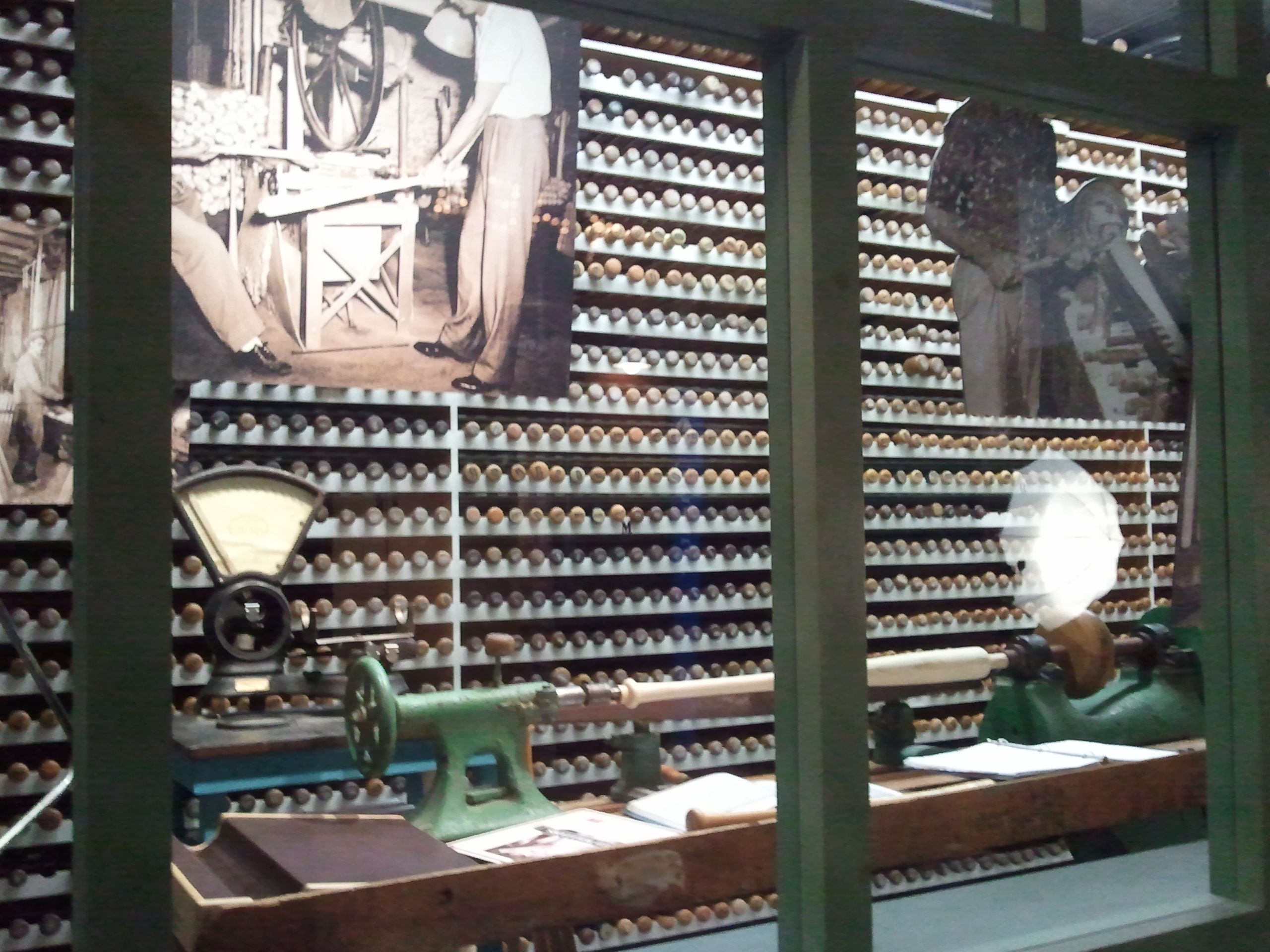
| 1. In what establishment was this picture taken? 2. Whose autograph was the first to appear on one of their products? 3. What is their top selling product today? |
| Submitted by QuizmasterSally Garrison. |
| Answers: 1. Slugger Museum, Louisville, KY 2. Honus Wagner, 1905 The TPS and TPX aluminum bats. |
| ********** |
| ********** |
| Congratulations to Our Winners Ed Vielmetti Janice Sellers Diane Burkett Milene Rawlinson Stan Read Gary Sterne Joshua Kreitzer Cindy Warburton Laurel Fletchner Frank Nollette Mike Dalton Barbara Battles Tom Pincince Dennis Brann Alex Sissoev Don Draper Betty Chambers Daniel Jolley Donna Jolley Jim Baker Peter Norton Brian Chamberlain Steve Jolley Robert W. Steinmann, Jr. Angel Esparza Joyce Veness Kerry Acker Nicole Blank Evan Hindman Stephen Jolley Brian Chamberlain Margaret Paxton David Haas Sally Garrison Cindy Tarsi |
| Comments from Our Readers |
The central wall of the quiz picture said bats. Question 2 said Louisville Slugger, the
only signed bat. Googling "Louisville Slugger" gave me the "Louisville Slugger museum
and factory" and Wikipedia web pages with all the information. I also received a couple
pictures similar to those in the quiz montage,but taken at different angles. "Louisville
Slugger factory" in google's image search tab gave me four images similar to some in
the quiz picture (a montage of many pictures). I looked up other bat manufacturers and
none mentioned autographs so I knew Louisville Slugger was correct. My wife, Mary,
and I went to the 2005 Kentucky Derby with Sports Leisure Vacations. We stopped at
the factory and took the tour, and were given a 12 inch long bat as a souvenir. We also
got a good look at the "Big Bat" outside the factory. My search for photos gave me
many big bat photos. The bat is 120 feet tall, weighs 68,000 lbs., is made of ASTM
A36 carbon steel. It is hollow and would hold 30,000 gallons. Arthur Hartwell
*****
While they have diversified into many products my guess would be their aluminum
bats. After having owned many beautiful ash Louisville Sluggers in my day, it appears
that aluminum is the most popular now.
While having always been a Louisville Slugger guy, I also played their Powerbilt golf
clubs for about 25 years. Thanks. Jim Baker
*****
It is quite evident from the photo that this is a baseball bat factory. The first name in
bats is the “Louisville Slugger”. I never really found an exact copy of the quiz photo but
had enough evidence to identify the location as the Louisville Slugger Factory and
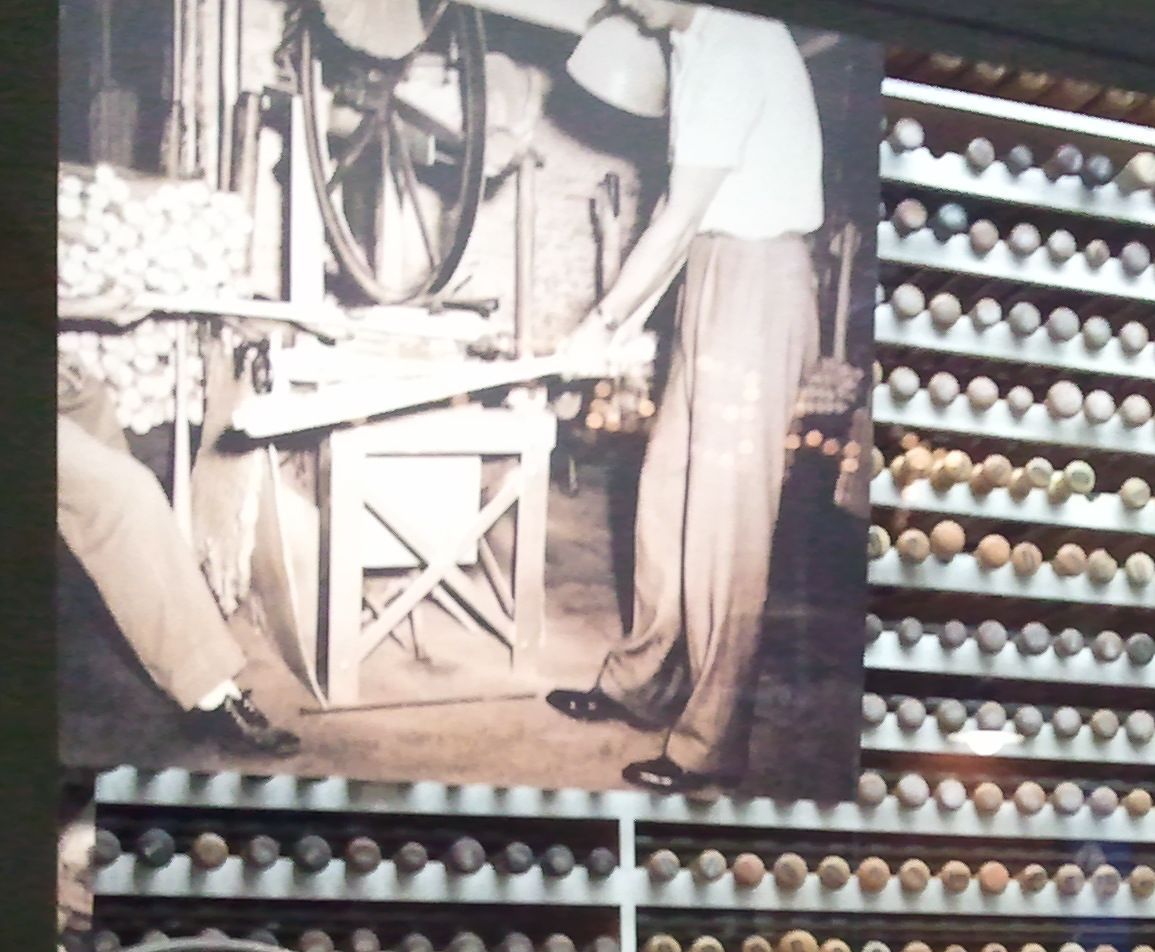
Museum in Louisville, Kentucky. I did locate a copy of the photo (top left) of the man
holding and looking down at a bat. The man was Ted Williams who visited the factory.
Many of the better wooden bats are made from white ash which presents a problem to
the company. In many parts of North America the Emerald Ash Borer is wiping out ash
forests. Eventually they may have to use what they consider the 2nd best wood -
perhaps rock or sugar maple. Don Draper
*****
This would have been a bit tougher without the baseball bat spinning in the foreground...
The Bat Vault contains 1000 of bats collected over the history of Louisville Slugger and
contains one bat from every player that signed a contract. Alex Sissoev
*****
I'm not much into baseball but my ex-husband is. We scheduled visits to his family
around the Cincinnati Reds home schedule. Haven't been to a game since my 1983
divorce.
The money some athletes and entertainers make is ridiculous. Even more ridiculous are
the instant news tabloid or reality show "celebrities" who are paid big bucks because
they have or are expected to behave outrageously. Diane Burkett
*****
Souvenir bats are provided as part of tour of factory; however baseball bats are not
allowed as carryon for airbourne tourists. Mike Dalton
*****
Interesting quiz... Until I figured it out, it was driving me batty. Evan Hindman
N.B. With comments like that, I'm going to go on "strike". - Q. Gen.
*****
Our eyes are instantly drawn to the wooden form that looks to be a baseball bat in the
process of being manufactured on a lathe. The older generation tools on display, as
well as the photos on the glass indicate that this is a museum display, likely the
Louisville Slugger museum in Louisville, Ky. Brian Chamberlain
*****
I love my sports, but athletes today are quite spoiled compared to their earlier
counterparts. Back then I am sure it was more for love of sport than money that they
endorsed products - today, not as much at least for many of them. It boggled my mind
to read this the other day: http://www.dailyfinance.com/2011/09/19/10-star-athletes-
who-excelled-at-losing-millions/. How is it possible?? Nicole Blank
only signed bat. Googling "Louisville Slugger" gave me the "Louisville Slugger museum
and factory" and Wikipedia web pages with all the information. I also received a couple
pictures similar to those in the quiz montage,but taken at different angles. "Louisville
Slugger factory" in google's image search tab gave me four images similar to some in
the quiz picture (a montage of many pictures). I looked up other bat manufacturers and
none mentioned autographs so I knew Louisville Slugger was correct. My wife, Mary,
and I went to the 2005 Kentucky Derby with Sports Leisure Vacations. We stopped at
the factory and took the tour, and were given a 12 inch long bat as a souvenir. We also
got a good look at the "Big Bat" outside the factory. My search for photos gave me
many big bat photos. The bat is 120 feet tall, weighs 68,000 lbs., is made of ASTM
A36 carbon steel. It is hollow and would hold 30,000 gallons. Arthur Hartwell
*****
While they have diversified into many products my guess would be their aluminum
bats. After having owned many beautiful ash Louisville Sluggers in my day, it appears
that aluminum is the most popular now.
While having always been a Louisville Slugger guy, I also played their Powerbilt golf
clubs for about 25 years. Thanks. Jim Baker
*****
It is quite evident from the photo that this is a baseball bat factory. The first name in
bats is the “Louisville Slugger”. I never really found an exact copy of the quiz photo but
had enough evidence to identify the location as the Louisville Slugger Factory and
Museum in Louisville, Kentucky. I did locate a copy of the photo (top left) of the man
holding and looking down at a bat. The man was Ted Williams who visited the factory.
Many of the better wooden bats are made from white ash which presents a problem to
the company. In many parts of North America the Emerald Ash Borer is wiping out ash
forests. Eventually they may have to use what they consider the 2nd best wood -
perhaps rock or sugar maple. Don Draper
*****
This would have been a bit tougher without the baseball bat spinning in the foreground...
The Bat Vault contains 1000 of bats collected over the history of Louisville Slugger and
contains one bat from every player that signed a contract. Alex Sissoev
*****
I'm not much into baseball but my ex-husband is. We scheduled visits to his family
around the Cincinnati Reds home schedule. Haven't been to a game since my 1983
divorce.
The money some athletes and entertainers make is ridiculous. Even more ridiculous are
the instant news tabloid or reality show "celebrities" who are paid big bucks because
they have or are expected to behave outrageously. Diane Burkett
*****
Souvenir bats are provided as part of tour of factory; however baseball bats are not
allowed as carryon for airbourne tourists. Mike Dalton
*****
Interesting quiz... Until I figured it out, it was driving me batty. Evan Hindman
N.B. With comments like that, I'm going to go on "strike". - Q. Gen.
*****
Our eyes are instantly drawn to the wooden form that looks to be a baseball bat in the
process of being manufactured on a lathe. The older generation tools on display, as
well as the photos on the glass indicate that this is a museum display, likely the
Louisville Slugger museum in Louisville, Ky. Brian Chamberlain
*****
I love my sports, but athletes today are quite spoiled compared to their earlier
counterparts. Back then I am sure it was more for love of sport than money that they
endorsed products - today, not as much at least for many of them. It boggled my mind
to read this the other day: http://www.dailyfinance.com/2011/09/19/10-star-athletes-
who-excelled-at-losing-millions/. How is it possible?? Nicole Blank

During our tour of the Louisville Slugger facility we heard a very interesting story about
a visit Ted Williams paid to the factory back in his playing days. Apparently, he’d
placed an order for bats and as was customary at the time he stopped by Slugger
during a tour his ballclub was making to the area.
Ahead of his visit a factory worker checked all the bats for size, shape and weight and
found nine of the ten were identical on all counts. One weighed slightly more than the
other nine (it was one tenth of an ounce heavier). The worker made an indistinguishable
mark on the one “off” bat and waited for Mr. Williams’ arrival.
When Ted came to the factory and handled the bats, he quickly decided one wasn’t
right. The worker took the bat back and shuffled it in with the other bats and asked Ted
to prove he could sense the difference a second time. Sure enough, after handling all
the bats he handed one to the worker and said, “This one’s a little off.” And he was
right!
a visit Ted Williams paid to the factory back in his playing days. Apparently, he’d
placed an order for bats and as was customary at the time he stopped by Slugger
during a tour his ballclub was making to the area.
Ahead of his visit a factory worker checked all the bats for size, shape and weight and
found nine of the ten were identical on all counts. One weighed slightly more than the
other nine (it was one tenth of an ounce heavier). The worker made an indistinguishable
mark on the one “off” bat and waited for Mr. Williams’ arrival.
When Ted came to the factory and handled the bats, he quickly decided one wasn’t
right. The worker took the bat back and shuffled it in with the other bats and asked Ted
to prove he could sense the difference a second time. Sure enough, after handling all
the bats he handed one to the worker and said, “This one’s a little off.” And he was
right!
| The Picture in the Picture innovatorsroadtrip.com/tag/louisville-slugger/ |
| ********** |
| How Cindi Solved the Puzzle |
| Okay, Colleen, this one seemed like a curveball, at least to me. When I first looked at the picture, I would have sworn that those were eggs sitting in the rows of shelves, and I thought it was some sort of agriculture-related place. But I had no luck on finding anything. I eventually noticed the lathe (front and center, but that's beside the point. ;) ), and I thought maybe it was furniture -- table legs, etc. But I didn't get any further on that train of thought. Finally, I just got to basics, and searched Google images using all sorts of various combinations of "wood", "lathe", "industrial", and "commercial". In one search, I saw a picture of a bat. At that point, I knew I was onto something, and I added "bat manufacturer" to the list, which is how I got to the Louisville Slugger Museum and Factory. From there it was downhill. I read the history page and found the info about both Honus Wagner and the TPS/TPX bats. But I wasn't finding anything about the actual location. I looked at the Virtual Tour that was on their site, but I still wasn't finding any pictures of what was in your photo. Finally, I found a photo of something that was called the 'Bat Vault'. Bingo! Cindy Tarsi |
J. Frederick Hillerich emigrated with his
family from Baden-Baden, Germany to the
United States in 1842.
After a short while, the Hillerichs moved
to Louisville, where J. Fred started a
woodworking shop in 1856. By 1864
"J.F. Hillerich, Job Turning" was in
operation and filled orders for businesses
by custom-turning everything from
balusters to bedposts. His eldest son, John
family from Baden-Baden, Germany to the
United States in 1842.
After a short while, the Hillerichs moved
to Louisville, where J. Fred started a
woodworking shop in 1856. By 1864
"J.F. Hillerich, Job Turning" was in
operation and filled orders for businesses
by custom-turning everything from
balusters to bedposts. His eldest son, John
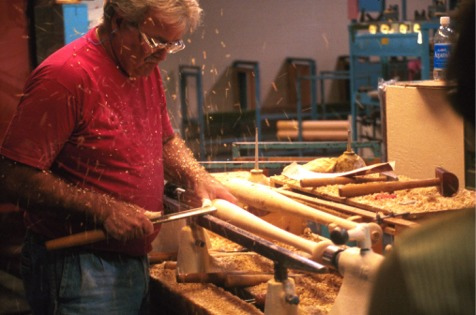
| The majority of bats are made from mountain white ash and maple trees obtained along the NY and PA border. Each year about 1.2 million bats are produced. Approximately 10% of them are major league bats; the remainder are used for minor league, little league, and recreational bats, as well as for mini bats. They also make the aluminum bats that are used by college baseball and other organizations. The aluminum bat, however, is manufactured in CA, not KY. It took about 30 minutes to make a bat with the old hand lathe versus 30 seconds today with an automated process. The average bat today weighs 30-32 ounces. Many professional players' bats are custom made and their contract autograph appears on the bat. blog.travelpod.com/travel-blog-entries/socks/1/1248827470/tpod. |
was unable to find another one. He stopped into the Hillerich wood-turning shop
located near his hotel and asked J. Fred to have Bud turn a bat for him. Latham's tale,
considered as questionable as the Browning version, was supported by a 1942 letter in
which Bud Hillerich verified the authenticity of the story. Experts continue to debate
each version. Bud Hillerich continued to improve the manufacturing processes of the
new bat business, inventing a centering device for a lathe and an automatic sander.
Their baseball bat business grew. The bat was first known as the Falls City Slugger, (a
reference to Louisville's location at the Falls of the Ohio River), but the brand name was
changed to Louisville Slugger and registered as a trademark in 1894. Bud Hillerich
became a partner with his father in 1897 and the name of the firm was changed to J.F.
Hillerich and Son.
The success of the growing bat company was further enhanced in 1905 when Honus
"The Flying Dutchman" Wagner, a star for the Pittsburgh Pirates, signed a contract as
the first player ever to endorse a bat. His autograph was also the first to be used on a
located near his hotel and asked J. Fred to have Bud turn a bat for him. Latham's tale,
considered as questionable as the Browning version, was supported by a 1942 letter in
which Bud Hillerich verified the authenticity of the story. Experts continue to debate
each version. Bud Hillerich continued to improve the manufacturing processes of the
new bat business, inventing a centering device for a lathe and an automatic sander.
Their baseball bat business grew. The bat was first known as the Falls City Slugger, (a
reference to Louisville's location at the Falls of the Ohio River), but the brand name was
changed to Louisville Slugger and registered as a trademark in 1894. Bud Hillerich
became a partner with his father in 1897 and the name of the firm was changed to J.F.
Hillerich and Son.
The success of the growing bat company was further enhanced in 1905 when Honus
"The Flying Dutchman" Wagner, a star for the Pittsburgh Pirates, signed a contract as
the first player ever to endorse a bat. His autograph was also the first to be used on a
| Another peek at the bat vault. www.soulofamerica.com/cgi- |
available in adult baseball, youth baseball, and softball models. Today, the TPX and
TPS brands are huge hits and are the top selling models in the business.The first line of
Louisville Slugger baseball and softball gloves was introduced in 1975.
Louisville Slugger Museum & Factory, one of the city's most popular attractions, is
also housed with the corporate headquarters. The location is well-marked by the
World's Biggest Baseball Bat that casually leans against the side of the building. Guests
are invited to learn about the Official Bat of Major League Baseball – Louisville Slugger.
TPS brands are huge hits and are the top selling models in the business.The first line of
Louisville Slugger baseball and softball gloves was introduced in 1975.
Louisville Slugger Museum & Factory, one of the city's most popular attractions, is
also housed with the corporate headquarters. The location is well-marked by the
World's Biggest Baseball Bat that casually leans against the side of the building. Guests
are invited to learn about the Official Bat of Major League Baseball – Louisville Slugger.
| Making a Bat Visitors can take a factory tour and see live production. One side churns out professional models, retail and minor leaguers on the other. The day I was there, a cart of Dustin Pedroia bats was waiting to be shipped out. The factory keeps a database of all player specs which includes length, weight, grain width, color, etc. You can have a personalized bat made to order, then step over to a batting cage and try it out vs. a 90-mph fastball. www.beingpeterkim.com/2009/04/ |



baseball scholars for many years. One of the earliest
references to the first bat appeared in a 1914 Louisville
Herald article that included an interview with Bud
Hillerich. In that interview, Bud indicated that he had only
carved a ring in a Browning bat to ensure hitting success
for the superstitious slugger. In fact, some claim that
Bud did not make the first bat. They believe his father did
and Bud then showed it to some professional players
who requested that his father make more bats for the
team. The elder Hillerich agreed only after getting a
promise from the players that they would request no
more bats. As word of mouth spread about the quality
bats, other teams began sending in orders.
There is one other story about the origins of the first
Louisville Slugger. In a 1937 interview for Baseball
Magazine , 77-year-old Arlie Latham claimed that the first
bat was made for him. Latham, a third baseman for the
St. Louis Browns of the American Association, said that
he had broken a bat in Louisville in 1883 or 1884 and
references to the first bat appeared in a 1914 Louisville
Herald article that included an interview with Bud
Hillerich. In that interview, Bud indicated that he had only
carved a ring in a Browning bat to ensure hitting success
for the superstitious slugger. In fact, some claim that
Bud did not make the first bat. They believe his father did
and Bud then showed it to some professional players
who requested that his father make more bats for the
team. The elder Hillerich agreed only after getting a
promise from the players that they would request no
more bats. As word of mouth spread about the quality
bats, other teams began sending in orders.
There is one other story about the origins of the first
Louisville Slugger. In a 1937 interview for Baseball
Magazine , 77-year-old Arlie Latham claimed that the first
bat was made for him. Latham, a third baseman for the
St. Louis Browns of the American Association, said that
he had broken a bat in Louisville in 1883 or 1884 and
| The 120' steel replica of Babe Ruth's bat outside the museum entrance. It weighs about 34 tons. blog.travelpod.com/... |

bat and the first time a professional athlete
endorsed an athletic product.
A fire severely damaged the bat factory in
1910 but rebuilding began quickly. In
1911, Frank Bradsby, a successful
salesman for one of Hillerich's largest
buyers, joined J.F. Hillerich and Son. He
brought sales and marketing expertise and
drive to the company. In 1916 he became
a full partner, and the company name was
changed, for the last time, to Hillerich &
Bradsby Co. Seeking to diversify
products Bradsby propelled the firm into
producing golf clubs, eventually creating
the PowerBilt brand.
The success of the Louisville Slugger bat
endorsed an athletic product.
A fire severely damaged the bat factory in
1910 but rebuilding began quickly. In
1911, Frank Bradsby, a successful
salesman for one of Hillerich's largest
buyers, joined J.F. Hillerich and Son. He
brought sales and marketing expertise and
drive to the company. In 1916 he became
a full partner, and the company name was
changed, for the last time, to Hillerich &
Bradsby Co. Seeking to diversify
products Bradsby propelled the firm into
producing golf clubs, eventually creating
the PowerBilt brand.
The success of the Louisville Slugger bat
| The wall of signature in the entryway of the hall of fame batters who've used Louisville Slugger bats -comprising over 80% of inductees. The average annual contract value - unlike megamillion dollar footwear and apparel deals, is in the 5 figure range. www.beingpeterkim.com/2009/04/l |
was due in part to the fact that amateur baseball players across the country could
purchase the bat model of their favorite big-league player. In 1915 the Louisville
Slugger first appeared in a youth-size model. In 1919 the company launched its first
national advertising campaign and in just four years was producing one million bats a
year. The success, however, was marred the next year by the death of J. Frederick
Hillerich. His son, Bud, became the boss.
A disastrous flood along the Ohio River in 1937 did significant damage to one of the
factories and some of the offices. Working almost nonstop for weeks to repair the
factory, Frank Bradsby was worn down. His efforts during this ordeal are believed to
have led to his death later that year.
Hillerich & Bradsby Co. served its country during World War II by producing M-1
carbine stocks, tank pins and billy clubs for the armed forces. It also continued to
make baseball and softball bats for the troops.
In 1954 the company purchased Larimer and Norton Inc., a lumber company in
purchase the bat model of their favorite big-league player. In 1915 the Louisville
Slugger first appeared in a youth-size model. In 1919 the company launched its first
national advertising campaign and in just four years was producing one million bats a
year. The success, however, was marred the next year by the death of J. Frederick
Hillerich. His son, Bud, became the boss.
A disastrous flood along the Ohio River in 1937 did significant damage to one of the
factories and some of the offices. Working almost nonstop for weeks to repair the
factory, Frank Bradsby was worn down. His efforts during this ordeal are believed to
have led to his death later that year.
Hillerich & Bradsby Co. served its country during World War II by producing M-1
carbine stocks, tank pins and billy clubs for the armed forces. It also continued to
make baseball and softball bats for the troops.
In 1954 the company purchased Larimer and Norton Inc., a lumber company in

Pennsylvania, and created its own timber
division. This expansion assured that the
bat making operation would maintain an
adequate supply of timber. The company
also further diversified its products with
the purchase of Wally Enterprises in
Ontario, Canada which marked the firm’s
entrance into the ice hockey stick
business with Louisville Hockey, later
known as TPS Hockey.
In 1970, the company began producing
aluminum bats. Louisville Slugger
aluminum and composite bats, are
division. This expansion assured that the
bat making operation would maintain an
adequate supply of timber. The company
also further diversified its products with
the purchase of Wally Enterprises in
Ontario, Canada which marked the firm’s
entrance into the ice hockey stick
business with Louisville Hockey, later
known as TPS Hockey.
In 1970, the company began producing
aluminum bats. Louisville Slugger
aluminum and composite bats, are
| The Bat Vault www.tripadvisor.com/ShowUserReviews |
Today, over 2-million people have enjoyed
the museum and factory tour experience.
In 2000, Hillerich & Bradsby Co. teamed
up with a local hand surgeon to create
H&B’s newest division – Bionic Gloves.
The unique combination of a physician’s
medical knowledge and H&B’s ability to
create exceptional equipment resulted in
revolutionary new gloves for hockey,
baseball, golf, gardening, and more.
John A. “Jack” Hillerich III retired as CEO
and President in 2001 but remains as
Chairman of the Board. His son, John A.
Hillerich IV succeeded him and currently
serves as CEO and President. John is the
great-grandson of Bud Hillerich, the
baseball fan who introduced his father's
company to the sport back in the 1800s.
Hillerich & Bradsby Co. celebrated the
125th anniversary of Louisville Slugger in
2009.
the museum and factory tour experience.
In 2000, Hillerich & Bradsby Co. teamed
up with a local hand surgeon to create
H&B’s newest division – Bionic Gloves.
The unique combination of a physician’s
medical knowledge and H&B’s ability to
create exceptional equipment resulted in
revolutionary new gloves for hockey,
baseball, golf, gardening, and more.
John A. “Jack” Hillerich III retired as CEO
and President in 2001 but remains as
Chairman of the Board. His son, John A.
Hillerich IV succeeded him and currently
serves as CEO and President. John is the
great-grandson of Bud Hillerich, the
baseball fan who introduced his father's
company to the sport back in the 1800s.
Hillerich & Bradsby Co. celebrated the
125th anniversary of Louisville Slugger in
2009.
| ********** |
| Babe Ruth's Bat |

| ********** |
| See Results of Our Ninth Occasional PhotoQuiz Survey Click here! |