killed or wounded in the tower. The artist wrote under his pictures the line, “Men that
were shot up here.”
Later that afternoon, Union General William P. Sanders was mortally wounded by a
Confederate sharpshooter using a British Whitworth rifle. The Whitworth rifle cost 12 –
15 hundred dollars each at the time. The rifles were known to be used with telescopic
sights; and, with their hexagonal bores, were accurate at over 1,000 yards.
During the fighting, Mrs. Armstrong and her daughters were confined to an upstairs
bedroom for their safety. A sentry was instructed not to allow them downstairs without
were shot up here.”
Later that afternoon, Union General William P. Sanders was mortally wounded by a
Confederate sharpshooter using a British Whitworth rifle. The Whitworth rifle cost 12 –
15 hundred dollars each at the time. The rifles were known to be used with telescopic
sights; and, with their hexagonal bores, were accurate at over 1,000 yards.
During the fighting, Mrs. Armstrong and her daughters were confined to an upstairs
bedroom for their safety. A sentry was instructed not to allow them downstairs without
The Bleak House, also known as the
Confederate Memorial Hall, is an
antebellum Classical Revival style mansion
of fifteen spacious rooms and wide halls
in Knoxville, TN.
The house was first occupied by Robert
Houston Armstrong and his wife, Louisa
Franklin. It was built for the couple as a
wedding gift by the bride's father, Major.
L. D. Franklin. Robert Armstrong's
Confederate Memorial Hall, is an
antebellum Classical Revival style mansion
of fifteen spacious rooms and wide halls
in Knoxville, TN.
The house was first occupied by Robert
Houston Armstrong and his wife, Louisa
Franklin. It was built for the couple as a
wedding gift by the bride's father, Major.
L. D. Franklin. Robert Armstrong's

 |  |  |  |
| If you have a picture you'd like us to feature a picture in a future quiz, please email it to us at CFitzp@aol.com. If we use it, you will receive a free analysis of your picture. You will also receive a free Forensic Genealogy CD or a 10% discount towards the purchase of the Forensic Genealogy book. |


 |  |  |  |
| Bleak House, aka Confederate Memorial Hall betterthanideserve.wordpress.com/2011/04/ www.knoxvillecmh.org/history.htm |
| ********** |
| ********** |

| If you enjoy our quizzes, don't forget to order our books! Click here. |

| Quiz #306 Results |
| Answer to Quiz #306 May 22, 2011 |

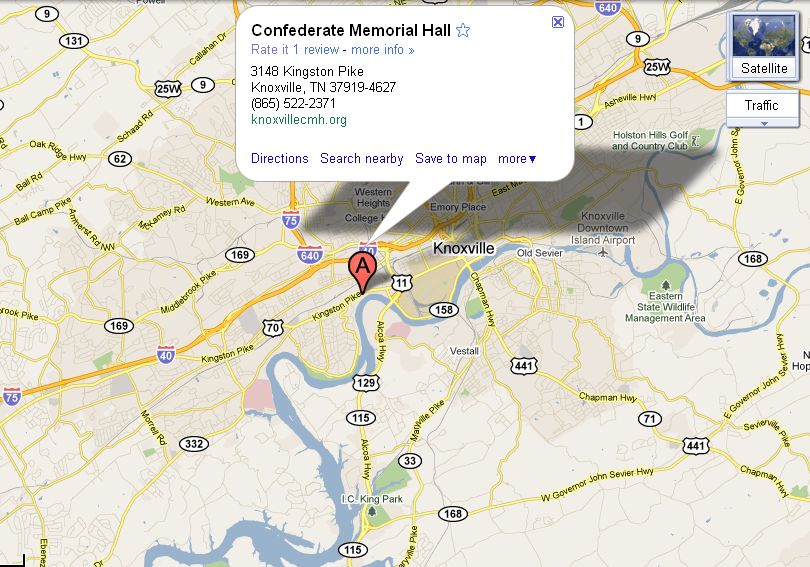
Answers: 1. 3148 Kingston Pike, Knoxville, TN 2. Confederate Memorial Hall 3. 11/17/1863 to 12/4/1863, this was the headquarters of General Longstreet. 4. The mansion was named Bleak House, after the title of the Dickens novel that was popular at the time. |
| 1. Where is this house located? 2. What is its current name? 3. What happened here in 1863? 4. What connection does it have to an English writer? Click here if you want to know the name of the English writer. |
| ********** |
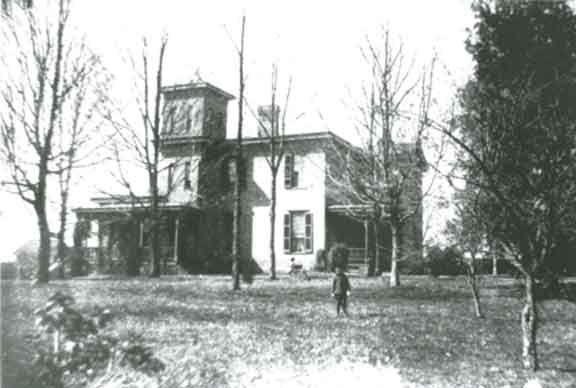
| Submitted by Quizmaster Emeritus Diane Burkett. |
| Comments from Our Readers |
I live fairly close to Knoxville, so I was chagrined when Dan told me the answer to this
weeks quiz. I guess I haven't lived in Tennessee long enough to know the attractions that
are here. Even though I could not find the answer I think it was a good
quiz.
Donna Jolley
*****
I googled Charles Dickens (hint) cmh (contest photo .jpg lettering) house. The 4th
google result was: History-Confederate Memorial House which had on its webpage the
matching contest photo. Mike Dalton
*****
I like storys about old houses. A year ago we did buy a house that was built before
1830 and in 1924 some parts of the house were demolished and build again.
Under the house I found pieces of an old newspaper and pieces of a nice tile with an
image on it. I don't know how old the house exactly is because the archives start in
1830 but from old maps I know that on this place there was a house at the end of the
17th century (not the same house as now). In the beginning of the 17th century there
was only water here. I have been many days in the archive and know now who has
lived in this house from 1830 till now. Under the house there is a well with a cover on
it. That well can only be opened when we remove the floor in the living room.
Somewhere in the next 10 years we have to replace the floor and you can be sure that I
will look in the well. Probably I will only find sand and rocks, but it will be fun digging
in it. Perhaps I will find the missing parts of the tile ;o)
Thanks for again a great story. Margreet Brouwer
weeks quiz. I guess I haven't lived in Tennessee long enough to know the attractions that
are here. Even though I could not find the answer I think it was a good
quiz.
Donna Jolley
*****
I googled Charles Dickens (hint) cmh (contest photo .jpg lettering) house. The 4th
google result was: History-Confederate Memorial House which had on its webpage the
matching contest photo. Mike Dalton
*****
I like storys about old houses. A year ago we did buy a house that was built before
1830 and in 1924 some parts of the house were demolished and build again.
Under the house I found pieces of an old newspaper and pieces of a nice tile with an
image on it. I don't know how old the house exactly is because the archives start in
1830 but from old maps I know that on this place there was a house at the end of the
17th century (not the same house as now). In the beginning of the 17th century there
was only water here. I have been many days in the archive and know now who has
lived in this house from 1830 till now. Under the house there is a well with a cover on
it. That well can only be opened when we remove the floor in the living room.
Somewhere in the next 10 years we have to replace the floor and you can be sure that I
will look in the well. Probably I will only find sand and rocks, but it will be fun digging
in it. Perhaps I will find the missing parts of the tile ;o)
Thanks for again a great story. Margreet Brouwer
| Congratulations to Our Winners! Stan Read Joyce Veness Gary Sterne Jim Baker Daniel E. Jolley Mike Dalton Margaret Waterman Margaret Paxton Margreet Brouwer |
How Daniel Solved the Puzzle |
| This quiz would have been almost impossible to answer had you not given the Charles Dickens clue. I normally don’t look at the clues, but due to the lack of any identifiable features in the photo, I was at an impasse so I looked. It was kind of a fluke how I found the answer. Thinking that the scene in the photo looked rather bleak, and remembering that Dickens wrote Bleak House, I searched on Bleak House 1863 and it was all downhill from there. Another good quiz. Daniel Jolley |

| A Hidden Clue |
By clicking on the thumbnail of the quiz photo, you can see a larger version. The name
of the file will appear in your browser window. If you Google CMH + Charles Dickens
+ 1863, you will come across the website of the Confederate Memorial Hall. (See
below.)
of the file will appear in your browser window. If you Google CMH + Charles Dickens
+ 1863, you will come across the website of the Confederate Memorial Hall. (See
below.)
| ********** |
| Location of the Confederate Memorial Hall in Knoxville, TN |

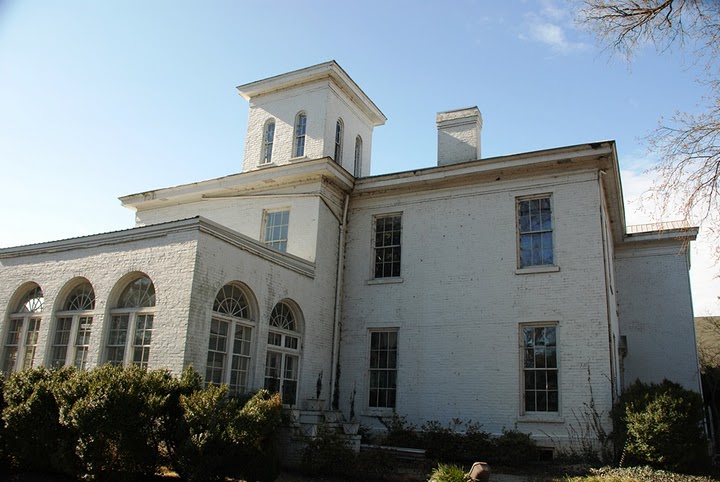
| Confederate Memorial Hall (formerly Bleak House) Today |
William P. Sanders ordered Lt. Samuel
Benjamin in Fort Loudon to put a cannon
shot through the Bleak House tower to
dislodge the sharpshooters. Called the
“Prettiest Shot of the War” by the
Federals, it hit the second floor of the
house at its southeast corner. Portraits of
three unnamed Confederates, drawn on
one wall by an unknown soldier artist, are
mute evidence today that soldiers were
Benjamin in Fort Loudon to put a cannon
shot through the Bleak House tower to
dislodge the sharpshooters. Called the
“Prettiest Shot of the War” by the
Federals, it hit the second floor of the
house at its southeast corner. Portraits of
three unnamed Confederates, drawn on
one wall by an unknown soldier artist, are
mute evidence today that soldiers were

| Robert H. Armstrong Birth: Mar. 16, 1825 Knoxville, TN Death: May 13, 1896 Knoxville, TN Robert H. Armstrong was a member of the HOUSE both 31st and 33rd Genereal Assemblies from 1855-57 and again in 1859-61 representing Knox and Sevier counties the American or Know-Nothing Party. Born on March 16, 1825 his parents were Drury Paine and Amelia(Houston) Armstrong. A law graduate of University Knoxville, Knoxville, Tennessee he married Louisa Franklin Armstrong. He and Louisa had the following children-Robert Franklin and Amelia Franklin Armstrong. Robert and Louisa made their home in Knoxville where he practiced law and was a farmer. Robert was appointed a trustee of East Tennessee University in 1865 and appointed to building commission for East Tennessee Hospital for the Insane 1883, and served as secretary- treasurer for that commission many years Robert was the grandson of Robert Houston. Parents: Drury P Armstrong, 1799- 1856 Amelia Armstrong, ____-1836 Children: Amelia F. Armstrong, ___-1859 Spouse: Louise Franklin, 1837-1910 www.findagrave.com/cgi-bin/fg.cg... |
permission. Mrs. Armstrong once defied the sentry,
and when she refused to return upstairs, he fired a
warning shot into the stairway, where the .58 caliber
minie ball remains today.
Bleak House is an antebellum mansion of fifteen
spacious rooms and wide halls, standing well back
on an eminence among lovely trees and elaborately
landscaped grounds. The property fronts 250 feet on
Kinston Pike and extends over 900 feet in terraced
gardens down to Fort Loudon Lake (Tennessee
River).
The house remained in the Armstrong family until
1906 when it was sold to Mr. and Mrs. John
Scruggs Brown. The Browns further beautified the
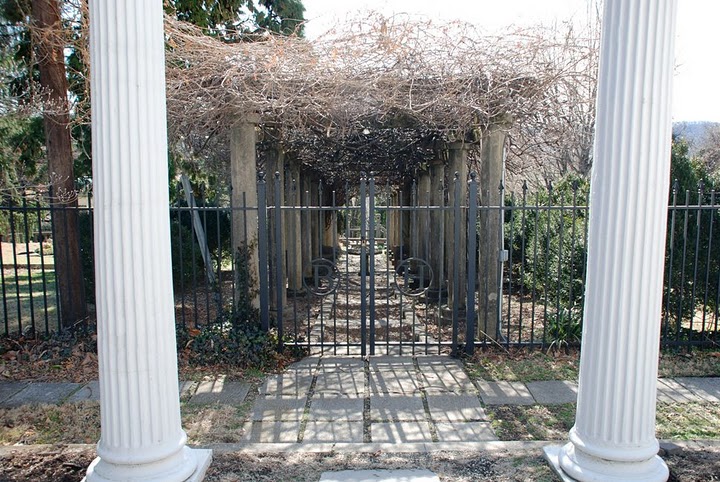
house and created the lovely Roman gardens,
including the elaborate fountains and ponds. Mrs.
Brown sold the property in 1936 to Mr. and Mrs.
Roy N. Lotspeich, prominent Knoxvillians. Knoxville
Chapter 89, United Daughters of the Confederacy
(UDC), acquired the property on May 4, 1959, for
use as a Confederate Memorial, museum, and
chapter house. The house, which was a focal point
during the War Between the States, is a fine example
of the Southern antebellum mansions that are rapidly
vanishing from Knoxville and other areas of the
South.
The portraits of the three unnamed Confederate
casualties in the tower, drawn on one wall by an
unknown soldier artist, are remarkably well
preserved after over 140 years. The tower, closed
and the entrance sealed for many years, was
reopened by the UDC, and a new stairway was built.
Much has been done toward maintaining the house
and grounds and restoring them to their original
grandeur and elegance. The entire house is furnished
with museum pieces, and the Chapters’ large
collection of pictures and paintings of historical
interest are on display. The museum contains a
continuously growing collection of priceless relics of
early Southern Culture. The extensive library,
containing many first editions of Southern literature
and history, is located in a spacious room on the
second floor.
Bleak House was added to the National Register of
Historic Places in 1984.
and when she refused to return upstairs, he fired a
warning shot into the stairway, where the .58 caliber
minie ball remains today.
Bleak House is an antebellum mansion of fifteen
spacious rooms and wide halls, standing well back
on an eminence among lovely trees and elaborately
landscaped grounds. The property fronts 250 feet on
Kinston Pike and extends over 900 feet in terraced
gardens down to Fort Loudon Lake (Tennessee
River).
The house remained in the Armstrong family until
1906 when it was sold to Mr. and Mrs. John
Scruggs Brown. The Browns further beautified the
house and created the lovely Roman gardens,
including the elaborate fountains and ponds. Mrs.
Brown sold the property in 1936 to Mr. and Mrs.
Roy N. Lotspeich, prominent Knoxvillians. Knoxville
Chapter 89, United Daughters of the Confederacy
(UDC), acquired the property on May 4, 1959, for
use as a Confederate Memorial, museum, and
chapter house. The house, which was a focal point
during the War Between the States, is a fine example
of the Southern antebellum mansions that are rapidly
vanishing from Knoxville and other areas of the
South.
The portraits of the three unnamed Confederate
casualties in the tower, drawn on one wall by an
unknown soldier artist, are remarkably well
preserved after over 140 years. The tower, closed
and the entrance sealed for many years, was
reopened by the UDC, and a new stairway was built.
Much has been done toward maintaining the house
and grounds and restoring them to their original
grandeur and elegance. The entire house is furnished
with museum pieces, and the Chapters’ large
collection of pictures and paintings of historical
interest are on display. The museum contains a
continuously growing collection of priceless relics of
early Southern Culture. The extensive library,
containing many first editions of Southern literature
and history, is located in a spacious room on the
second floor.
Bleak House was added to the National Register of
Historic Places in 1984.

father Drury Armstrong, gave them the land. The Armstrongs named the house after
Charles Dickens’ “Bleak House” novel of the same name.
During the siege of Knoxville by the Confederates under General James Longstreet,
November 17 to December 4, 1863, Bleak House was the headquarters of General
Longstreet and his staff. A sharpshooters unit, “The Elite Twenty”, occupied the house’
s second-floor east-facing windows, as well as the tower.
A first-hand account of the occupation and the fighting around her home was told in a
letter written by Mrs. Louisa Armstrong and published in the Knoxville Journal and
Tribune on September 27, 1898.
On November 18 ,when the Federal line was 750 yards east of the house, Union Gen.
Charles Dickens’ “Bleak House” novel of the same name.
During the siege of Knoxville by the Confederates under General James Longstreet,
November 17 to December 4, 1863, Bleak House was the headquarters of General
Longstreet and his staff. A sharpshooters unit, “The Elite Twenty”, occupied the house’
s second-floor east-facing windows, as well as the tower.
A first-hand account of the occupation and the fighting around her home was told in a
letter written by Mrs. Louisa Armstrong and published in the Knoxville Journal and
Tribune on September 27, 1898.
On November 18 ,when the Federal line was 750 yards east of the house, Union Gen.

| "Men that were shot up here". |
| ********** |
| A Brief Armstrong Genealogy Notable Southern Families, Volume 2 Zella Armstrong & Janie Preston Collup French books.google.com/books?i... |
| See more images of Bleak House in Brian McKinley's Picasa gallery at picasaweb.google.com/bgmckinley69/BleakHouse# |


| The Siege of Knoxville en.wikipedia.org/wiki/Knoxville_Campaign |
The Knoxville Campaign was a series of
American Civil War battles and maneuvers
in East Tennessee during the fall of 1863.
Union forces under Maj. Gen. Ambrose
Burnside occupied Knoxville, Tennessee,
and Confederate forces under Lt. Gen.
James Longstreet were detached from
Gen. Braxton Bragg's Army of Tennessee
at Chattanooga to prevent Burnside's
reinforcement of the besieged Union
forces there. Ultimately, Longstreet's own
siege of Knoxville ended when Union Maj.
Gen. William Tecumseh Sherman led
American Civil War battles and maneuvers
in East Tennessee during the fall of 1863.
Union forces under Maj. Gen. Ambrose
Burnside occupied Knoxville, Tennessee,
and Confederate forces under Lt. Gen.
James Longstreet were detached from
Gen. Braxton Bragg's Army of Tennessee
at Chattanooga to prevent Burnside's
reinforcement of the besieged Union
forces there. Ultimately, Longstreet's own
siege of Knoxville ended when Union Maj.
Gen. William Tecumseh Sherman led

| Confederate General Longstreet (left); Union General Burnside (right) |
elements of the Army of the Tennessee and other troops to Burnside's relief after Union
troops had broken the Confederate siege of Chattanooga. Although Longstreet was one
of Gen. Robert E. Lee's best corps commanders in the East, he was unsuccessful in his
role as an independent commander in the West and accomplished little in the Knoxville
Campaign.
Read more...
troops had broken the Confederate siege of Chattanooga. Although Longstreet was one
of Gen. Robert E. Lee's best corps commanders in the East, he was unsuccessful in his
role as an independent commander in the West and accomplished little in the Knoxville
Campaign.
Read more...
| ********** |
Bleak House is the ninth novel by Charles Dickens,
published in twenty monthly installments between March
1852 and September 1853. It is held to be one of
Dickens's finest novels, containing one of the most vast,
complex and engaging arrays of minor characters and
sub-plots in his entire canon. The story is told partly by
the novel's heroine, Esther Summerson, and partly by an
omniscient narrator. Memorable characters include the
menacing lawyer Tulkinghorn, the friendly, but depressive
John Jarndyce, and the childish and disingenuous Harold
Skimpole, as well as the likeable but imprudent Richard
Carstone.
At the novel's core is long-running litigation in England's
Court of Chancery, Jarndyce and Jarndyce, which has
published in twenty monthly installments between March
1852 and September 1853. It is held to be one of
Dickens's finest novels, containing one of the most vast,
complex and engaging arrays of minor characters and
sub-plots in his entire canon. The story is told partly by
the novel's heroine, Esther Summerson, and partly by an
omniscient narrator. Memorable characters include the
menacing lawyer Tulkinghorn, the friendly, but depressive
John Jarndyce, and the childish and disingenuous Harold
Skimpole, as well as the likeable but imprudent Richard
Carstone.
At the novel's core is long-running litigation in England's
Court of Chancery, Jarndyce and Jarndyce, which has
| Bleak House en.wikipedia.org/wiki/Bleak_House |

far-reaching consequences for all involved. This case revolves around a testator who
apparently made several wills, all of them seeking to bequeath money and land
surrounding the Manor of Marr in South Yorkshire. The litigation, which already has
consumed years and sixty to seventy thousand pounds sterling in court costs, is
emblematic of the failure of Chancery. Dickens's assault on the flaws of the British
judiciary system is based in part on his own experiences as a law clerk, and in part on
his experiences as a Chancery litigant seeking to enforce his copyright on his earlier
books. His harsh characterisation of the slow, arcane Chancery law process gave
memorable form to pre-existing widespread frustration with the system. Though
Chancery lawyers and judges criticized Dickens's portrait of Chancery as exaggerated
and unmerited, his novel helped to spur an ongoing movement that culminated in
enactment of the legal reform in the 1870s. In fact, Dickens was writing just as
Chancery was reforming itself, with the Six Clerks and Masters mentioned in Chapter
One abolished in 1842 and 1852 respectively: the need for further reform was being
widely debated. These facts raise an issue as to when Bleak House is actually set.
Technically it must be before 1842, and at least some of his readers at the time would
have been aware of this. However, there is some question as to whether this timeframe
is consistent with some of the themes of the novel. The great English legal historian Sir
William Holdsworth set the action in 1827.
apparently made several wills, all of them seeking to bequeath money and land
surrounding the Manor of Marr in South Yorkshire. The litigation, which already has
consumed years and sixty to seventy thousand pounds sterling in court costs, is
emblematic of the failure of Chancery. Dickens's assault on the flaws of the British
judiciary system is based in part on his own experiences as a law clerk, and in part on
his experiences as a Chancery litigant seeking to enforce his copyright on his earlier
books. His harsh characterisation of the slow, arcane Chancery law process gave
memorable form to pre-existing widespread frustration with the system. Though
Chancery lawyers and judges criticized Dickens's portrait of Chancery as exaggerated
and unmerited, his novel helped to spur an ongoing movement that culminated in
enactment of the legal reform in the 1870s. In fact, Dickens was writing just as
Chancery was reforming itself, with the Six Clerks and Masters mentioned in Chapter
One abolished in 1842 and 1852 respectively: the need for further reform was being
widely debated. These facts raise an issue as to when Bleak House is actually set.
Technically it must be before 1842, and at least some of his readers at the time would
have been aware of this. However, there is some question as to whether this timeframe
is consistent with some of the themes of the novel. The great English legal historian Sir
William Holdsworth set the action in 1827.
| ********** |
| ********** |
| ********** |