hotels. Get them to add it to their breakfast buffet, where the plate-pilers aren’t paying
directly, and those cheese wheels disappear like magic.
Initially Driard would purchase milk to make the cheese. But local farmers often dilute it
with unhygienic water, so he started producing his own. That created new problems.
Cows must get pregnant to produce milk, and inevitably that leads to male calves. But
in Hindu-majority Nepal, you can’t kill cattle. And keeping them gets expensive.
Some farms turn them loose to wander. “When I first came, I thought, cool, holy
cows,” Driard said. “But it’s a very sad situation. That’s why you see old bulls in the
street, bloody, eating plastic bags. Cars hit them.”
So he’s thinking of switching to water buffalo, which are not considered sacred and
can be killed, eaten or sold.
Already, with his business just 3 years old, the restless entrepreneur has expanded his
horizons. “Doing the same thing every day drives me crazy,” he said. “Starting new
projects is the interesting part.”
He’s begun producing sausage, foie gras and apple cider, is mulling a delicatessen and a
vineyard, and is buying a larger farm farther from Katmandu and at a higher elevation,
adding pigs, sheep and other animals. He’s helped start a weekly farmer’s market. And
he and his sister — who left Paris to work with him –- have turned the farmhouse into
a bed and breakfast.
directly, and those cheese wheels disappear like magic.
Initially Driard would purchase milk to make the cheese. But local farmers often dilute it
with unhygienic water, so he started producing his own. That created new problems.
Cows must get pregnant to produce milk, and inevitably that leads to male calves. But
in Hindu-majority Nepal, you can’t kill cattle. And keeping them gets expensive.
Some farms turn them loose to wander. “When I first came, I thought, cool, holy
cows,” Driard said. “But it’s a very sad situation. That’s why you see old bulls in the
street, bloody, eating plastic bags. Cars hit them.”
So he’s thinking of switching to water buffalo, which are not considered sacred and
can be killed, eaten or sold.
Already, with his business just 3 years old, the restless entrepreneur has expanded his
horizons. “Doing the same thing every day drives me crazy,” he said. “Starting new
projects is the interesting part.”
He’s begun producing sausage, foie gras and apple cider, is mulling a delicatessen and a
vineyard, and is buying a larger farm farther from Katmandu and at a higher elevation,
adding pigs, sheep and other animals. He’s helped start a weekly farmer’s market. And
he and his sister — who left Paris to work with him –- have turned the farmhouse into
a bed and breakfast.
One niche remained unfilled: the raw, smelly cheese he gorged on back home.
The traditional 19th — even 18th — century technology used in making cheese would
work well in an area with bad infrastructure and frequent power outages, he reasoned.
Unabashed by his artisanal ignorance, Driard hitchhiked around France, especially the
Chaine des Puys region, knocking on doors and asking cheese makers to divulge their
family secrets.
You’d think they would have told him where he could stick their cheese. But because
he was setting up in far-off Nepal, and presented no immediate threat to their business,
people were generous. Many loved the idea of their traditional methods being used to
push back at the plastique-tasting supermarket cheese in other countries.
Driard admits to a certain impatience, which created another problem. “Here’s
something they’ve spent generations doing just perfectly,” he said, “and I’m trying to
get them to tell me everything in 20 minutes.”
Within a few weeks, however, he had the basic idea. Although it’s an exacting process,
he said, it’s hardly rocket science.
He spent three months searching for a suitable farm, which he bought with Nepalese
partners. (Foreigners can’t buy land in Nepal, although a company can.) Then he spent
more time trying to get a business visa the official way before giving up and paying a
“fixer,” who had it in a week.
“In Nepal, you can make your reality,” he said. “In France, you need six weeks’
obligatory training, licenses, bureau approval for everything. It’s endless.”
The traditional 19th — even 18th — century technology used in making cheese would
work well in an area with bad infrastructure and frequent power outages, he reasoned.
Unabashed by his artisanal ignorance, Driard hitchhiked around France, especially the
Chaine des Puys region, knocking on doors and asking cheese makers to divulge their
family secrets.
You’d think they would have told him where he could stick their cheese. But because
he was setting up in far-off Nepal, and presented no immediate threat to their business,
people were generous. Many loved the idea of their traditional methods being used to
push back at the plastique-tasting supermarket cheese in other countries.
Driard admits to a certain impatience, which created another problem. “Here’s
something they’ve spent generations doing just perfectly,” he said, “and I’m trying to
get them to tell me everything in 20 minutes.”
Within a few weeks, however, he had the basic idea. Although it’s an exacting process,
he said, it’s hardly rocket science.
He spent three months searching for a suitable farm, which he bought with Nepalese
partners. (Foreigners can’t buy land in Nepal, although a company can.) Then he spent
more time trying to get a business visa the official way before giving up and paying a
“fixer,” who had it in a week.
“In Nepal, you can make your reality,” he said. “In France, you need six weeks’
obligatory training, licenses, bureau approval for everything. It’s endless.”
| XXX |
| XXX |
Francois Driard wanted to live in the
Himalayas, and figured traditional French
cheese making would be right at home.
Reporting from Chandeshwori, Nepal —
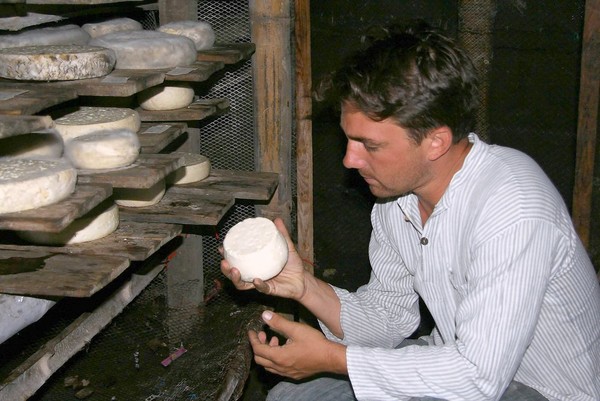
Francois Driard enters a cave dug into the
steep Himalayan hillside, scares off a
mouse and, in a twice-weekly ritual, wipes
mold from several plate-sized wheels of
cheese sitting on crude shelves against the
wall.
Himalayas, and figured traditional French
cheese making would be right at home.
Reporting from Chandeshwori, Nepal —
Francois Driard enters a cave dug into the
steep Himalayan hillside, scares off a
mouse and, in a twice-weekly ritual, wipes
mold from several plate-sized wheels of
cheese sitting on crude shelves against the
wall.

 |  |  |  |
| If you have a picture you'd like us to feature a picture in a future quiz, please email it to us at CFitzp@aol.com. If we use it, you will receive a free analysis of your picture. You will also receive a free Forensic Genealogy CD or a 10% discount towards the purchase of the Forensic Genealogy book. |


 |  |  |  |
But he’s not forgotten his beloved cheese. In the
works are blue cheese, ricotta and goat cheese. And
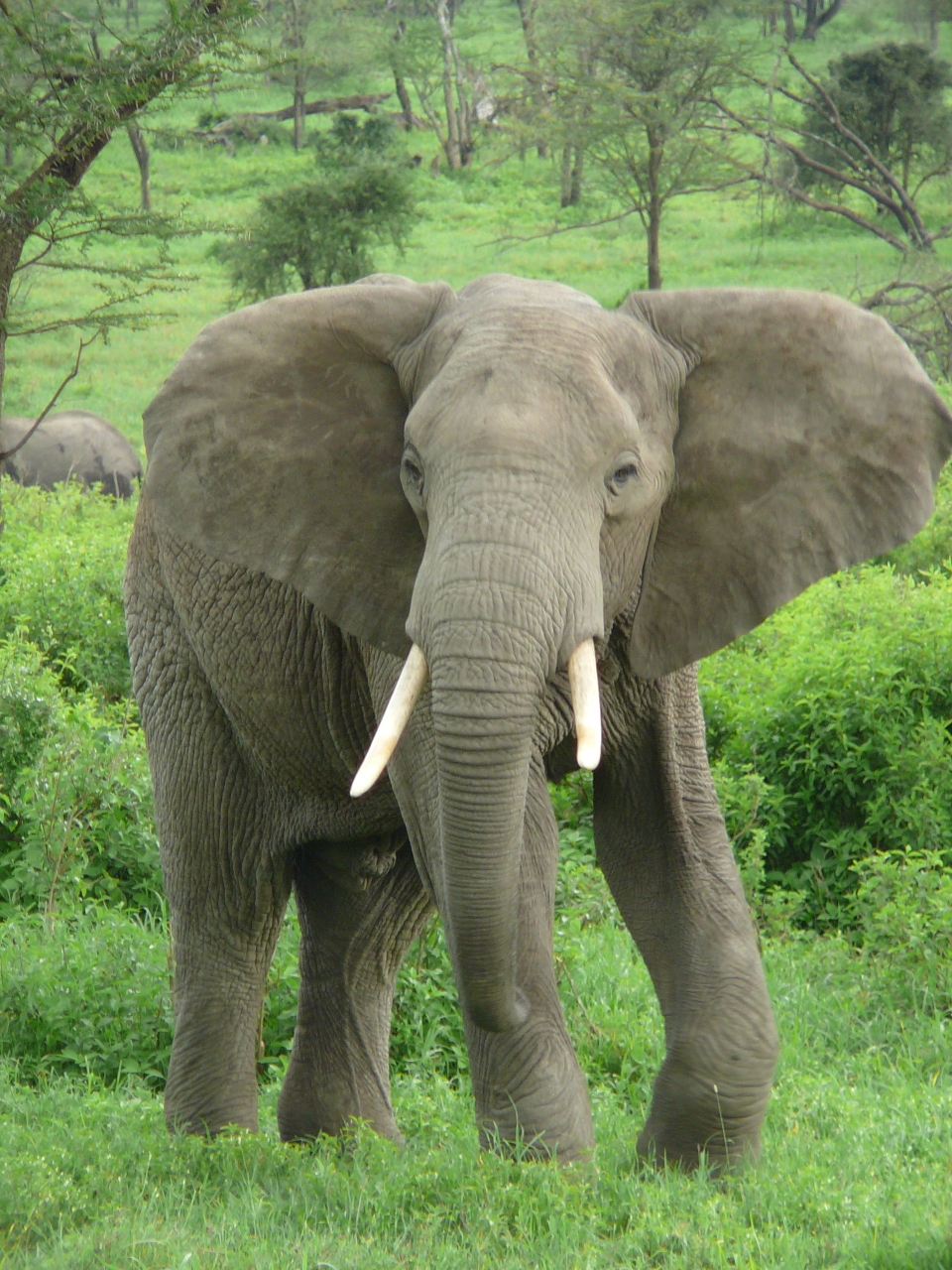
then there’s a really out-there idea: cheese from
elephant’s milk. (“They must have so much milk,”
said Driard.)
He runs through the hurdles. Most pregnant
pachyderms lactate in the jungle. So you’d have to
find them. You’d need to pacify them, which requires
a tame elephant on each side.
Then there’s milking them.
Hmm, maybe he’ll hold off on that one. “I’m not
sure,” he said. “Going under them could be quite
difficult and dangerous.”
| ********** |
| ********** |

| If you enjoy our quizzes, don't forget to order our books! Click here. |

| Quiz #296 Results |
| Quiz #296 March 13, 2011 |

Answers: 1. Cheese 2. Francois Driard is the first to produce French cheese in Nepal. 3. Fois gras, sausage, apple cider, and a delicatessen. |
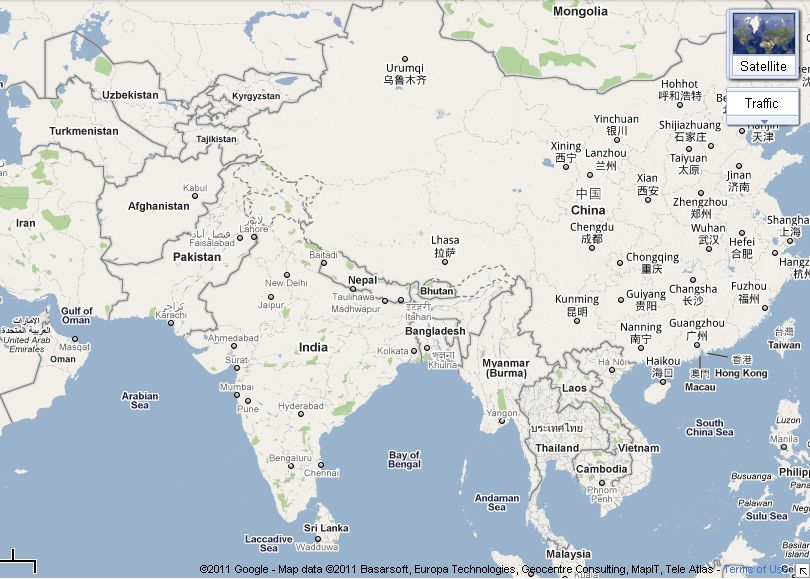
| A story from Hillary's old stompin' ground. 1. What is this man holding in his hand? 2. What "first" is he known for? 3. What are his plans for the future? |
| ********** |
| ********** |
| Congratulations to Our Winners! Diane Burkett Milene Rawlinson Barbara Battles Gary Sterne Kathleen Londagin Nicole Blank Marilyn Hamill Kathleen Londagin Jason Bowman Joyce Veness Odile Loreille |
| Extreme High The first mountaineers to attempt Everest came from the north, through Tibet. But China cut that route off when it occupied the Himalayan kingdom in 1950. Nepal, to the south of the world's mightiest peak, became the stomping ground of would-be Edmund Hillarys and Shangri La-seeking hippies. Over the past few years though, the Chinese government has relaxed border regulations in Tibet. Westerners, or at least the backpacking type, are once again welcome. A handful of companies have even started tours to the far west of the region, which few outsiders have ever visited. Excerpted from The Going Gets Tougher, Time Magazine, October 30. 2000. Read more: http://www.time.com/time/world/article/0,8599,2056308,00.html#ixzz1GyeCVHgk |
| ********** |
| French cheese maker finds a niche in Nepal Los Angeles Times January 22, 2011 by Mark Magnier articles.latimes.com/2011/jan/22/world/la-fg-nepal-cheese-20110122 |
Voila! High-end French cheese has reached a new level, literally, with Driard’s farm an
hour from Katmandu, where the 32-year-old has become what he believes is the only
French cheese maker in the Himalayas.
He acknowledges that it’s not the by-the-book operation you’d find under Europe’s
rigorous hygiene and certification requirements.
“If it’s too clean, there’s no life,” he said. “Well, no real danger of that here.”
Raised in a Parisian suburb of sidewalks and shopping malls, Driard knew nothing
hour from Katmandu, where the 32-year-old has become what he believes is the only
French cheese maker in the Himalayas.
He acknowledges that it’s not the by-the-book operation you’d find under Europe’s
rigorous hygiene and certification requirements.
“If it’s too clean, there’s no life,” he said. “Well, no real danger of that here.”
Raised in a Parisian suburb of sidewalks and shopping malls, Driard knew nothing
| Francois Driard |


about cheese making until a few years
ago. Now he’s getting rave reviews from
mostly foreign customers in one of the
world’s poorest nations. Trekking
companies even carry his cheese up Mt.
Everest to serve on expeditions.
“He’s quite famous, the French cheese
king of Katmandu, and his cheese makes
life more comfortable,” said Henrik
Hansen, a Dane working for the United
Nations in Nepal. “I was in Yemen before,
where it’s difficult to get anything but
Kalashnikovs.”
Driard’s first interest was living in Nepal,
with cheese production a pungent
afterthought. A few years out of French
business school, after taking time off to
read and working three years writing
business articles, he decided to act on his
loathing for offices.
The entrepreneur, with deep-set eyes,
brown hair and a roundish face, had been
coming to Nepal on vacation almost every
year since he was 18, and had picked up
Nepali living with a local family. So he
tried to figure out a way to move back for
good.
Over the years, he’d noticed more and
more once-unavailable Western products
appearing on shelves in Katmandu —
personal-hygiene items, wine, pistachios.
ago. Now he’s getting rave reviews from
mostly foreign customers in one of the
world’s poorest nations. Trekking
companies even carry his cheese up Mt.
Everest to serve on expeditions.
“He’s quite famous, the French cheese
king of Katmandu, and his cheese makes
life more comfortable,” said Henrik
Hansen, a Dane working for the United
Nations in Nepal. “I was in Yemen before,
where it’s difficult to get anything but
Kalashnikovs.”
Driard’s first interest was living in Nepal,
with cheese production a pungent
afterthought. A few years out of French
business school, after taking time off to
read and working three years writing
business articles, he decided to act on his
loathing for offices.
The entrepreneur, with deep-set eyes,
brown hair and a roundish face, had been
coming to Nepal on vacation almost every
year since he was 18, and had picked up
Nepali living with a local family. So he
tried to figure out a way to move back for
good.
Over the years, he’d noticed more and
more once-unavailable Western products
appearing on shelves in Katmandu —
personal-hygiene items, wine, pistachios.
| Gary Sterne Nomated for Quizmaster of the Year |
| I googled "hiliary's stomping ground" and it wanted to search for "hillary's stomping ground". I found this site. www.time.com/time/world/article/0,8599,2056308,00.html#ixzz1GyeCVHgk So the stomping ground is Nepal. It looked like cheese to me. I googled images for "man holding cheese nepal" and found this site with the picture and the story. www.latimes.com/news/nationworld/world/la-fg-nepal-cheese-20110 122,0,3643649. So he is holding cheese. Gary Sterne N.B. It is rare that a Quizmaster comes up with a link that is such a perfect fit to a quiz. I did not know about this article in Time Magazine when I proposed the hint about Sir Edmund Hillary. Gary is hereby nominated for Quizmaster of the Year. Winners will be announced at our annual quiz banquet later this year. |
The one-acre farm has a three-bedroom stone farmhouse and a shed full of cows
surrounded by a landscape of terraced fields, thatched roofs and marigolds. Ducks
quack and goats frolic, even though, Driard said, “I hate goats. They eat everything.”
The village is a lush mountainside community of farmers tending modest fields. But
upscale houses, cellphone shops and other tendrils of development are creeping in from
the capital.
Driard has trouble sitting still and spends a lot of time in Katmandu, leaving much of the
manure shoveling, milking and feeding to hired hands who, in a bit of management-
speak carryover, he refers to as his “team.”
“Running a farm is boring,” he said. “I’m a farmer with an iPhone.”
His neighbors are a bit mistrustful of this wacky Frenchman, hardly the embodiment of
pastoral bliss, in their midst. “I have a girlfriend. I come and go at odd hours. Lots of
friends come over,” Driard said.
He makes more than 6,500 pounds of cheese a year in the style of France’s Tomme de
Savoie variety, which he calls French Himalayan and sells to retail customers for about
$9 a pound. Some customers take it home to Bhutan, Thailand, even mother France.
surrounded by a landscape of terraced fields, thatched roofs and marigolds. Ducks
quack and goats frolic, even though, Driard said, “I hate goats. They eat everything.”
The village is a lush mountainside community of farmers tending modest fields. But
upscale houses, cellphone shops and other tendrils of development are creeping in from
the capital.
Driard has trouble sitting still and spends a lot of time in Katmandu, leaving much of the
manure shoveling, milking and feeding to hired hands who, in a bit of management-
speak carryover, he refers to as his “team.”
“Running a farm is boring,” he said. “I’m a farmer with an iPhone.”
His neighbors are a bit mistrustful of this wacky Frenchman, hardly the embodiment of
pastoral bliss, in their midst. “I have a girlfriend. I come and go at odd hours. Lots of
friends come over,” Driard said.
He makes more than 6,500 pounds of cheese a year in the style of France’s Tomme de
Savoie variety, which he calls French Himalayan and sells to retail customers for about
$9 a pound. Some customers take it home to Bhutan, Thailand, even mother France.
| Home to make homemade cheese |
| Tomme de Savoie is a variety of Tomme cheese from Savoie in the French Alps. It is a |
“He’s definitely the best around,” said
Hansen, the U.N. worker, “and the most
expensive.”
For your average local just scraping by,
such extravagance for a bit of old milk
is unthinkable.
“We wouldn’t buy that kind of cheese,”
said Bhaktamaya Nepali, 39, a
Katmandu homemaker whose family
lives on $275 a month. “It’s expensive,
and the money is better spent on
clothes, food, education, basic
necessities.”
Driard sells some of his cheese to
restaurants catering to tourists.
“French customers are very pleased and
surprised to get real cheese here,” said
Christine Regnier, owner of the Delices
de France restaurant in Katmandu. “You
know the French and their cheese.”
But the real gold mine for him is five-star

| mild, semi-firm cow's milk cheese with a beige interior and a thick brownish-grey rind. Tomme de Savoie, like most Tommes, is usually made from the skim milk left over after the cream is used to make butter or richer cheeses. As a result, the cheese has a relatively low fat content (between 20 and 45%). The cheese is made year-round, and typically has a slightly different character depending on whether the cows are fed on winter hay or summer grass. The cheese normally comes in discs approximately 18 cm across, 5-8 cm in thickness, and weighing between 1 and 2 kg. It is first pressed, and then matured for several months in a traditional cellar, which produces the characteristically thick rind and adds flavor. en.wikipedia.org/wiki/Tomme_de_Savoie |
| A challenge is on the horizon. |
| Comments from Our Readers |
This was a difficult quiz for me. I spent a lot of time searching for different things,
with no luck, before I thought of searching for Hillary's stomping grounds.
Gary Sterne
*****
Interesting article. Instantly knew it was cheese by the shape and the varying levels of
mold growth. Then found it by Googling "aged cheese wheels first" where there were
several references to Nepal and when I selected images, the same picture was one of
those listed. Diane Burkett
*****
I got lucky this week with a final guess of "raw cheese maker" and found the pic of the
man on the contest in Google images: thehimalayanbeacon.com/abdulkalam/2011/01...
Quite the handsome fellow but I don't know if my stomach could handle the raw
cheese! The article even made it quiver a little with its descriptions of wiping mold off
the cheese wheels.
I didn't know which Hillary you were talking about - in my mind it was another quiz
taker, not Sir Edmund - so that clue didn't help me at all with the quiz (I didn't honestly
make the connection to this Hillary until I saw this link that you sent me!). I knew for
sure though that the man in the pic was looking at cheese wheels, and with the small
batches in the cellar was pretty sure it was raw cheese batches - so I got lucky on
Google. Nicole Blank
*****
Francois is definitely in an interesting line of work. Daniel Jolley
*****
You gotta to give it to the guy, he has vision. Very nice story. Odile Loreille
with no luck, before I thought of searching for Hillary's stomping grounds.
Gary Sterne
*****
Interesting article. Instantly knew it was cheese by the shape and the varying levels of
mold growth. Then found it by Googling "aged cheese wheels first" where there were
several references to Nepal and when I selected images, the same picture was one of
those listed. Diane Burkett
*****
I got lucky this week with a final guess of "raw cheese maker" and found the pic of the
man on the contest in Google images: thehimalayanbeacon.com/abdulkalam/2011/01...
Quite the handsome fellow but I don't know if my stomach could handle the raw
cheese! The article even made it quiver a little with its descriptions of wiping mold off
the cheese wheels.
I didn't know which Hillary you were talking about - in my mind it was another quiz
taker, not Sir Edmund - so that clue didn't help me at all with the quiz (I didn't honestly
make the connection to this Hillary until I saw this link that you sent me!). I knew for
sure though that the man in the pic was looking at cheese wheels, and with the small
batches in the cellar was pretty sure it was raw cheese batches - so I got lucky on
Google. Nicole Blank
*****
Francois is definitely in an interesting line of work. Daniel Jolley
*****
You gotta to give it to the guy, he has vision. Very nice story. Odile Loreille
| ********** |