| XXXXX |
| XXX |
head which penetrated the skull. The Sergeant then cut off Chief Mkwawa's head and
took it to Iringa town as a proof that Chief Mkwawa was no more.
Chief Mkwawa's headless body was handed to his family for burial. His skull was sent
to German and kept at Bremen Anthropological Museum. The headless body was buried
at Mlambalasi.The other bodyguard body was also buried at Mlambalasi. The death of
Chief Mkwawa marked the destruction of the Hehe kingdom and power.
The ambush of the German forces at Lugalo on August 17th 1891, the destruction of
the Hehe fort at Kalenga on 30th October 1894 and the death of Chief Mkwawa on 19th
June 1898 were key events in the German colonization in East Africa.
After his death, German soldiers removed Mkwawa's head. The skull was sent to Berlin
and probably ended up in a Bremen museum. In 1918 the then British Administrator of
German East Africa H.A. Byatt proposed to his government that it should demand a
return of the skull to Tanganyika in order to reward the Wahehe for their cooperation
with the British during the war and in order to have a symbol assuring the locals of the
definitive end of German power. The skull's return was stipulated in the 1919 Treaty of
Versailles:
"ARTICLE 246. Within six months from the coming into force of the present Treaty, ...
Germany will hand over to His Britannic Majesty's Government the skull of the Sultan
Mkwawa which was removed from the Protectorate of German East Africa and taken
to Germany."
The Germans disputed the removal of the said skull from East Africa and the British
government took the position that the whereabouts could not be traced.
took it to Iringa town as a proof that Chief Mkwawa was no more.
Chief Mkwawa's headless body was handed to his family for burial. His skull was sent
to German and kept at Bremen Anthropological Museum. The headless body was buried
at Mlambalasi.The other bodyguard body was also buried at Mlambalasi. The death of
Chief Mkwawa marked the destruction of the Hehe kingdom and power.
The ambush of the German forces at Lugalo on August 17th 1891, the destruction of
the Hehe fort at Kalenga on 30th October 1894 and the death of Chief Mkwawa on 19th
June 1898 were key events in the German colonization in East Africa.
After his death, German soldiers removed Mkwawa's head. The skull was sent to Berlin
and probably ended up in a Bremen museum. In 1918 the then British Administrator of
German East Africa H.A. Byatt proposed to his government that it should demand a
return of the skull to Tanganyika in order to reward the Wahehe for their cooperation
with the British during the war and in order to have a symbol assuring the locals of the
definitive end of German power. The skull's return was stipulated in the 1919 Treaty of
Versailles:
"ARTICLE 246. Within six months from the coming into force of the present Treaty, ...
Germany will hand over to His Britannic Majesty's Government the skull of the Sultan
Mkwawa which was removed from the Protectorate of German East Africa and taken
to Germany."
The Germans disputed the removal of the said skull from East Africa and the British
government took the position that the whereabouts could not be traced.
counterattacked Mkwawa's fortress at Kalenga. Although they took the fort, Mkwawa
managed to escape.
Chief Mkwawa exercised an inexplicable influence over the natives who, when the
pursuing troops surprised his camp, would time after time hurl themselves on the
soldiers, sacrificing themselves merely to give Chief Mkwawa the chance to escape. No
scheme for his capture was possible, and no German knew even what he looked like.In
1898 when German Governor offered a reward of 5,000 rupees for Chief Mkwawa's
head, there was no Hehe willing to take it.
Mkwawa conducted a campaign of guerrilla warfare, harassing the Germans. On June
19th 1898, Chief Mkwawa set his last camp at Mlambalasi on the way to Kalenga to
secretly inspect his fort. The Hehe came to warn him that a company of German forces
led by Sergeant Merckel was near by. Chief Mkwawa realized that he could not get
away. It was the end. But he was not going to be taken as prisoner.
He had two bodyguards with him. He ordered one to collect firewood and light a fire.
When it was burning,he sent the other to fetch more firewood. This bodyguard, who
managed to escape.
Chief Mkwawa exercised an inexplicable influence over the natives who, when the
pursuing troops surprised his camp, would time after time hurl themselves on the
soldiers, sacrificing themselves merely to give Chief Mkwawa the chance to escape. No
scheme for his capture was possible, and no German knew even what he looked like.In
1898 when German Governor offered a reward of 5,000 rupees for Chief Mkwawa's
head, there was no Hehe willing to take it.
Mkwawa conducted a campaign of guerrilla warfare, harassing the Germans. On June
19th 1898, Chief Mkwawa set his last camp at Mlambalasi on the way to Kalenga to
secretly inspect his fort. The Hehe came to warn him that a company of German forces
led by Sergeant Merckel was near by. Chief Mkwawa realized that he could not get
away. It was the end. But he was not going to be taken as prisoner.
He had two bodyguards with him. He ordered one to collect firewood and light a fire.
When it was burning,he sent the other to fetch more firewood. This bodyguard, who
Paramount Chief Mkwavinyika Munyigumba
Mwamuyinga (1855–19 July 18981), more commonly
known as Chief Mkwawa, was a Hehe tribal leader in
German East Africa (now mostly the mainland part of
Tanzania) who opposed the German colonisation. The
name "Mkwawa" is derived from Mukwava, itself a
shortened form of Mukwavinyika, meaning
"conqueror of many lands". Mkwawa was born in
Luhota and was the son of Chief Munyigumba, who
died in 1879.
During the second half of the 19th century the Hehe
became one of the most powerful tribes in central
Tanzania overpowering one group after another until
by the late 1880s they were threatening trade traffic
along the caravan route to Bagamoyo.
In July 1891, the German commissioner, Emil von
Zelewski, led a battalion of soldiers (320 askaris with
officers and porters) to suppress the Hehe. On 17
August, they were attacked by Mkwawa's 3,000-
strong army at Lugalo, who, despite only being
equipped with spears and a few guns, quickly
overpowered the German force and killed Zelewski.
In response, the Germans placed a bounty on
Mkwawa's head.
On 28 October 1894, the Germans, under the new
commissioner Colonel Freiherr Friedrich von Schele,
Mwamuyinga (1855–19 July 18981), more commonly
known as Chief Mkwawa, was a Hehe tribal leader in
German East Africa (now mostly the mainland part of
Tanzania) who opposed the German colonisation. The
name "Mkwawa" is derived from Mukwava, itself a
shortened form of Mukwavinyika, meaning
"conqueror of many lands". Mkwawa was born in
Luhota and was the son of Chief Munyigumba, who
died in 1879.
During the second half of the 19th century the Hehe
became one of the most powerful tribes in central
Tanzania overpowering one group after another until
by the late 1880s they were threatening trade traffic
along the caravan route to Bagamoyo.
In July 1891, the German commissioner, Emil von
Zelewski, led a battalion of soldiers (320 askaris with
officers and porters) to suppress the Hehe. On 17
August, they were attacked by Mkwawa's 3,000-
strong army at Lugalo, who, despite only being
equipped with spears and a few guns, quickly
overpowered the German force and killed Zelewski.
In response, the Germans placed a bounty on
Mkwawa's head.
On 28 October 1894, the Germans, under the new
commissioner Colonel Freiherr Friedrich von Schele,

 |  |  |  |
| If you have a picture you'd like us to feature a picture in a future quiz, please email it to us at CFitzp@aol.com. If we use it, you will receive a free analysis of your picture. You will also receive a free Forensic Genealogy CD or a 10% discount towards the purchase of the Forensic Genealogy book. |


 |  |  |  |
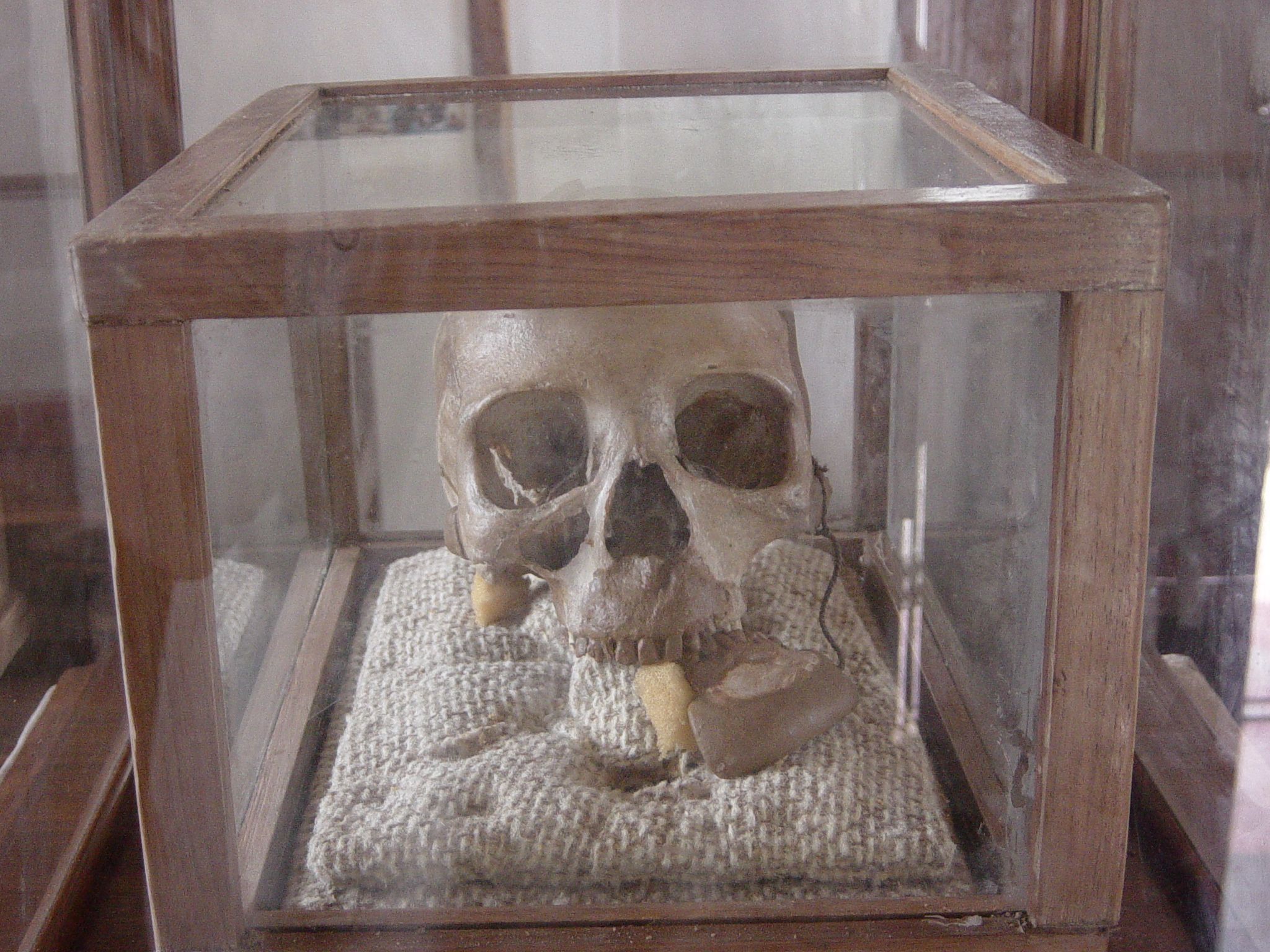
| Within the same period [six months from the coming into force of the Treaty] Germany will hand over to his Britannic Majesty's Government the skull oj the Sultan Mkwawa, which was removed from the Protectorate of German East Africa and taken to Germany. —Article 246, Treaty of Versailles Inside this famed skull had been the shrewd brain of the black Sultan Mkwawa of Tanganyika. Some say he died by his own hand, others that he was beheaded when his rebellion in the 90's against the Imperial Germanization of East Africa failed and he was about to be captured. Inside the living skulls of the Negroes of East Africa grew a superstition that they were doomed to endless calamity until Mkwawa's skull was returned to them The Britons who tried to rule them bribed the tribal chiefs into loyalty. But without the skull, the chiefs lost all prestige and power among their people. Meanwhile the German Government, not particularly anxious to help British rule in what had once been Germany's great African colony, denied that it had ever removed the skull from East African territory Last week came evidence that Germany had not lied, in a letter to The East African Standard from H. Malcolm Ross, British land agent in Tanganyika. In 1921, he wrote, while custodian of enemy property, he had found a pile of packing cases in a German warehouse in the East African lake town of Bukoba. One "was slightly packed with sawdust and had a smaller case inside. This also was very well made and strongly fastened. When I opened this the contents proved to be a native's skull. Whether this was the skull of Mkwawa I cannot say, but very great care had been taken in packing it." He concluded that he did not know what became of the skull, because he left it where it was. Time Magazine Monday Sept 11, 1933 www.time.com/time/magazine/article/0,9171,746025,00.html |
| Mkwawa Memorial Museum at Kalenga picasaweb.google.com/magoto4/Kalenga?fgl=true&pli=1# |
| ********** |

| If you enjoy our quizzes, don't forget to order our books! Click here. |

| Quiz #288 Results |
| Answer to Quiz #288 January 16, 2011 |

Answers: 1. The Treaty of Versailles, ending WWI. 2. Chief Mkwawa of the Hehe people 3. To reward the Hehe people for cooperating with the British during World War I and provide them with a symbol of the end of German rule over them |
| 1. This was a line item in what famous treaty? 2. Whose skull was it? 3. Why was it asked to be returned? |
| Thanks to Quizmaster Emeritus Stan Read for submitting this puzzle. |
| ********** |
| The idea for this quiz was submitted by Gerald Vanlandingham. |
| ********** |
So...do you think they got the right skull? Joe Ruffner
N. B. Nadhani yako ni nzuri kama yangu. (Swahili for "your guess is as good as
mine". - Q. Gen.
*****
I had known of other major issues with that treaty that affected subsequent actions of
Germany, but certainly had never heard of this detail. This was a very interesting
discovery! Maureen O'Connor
*****
Colleen, I found my initial lead with a yahoo search of the terms "skull
treaty". Thank you very much for the fascinating history lesson. I thought I
knew a lot of miscellanea, but this was is a new one for me. Fortunately, I just love
little known history. George E. Wright
*****
I can't credit the stories that the people superstitiously believed that their country was
doomed unless the skull was reunited with the body; that seems a rather patronizing
explanation. Nelsen Spickard
*****
To reward the Wahee for their cooperation with the British during the war. You should
have asked which war ;-P Odile Loreille
*****
Great Quiz!, I did not know this! At first, when I saw the picture of a skull in a glass
display case, I immediately thought of the Mutter Museum in Philadelphia. I thought it
might have something to do with some medical anomaly. Then I noticed the missing
mandible and did some reading on traumatic war wounds, focusing on the Civil War for
some reason. Then I thought it might have something to do with repatriations of Native
American artifacts and human remains (like Kennewick Man). Then on a whim, I just
took a stab at google search parameters: skull & Versailles Treaty and found the
answer. Very interesting, I did not know that! Have a great week.
Robert W. Steinmann Jr.
*****
Googleing "Skull treaty" gave me enough information to find the Wikipidia article. Didn't
need to try flipping picture for TinEye. Interesting how skull found. Sure enough that
no one complains. Arthur Hartwell
*****
IN-teresting.
I was bored this morning and decided to give this an off-the-wall treatment (after giving
up yesterday).
I pulled up "view image info" about the photo itself and its nametag, "otohplluks." I
googled that exact string but came up empty handed. Then I extrapolated it into a name
"Otto h. polluks." No results there, either (but it WAS interesting!).
I was sure the name has something to do with the photo, but what? [after solving the
puzzle, I realize it must be the name of the submitter- not related to the search].
But wait! There I go. I advance-searched Google's picture searcher using the terms
"skull" and "treaty." After scrolling through an impossible number of skull photos, there
was ours, at http://lanalog.blogspot.com/2008_01_01_archive.html
Moral of this story: if you're googling for a photo, use a _photo_search_ engine :)
Marjorie Wilser
N.B. Read the name of the photo backwards. I did this because I reversed the picture
right to left so that it would NOT be picked up by the search engines. - Q. Gen.
*****
One of the truly wonderful characteristics of these quizzes is that they don't have to be
difficult to be fascinating. Even when they deal with subject I may know something
about (not often), they come at it from some obtuse angle that makes it all fresh. It's a
hopeless addiction, no possibility of rehab. Peter Norton
N.B. We've been working on quiz-methadone, but it won't be publicly available for a
while. -Q. Gen.
*****
I think that the fact that this particular skull was the only one with a bullet hole in it was
at least circumstantial evidence that it was that of the chief. Jim Bullock
*****
I remember briefly learning about the Treaty of Versailles in high school, but they never
mentioned this tidbit as being part of it. I think it would have made it a little more
interesting to know that! Nicole Blank
*****
How I found this: a search for Treaty Skull returned this Time Magazine article from
1933: www.time.com/time/magazine/article/0,9171,746025,00.html
Edward Vielmetti
N. B. Nadhani yako ni nzuri kama yangu. (Swahili for "your guess is as good as
mine". - Q. Gen.
*****
I had known of other major issues with that treaty that affected subsequent actions of
Germany, but certainly had never heard of this detail. This was a very interesting
discovery! Maureen O'Connor
*****
Colleen, I found my initial lead with a yahoo search of the terms "skull
treaty". Thank you very much for the fascinating history lesson. I thought I
knew a lot of miscellanea, but this was is a new one for me. Fortunately, I just love
little known history. George E. Wright
*****
I can't credit the stories that the people superstitiously believed that their country was
doomed unless the skull was reunited with the body; that seems a rather patronizing
explanation. Nelsen Spickard
*****
To reward the Wahee for their cooperation with the British during the war. You should
have asked which war ;-P Odile Loreille
*****
Great Quiz!, I did not know this! At first, when I saw the picture of a skull in a glass
display case, I immediately thought of the Mutter Museum in Philadelphia. I thought it
might have something to do with some medical anomaly. Then I noticed the missing
mandible and did some reading on traumatic war wounds, focusing on the Civil War for
some reason. Then I thought it might have something to do with repatriations of Native
American artifacts and human remains (like Kennewick Man). Then on a whim, I just
took a stab at google search parameters: skull & Versailles Treaty and found the
answer. Very interesting, I did not know that! Have a great week.
Robert W. Steinmann Jr.
*****
Googleing "Skull treaty" gave me enough information to find the Wikipidia article. Didn't
need to try flipping picture for TinEye. Interesting how skull found. Sure enough that
no one complains. Arthur Hartwell
*****
IN-teresting.
I was bored this morning and decided to give this an off-the-wall treatment (after giving
up yesterday).
I pulled up "view image info" about the photo itself and its nametag, "otohplluks." I
googled that exact string but came up empty handed. Then I extrapolated it into a name
"Otto h. polluks." No results there, either (but it WAS interesting!).
I was sure the name has something to do with the photo, but what? [after solving the
puzzle, I realize it must be the name of the submitter- not related to the search].
But wait! There I go. I advance-searched Google's picture searcher using the terms
"skull" and "treaty." After scrolling through an impossible number of skull photos, there
was ours, at http://lanalog.blogspot.com/2008_01_01_archive.html
Moral of this story: if you're googling for a photo, use a _photo_search_ engine :)
Marjorie Wilser
N.B. Read the name of the photo backwards. I did this because I reversed the picture
right to left so that it would NOT be picked up by the search engines. - Q. Gen.
*****
One of the truly wonderful characteristics of these quizzes is that they don't have to be
difficult to be fascinating. Even when they deal with subject I may know something
about (not often), they come at it from some obtuse angle that makes it all fresh. It's a
hopeless addiction, no possibility of rehab. Peter Norton
N.B. We've been working on quiz-methadone, but it won't be publicly available for a
while. -Q. Gen.
*****
I think that the fact that this particular skull was the only one with a bullet hole in it was
at least circumstantial evidence that it was that of the chief. Jim Bullock
*****
I remember briefly learning about the Treaty of Versailles in high school, but they never
mentioned this tidbit as being part of it. I think it would have made it a little more
interesting to know that! Nicole Blank
*****
How I found this: a search for Treaty Skull returned this Time Magazine article from
1933: www.time.com/time/magazine/article/0,9171,746025,00.html
Edward Vielmetti
| Comments from Our Readers |
| Congratulations to Our Winners! Joshua Kreitzer Roberta Martin Carol Farrant Audrey Nicholson Debbie Sterbinsky Elaine C. Hebert Jim Kiser Katie Weiss Betty Chambers Marilyn Hamill Edward Vielmetti Stan Read Peter Norton Gary Sterne Joe Ruffner Margaret Waterman Debbie Johnson Carl Blessing Maureen O'Connor George E. Wright Alex Sissoev Margaret Paxton Nelsen Spickard Vic Brabender Stephen Jolley Wendy Plew Donna Jolley Daniel E. Jolley Odile Loreille JoLynn Pfeiffer Robert W. Steinmann, Jr. Nicole Blank Arthur Hartwell Jim Bullock Molly Collins Marjorie Wilser Evan Hindman Joyce Veness Wayne Douglas Mary Fraser Diane Burkett |

| New York Times May 12, 1919 query.nytimes.com... |
| Chief Mkwawa's Skull en.wikipedia.org/wiki/Chief_Mkwawa www.beep.com/members45/poetryrose/konigsberg.htm www.mkwawa.com/mlambalasi |
overheard what the Hehe told the Chief, realized that
Chief Mkwawa was about to kill himself but that he
would first shoot his two bodyguards so they should
accompany him to the other world.
The bodyguard ran some way into the forest, then
stood listening. When he heard the first shot he knew
that it had taken the life of his companion. A few
moment later, he heard the second shot and knew
that Chief Mkwawa had taken his own life. Chief
Mkwawa shot himself in such a way that his body
fell into the fire. This is how he hoped to prevent the
Germans from capturing him even in death.
At this moment, the German patrol appeared. The
bodyguard told the Sergeant that Chief Mkwawa was
dead, pointing to the bodies. The Sergeant did not
believe him and aimed a shot at Chief Mkwawa's
Chief Mkwawa was about to kill himself but that he
would first shoot his two bodyguards so they should
accompany him to the other world.
The bodyguard ran some way into the forest, then
stood listening. When he heard the first shot he knew
that it had taken the life of his companion. A few
moment later, he heard the second shot and knew
that Chief Mkwawa had taken his own life. Chief
Mkwawa shot himself in such a way that his body
fell into the fire. This is how he hoped to prevent the
Germans from capturing him even in death.
At this moment, the German patrol appeared. The
bodyguard told the Sergeant that Chief Mkwawa was
dead, pointing to the bodies. The Sergeant did not
believe him and aimed a shot at Chief Mkwawa's

surviving relatives of Chief Mkwawa; from this selection he picked the only skull with a
bullet-hole as the skull of chief Mkwawa.
The skull was finally returned on 9 July 1954, and now resides at the Mkwawa
Memorial Museum in Kalenga, near the town of Iringa.
bullet-hole as the skull of chief Mkwawa.
The skull was finally returned on 9 July 1954, and now resides at the Mkwawa
Memorial Museum in Kalenga, near the town of Iringa.


| ********** |
| Entrance to Museum |
| Skull Exhibit |
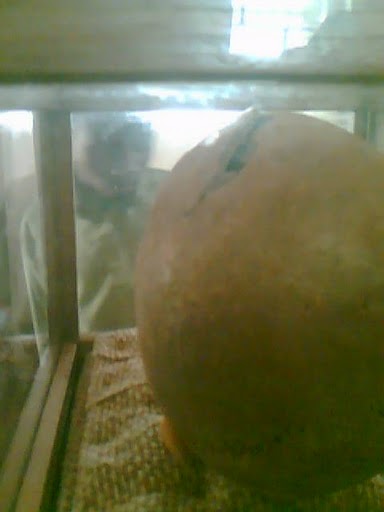
| Two Views of Mkwawa's Skull |
| ********** |
| For more pictures of the Museum, click here. |
| ********** |
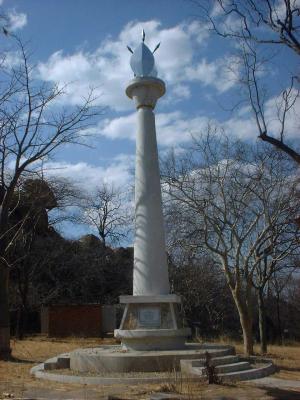
| Mlumbalasi, where the headless body of Chief Mkawa is buried. |
However, after World War II the Governor of
Tanganyika, Sir Edward Twining, took up the
issue again. After enquiries he was directed to
the Bremen Museum which he visited himself
in 1953. The Museum had a collection of 2000
skulls, 84 of which originated from the former
German East Africa. He short-listed the ones
which showed measurements similar to
Tanganyika, Sir Edward Twining, took up the
issue again. After enquiries he was directed to
the Bremen Museum which he visited himself
in 1953. The Museum had a collection of 2000
skulls, 84 of which originated from the former
German East Africa. He short-listed the ones
which showed measurements similar to
| Just for fun, try this page about the museum in Swahili: francisgodwin.blogspot.com/2010/07/eng-gabriel-mkalinga-msomi-na-mgombea.html |