photographs of sharecroppers.
Evans continued to work for the FSA until 1938. That year, an exhibition, Walker
Evans: American Photographs, was held at The Museum of Modern Art, New York.
This was the first exhibition in this museum devoted to the work of a single
photographer. The catalogue included an accompanying essay by Lincoln Kirstein,
whom Evans had befriended in his early days in New York.
In 1938, Evans also took his first photographs in the New York subway with a camera
hidden in his coat. These would be collected in book form in 1966 under the title
Evans continued to work for the FSA until 1938. That year, an exhibition, Walker
Evans: American Photographs, was held at The Museum of Modern Art, New York.
This was the first exhibition in this museum devoted to the work of a single
photographer. The catalogue included an accompanying essay by Lincoln Kirstein,
whom Evans had befriended in his early days in New York.
In 1938, Evans also took his first photographs in the New York subway with a camera
hidden in his coat. These would be collected in book form in 1966 under the title
snapshots during a European trip. Upon his return to New York, he published his first
images in 1930. During the Great Depression, Evans began to photograph for the
Resettlement Administration, later known as the Farm Security Administration (FSA),
documenting workers and architecture in the Southeastern states.
In 1933, he photographed in Cuba on assignment for the publisher of Carleton Beals'
then-forthcoming book, The Crime of Cuba, photographing the revolt against the
dictator Gerardo Machado. In Cuba, Evans briefly knew Ernest Hemingway.
In 1935, Evans spent two months at first on a fixed-term photographic campaign for
the Resettlement Administration (RA) in West Virginia and Pennsylvania. From October
images in 1930. During the Great Depression, Evans began to photograph for the
Resettlement Administration, later known as the Farm Security Administration (FSA),
documenting workers and architecture in the Southeastern states.
In 1933, he photographed in Cuba on assignment for the publisher of Carleton Beals'
then-forthcoming book, The Crime of Cuba, photographing the revolt against the
dictator Gerardo Machado. In Cuba, Evans briefly knew Ernest Hemingway.
In 1935, Evans spent two months at first on a fixed-term photographic campaign for
the Resettlement Administration (RA) in West Virginia and Pennsylvania. From October
| Houghton Mifflin Harcourt October 1979 ISBN-13: 9780156234924 Order now. |
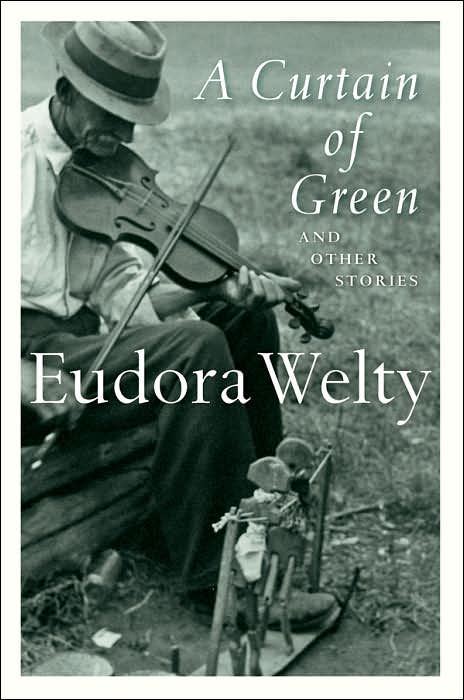
Eudora Alice Welty (April 13 1909 – July 23 2001) was an
award-winning American author and photographer who wrote
about the American South.
Welty was born in Jackson, Mississippi and lived a significant
portion of her life in the city's Belhaven neighborhood, where
her home has been preserved. She was educated at the
Mississippi State College for Women (now called Mississippi
University for Women, the University of Wisconsin-Madison,
and Columbia Business School. While at Columbia University,
where she was the captain of the women's polo team, Welty
was a regular at Romany Marie's café in 1930.
award-winning American author and photographer who wrote
about the American South.
Welty was born in Jackson, Mississippi and lived a significant
portion of her life in the city's Belhaven neighborhood, where
her home has been preserved. She was educated at the
Mississippi State College for Women (now called Mississippi
University for Women, the University of Wisconsin-Madison,
and Columbia Business School. While at Columbia University,
where she was the captain of the women's polo team, Welty
was a regular at Romany Marie's café in 1930.

 |  |  |  |
| If you have a picture you'd like us to feature a picture in a future quiz, please email it to us at CFitzp@aol.com. If we use it, you will receive a free analysis of your picture. You will also receive a free Forensic Genealogy CD or a 10% discount towards the purchase of the Forensic Genealogy book. |


 |  |  |  |
| 1. Walker Evans 2. Eudora Welty 3. She wrote a famous short story "Why I live at the P.O." |
| ********** |
| Click here to see results of 5th occasional photoquiz survey. |
| Answer to Quiz #202 - March 22, 2009 |
| ********** |
| ********** |


| If you enjoy our quizzes, don't forget to order our books! Click here. |

| Quiz #202 Results |
| Visit our blog at www.forensicgenealogy.info/blog. |
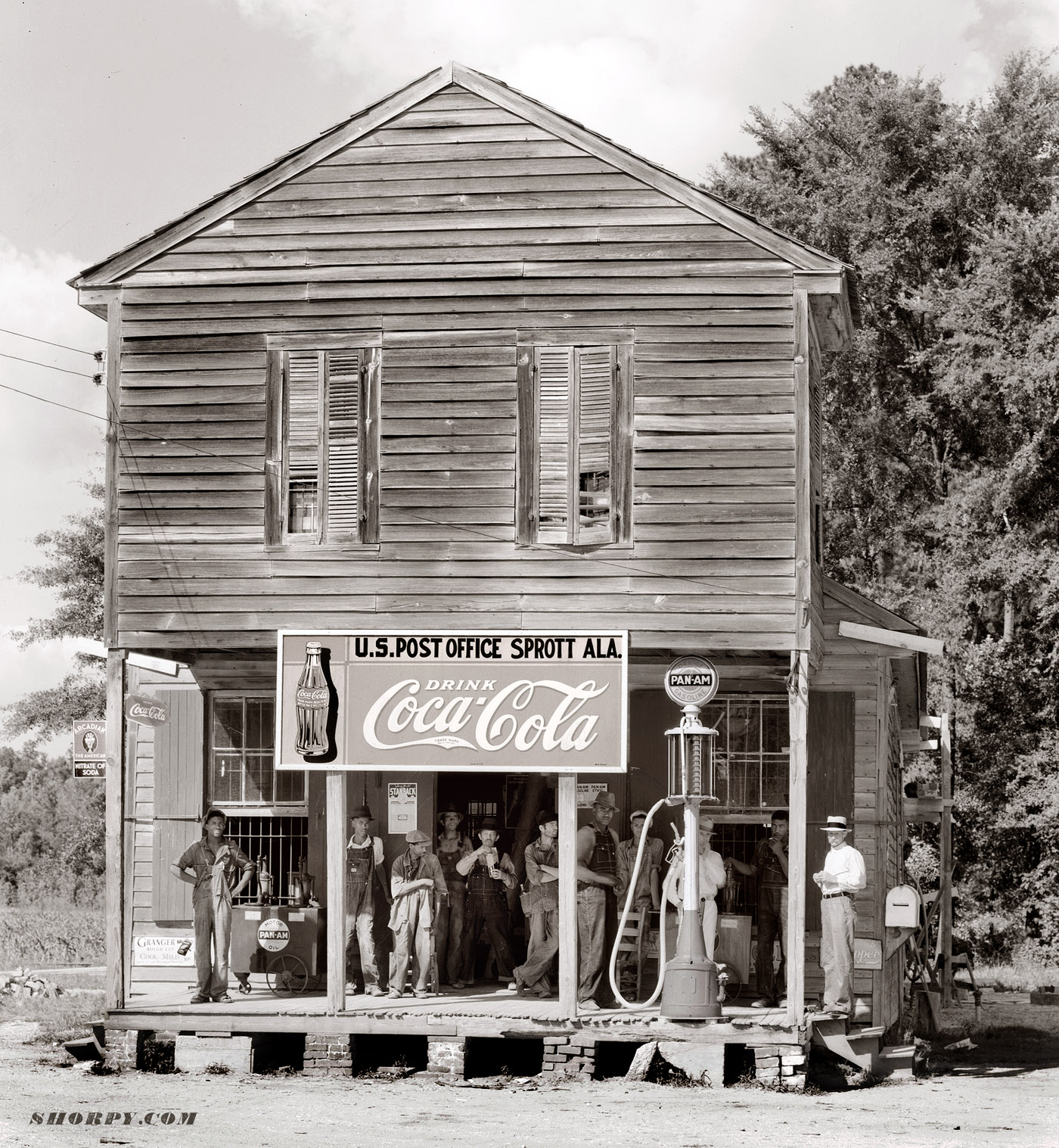
| 1. Who was the photographer who took this photograph? 2. What contemporary photographer and Pulitzer Prize winning author has an electronic mail program named after her? 3. What's her connection to a P.O.? |
| Based on a suggestion sent in by Stan Read. |
| Walker Evans b. 1903 St. Louis, MO - d. 1975 New Haven, CT http://en.wikipedia.org/wiki/Walker_Evans http://www.getty.edu/art/gettyguide/artMakerDetails?maker=1634 |
| Congratulations to Our Winners! Rick and his Quiz Angel Jina Yi do it again! Congrats team! Rex Cornelius Gina Hudson Linda Templer Alexander Shirley Ferguson Edee Scott Joshua Kreitzer Gary Sterne Carolyn Pointer Larry Slavens Marilyn Hamill Bill Hurley Wayne Douglas Mary Lee Alderman Sandra McConathy Leslie Shapard Gerald Vanlandingham Bill Utterback Margaret Bonar Laurel Fletchner Carol Lemieux Tom Tollefsen Maureen O'Connor Joe Ruffner Thomas MacEntee Margaret Waterman Mike Swierczewski Karen Kay Bunting Judy Pfaff Marjorie Wilser Mike Dalton Mary Osmar Diane Burkett Beth Long Sandy Thompson Anna Farris Tamura Jones Sharon Martin Carolyn Cornelius Jane Taubman Joan Collier Ted McChesney Gina Ortega Don Draper Carl Blessing Angela McLaughlin Carol Darrow Jane Kennedy Teresa Yu Jocelyn Thayer Elaine C. Hebert Joe McCabe Douglas G. Smith Milene Rawlinson Jim Kiser Delores Martin Robert Edward McKenna, QPL |
| Comments from Our Readers |
Good short story. With a family like that, I'd live at the P.O., too! Caroline Pointer
*****
I woke up this morning and your hint made me think “Eudora” and “Eudora Welty?”
So I looked up Eudora Welty and there was the answer. Brian Kemp
*****
That's one sad, strange story. Made me nervous reading it. Marilyn Hamill
*****
I have a book of her photographs, and have turned a few of them into oil paintings -
abstractions of her touching pictures of the old south that has mercifully disappeared.
Maureen O'Connor
*****
Funny that the two answers have inverted initials, WE & EW. I totally took the short
cut and searched for "Sprott Alabama" at Shorpy.com. Joe Ruffner
*****
Wonderful puzzle. Challenging enough to make me feel proud when I found all the
answers. We sure do learn a lot about photographers in these puzzles. I love the
picture. Mary Osmar
*****
I love Eudora Welty stories but I am also a big Simpsons fan and there is a funny
episode where one of the characters, Krusty the Clown is dating Eudora Welty.
Always makes me laugh. I had fun with this quiz and yes I thought more people would
get it. Thomas McEntee
*****
I thought this week's quiz was incredibly easy. Googling Sprott "post office" gave me
Walker Evans and "electronic mail server" gave me Eudora. Eudora Welty was the only
Eudora I could think of. At first I was confused a bit by clue #2, because I didn't
realize she had also worked as a photographer until I starting reading about her life.
Diane Burkett
*****
For me, the starting point on this one was the email program. I knew that the Eudora
program was named after an author, so that's where I started. I love these quizzes! :)
Laurel Fletchner
*****
One of the easiest I have found. Google Images gave me Walker Evans and Wikipedia
gave me all the rest. I do have an old Eudora Mail program so I recognized the name.
Wayne Douglas
*****
This week's contest was pretty easy but informative. I learned a lot about Eudora
Welty and the group of photographers who photographed the south during the mid-
thirties. Sandy Thompson
*****
I knew about Eudora Welty, because I use Eudora and, years ago, I had researched
why it was called Eudora. I understand that Eudora is about to be replaced by
Qualcomm by another, extended version e-mail client called "Penelope", but I have not
yet seen an announcement of it. I think it is available in beta, though.
Bill Utterback
*****
I woke up this morning and your hint made me think “Eudora” and “Eudora Welty?”
So I looked up Eudora Welty and there was the answer. Brian Kemp
*****
That's one sad, strange story. Made me nervous reading it. Marilyn Hamill
*****
I have a book of her photographs, and have turned a few of them into oil paintings -
abstractions of her touching pictures of the old south that has mercifully disappeared.
Maureen O'Connor
*****
Funny that the two answers have inverted initials, WE & EW. I totally took the short
cut and searched for "Sprott Alabama" at Shorpy.com. Joe Ruffner
*****
Wonderful puzzle. Challenging enough to make me feel proud when I found all the
answers. We sure do learn a lot about photographers in these puzzles. I love the
picture. Mary Osmar
*****
I love Eudora Welty stories but I am also a big Simpsons fan and there is a funny
episode where one of the characters, Krusty the Clown is dating Eudora Welty.
Always makes me laugh. I had fun with this quiz and yes I thought more people would
get it. Thomas McEntee
*****
I thought this week's quiz was incredibly easy. Googling Sprott "post office" gave me
Walker Evans and "electronic mail server" gave me Eudora. Eudora Welty was the only
Eudora I could think of. At first I was confused a bit by clue #2, because I didn't
realize she had also worked as a photographer until I starting reading about her life.
Diane Burkett
*****
For me, the starting point on this one was the email program. I knew that the Eudora
program was named after an author, so that's where I started. I love these quizzes! :)
Laurel Fletchner
*****
One of the easiest I have found. Google Images gave me Walker Evans and Wikipedia
gave me all the rest. I do have an old Eudora Mail program so I recognized the name.
Wayne Douglas
*****
This week's contest was pretty easy but informative. I learned a lot about Eudora
Welty and the group of photographers who photographed the south during the mid-
thirties. Sandy Thompson
*****
I knew about Eudora Welty, because I use Eudora and, years ago, I had researched
why it was called Eudora. I understand that Eudora is about to be replaced by
Qualcomm by another, extended version e-mail client called "Penelope", but I have not
yet seen an announcement of it. I think it is available in beta, though.
Bill Utterback
| How Gerald Solved the Puzzle |
| This is another one I had a head start on. I was already familiar with the photo and it took me about 5 seconds to find it and the answer to #1, Walker Evans, at the Library of Congress website (where you can get an 8x10 print for $28 - which would have blown the minds of anyone in the photo if they knew!) #2 and #3 threw me though. I eventually found the answer, Eudora Welty, and her short story "Why I Live at the P.O." by searching Yahoo for "email program named after photographer" and getting the top 3 replys all giving me the right answer. I'm ashamed to say though, that after reading her short story, I have no interest in living at a P.O. Gerald Vanlandingham |
| GIVING LIMERICKS A TRY There was a Post Office in Sprott, Alabama in '35 was the spot Walker Evans said "stand still" To them it was really a thrill They are still there, believe it or not! A gal living in rural Florida clime Wrote stories about a rougher time Marjorie Rawlings was her name Her stories brought her great fame Wording of her E-mail text is sublime The Post Office wanted to honor her work On a stamp with her picture was the perk Her prose, pictures and wit Made her stories a great hit With her E-mail she had to hired a clerk. Robert Edward McKenna Quiz Poet Laureate To write mail to friends is E-Z No matter where on earth they may be My letters are fine. When I send them online But I use Eudora and not Marjorie! Colleen Fitzpatrick Understudy to Robert Edward McKenna, QPL |
In April, the centennial birth month of Eudora Welty, Mississippi Public Broadcasting
has scheduled two TV special rebroadcasts of Welty in 1975 reading some of her
work. [Click here]. Also, for your information, the 1972 NY Times book review of
"The Optimist's Daughter" [can be read here]. This is the story with the New Orleans
setting that won Welty the 1973 Pulitzer prize for fiction. The YouTube video of "The
Photography of Eudora Welty" (click here) has some interesting comments including
that by Robert MacNeil formerly of the PBS MacNeil/Lehrer NewsHour. MacNeil is
the author of "Eudora Welty: Seeing Black & White". Stan Read
has scheduled two TV special rebroadcasts of Welty in 1975 reading some of her
work. [Click here]. Also, for your information, the 1972 NY Times book review of
"The Optimist's Daughter" [can be read here]. This is the story with the New Orleans
setting that won Welty the 1973 Pulitzer prize for fiction. The YouTube video of "The
Photography of Eudora Welty" (click here) has some interesting comments including
that by Robert MacNeil formerly of the PBS MacNeil/Lehrer NewsHour. MacNeil is
the author of "Eudora Welty: Seeing Black & White". Stan Read
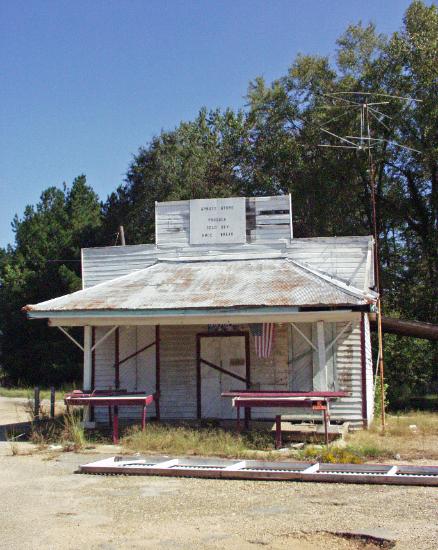
| Sprott, AL |
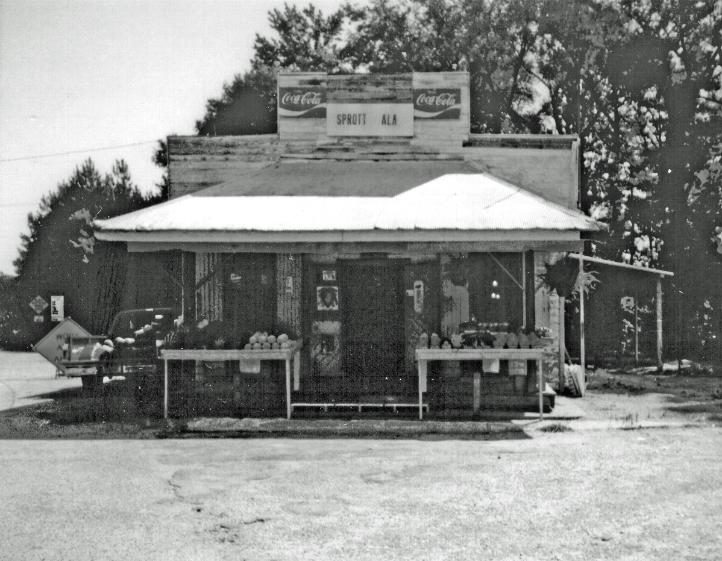
| Sprott Crossroads June 5, 1996 Dorothy Woodell www.marvhamm.com/my_.. |
| Sprott Crossroads 2005 Marv Hamm www.marvhamm.com/... |
| Sprott PO, Store & Gas Station 1935-1936 Walker Evans www.shorpy.com |
Sprott is an unincorporated community in
Perry County, Alabama, United States. It
is located at the intersection of Alabama
Highways 14, and 183, northeast of
Marion.
GPS Coordinates:
32°40′36″N
87°13′17″W
County = Perry Co., AL
Zip Code = 36756
Area Code = 334
Perry County, Alabama, United States. It
is located at the intersection of Alabama
Highways 14, and 183, northeast of
Marion.
GPS Coordinates:
32°40′36″N
87°13′17″W
County = Perry Co., AL
Zip Code = 36756
Area Code = 334
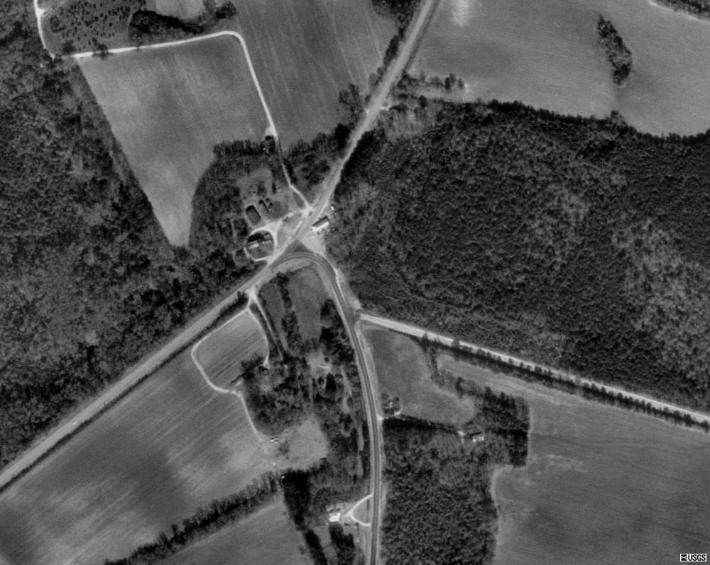
| Aerial View of Sprott, AL showing crossroads |
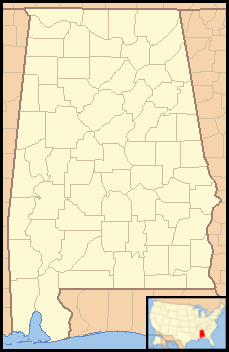
| Click on map to see location. |
| ********** |
| Comment from Stan Read, Submitter of This Week's Quiz Photo |
| ********** |
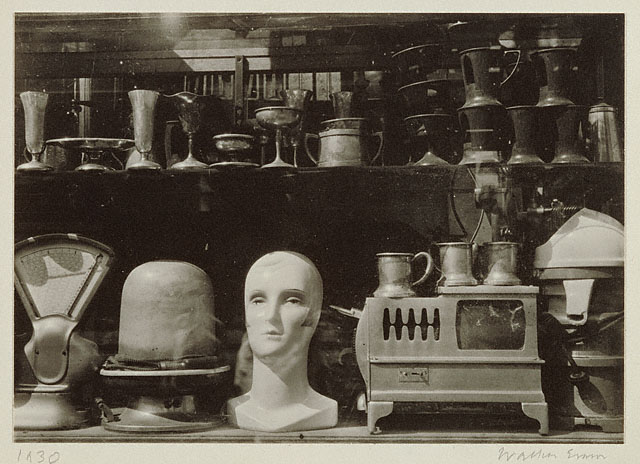
| Window of Secondhand Shop Walker Evans http://www.getty.edu... |
| Eudora Welty http://www.absoluteastronomy.com/topics/Eudora_Welty http://en.wikipedia.org/wiki/Eudora_Welty |
| ********** |
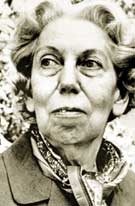
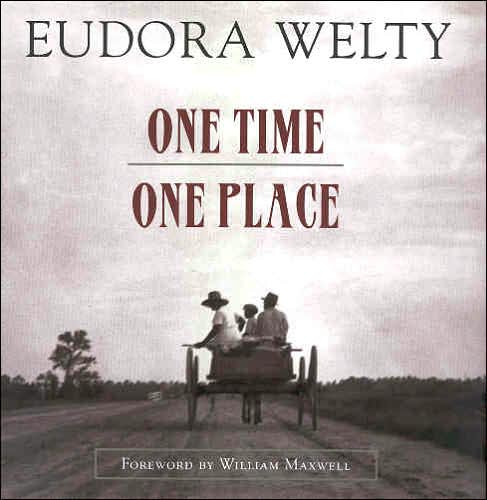
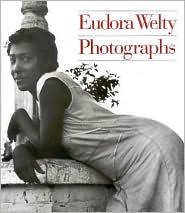
During the 1930s, Welty worked as a photographer for the Works Progress
Administration, a job that sent her all over the state of Mississippi photographing people
from all economic and social classes. A collection of her photographs was published as
One Time, One Place and Photographs.
Welty's true love was literature, not photography, and she soon devoted her energy to
writing fiction. Her first short story, "Death of a Traveling Salesman," appeared in 1936
1936 in literature. Her work attracted the attention of Katherine Anne Porter, who
became a mentor to her and wrote the foreword to Welty's first collection of short
stories, A Curtain of Green, in 1941. The book immediately established Welty as one of
American literature's leading lights and featured the legendary and oft-anthologized
stories "Why I Live at the P.O.," "Petrified Man," and "A Worn Path." Her novel The
Optomist's Daughter won the Pulitzer Prize in 1973 for literature. In 1992, Welty was
awarded the Rea Award for the Short Story for her lifetime contributions to the
American short story, and was also a charter member of the Fellowship of Southern
Administration, a job that sent her all over the state of Mississippi photographing people
from all economic and social classes. A collection of her photographs was published as
One Time, One Place and Photographs.
Welty's true love was literature, not photography, and she soon devoted her energy to
writing fiction. Her first short story, "Death of a Traveling Salesman," appeared in 1936
1936 in literature. Her work attracted the attention of Katherine Anne Porter, who
became a mentor to her and wrote the foreword to Welty's first collection of short
stories, A Curtain of Green, in 1941. The book immediately established Welty as one of
American literature's leading lights and featured the legendary and oft-anthologized
stories "Why I Live at the P.O.," "Petrified Man," and "A Worn Path." Her novel The
Optomist's Daughter won the Pulitzer Prize in 1973 for literature. In 1992, Welty was
awarded the Rea Award for the Short Story for her lifetime contributions to the
American short story, and was also a charter member of the Fellowship of Southern
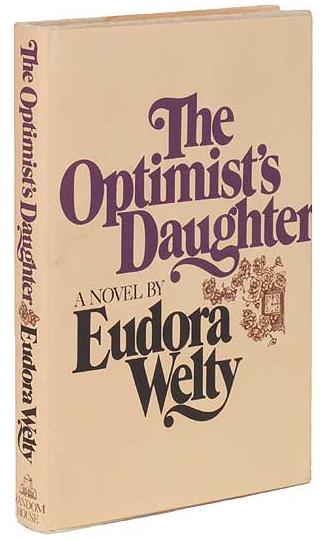
| Knopf Doubleday Publishing Group August 1990 ISBN-13: 9780679728832 Order now. |
| ********** |
1936 "Death of a Traveling Salesman" (separate short story)
1940 "A Worn Path" (separate short story)
1941 A Curtain of Green
1943 The Wide Net and Other Stories
1948 Music from Spain
1949 The Golden Apples
1954 Selected Stories
1955 The Bride of the Innisfallen and Other Stories
1965 Thirteen Stories
1982 The Collected Stories of Eudora Welty
1980 Moon Lake and Other Stories
1988 Morgana: Two Stories from The Golden Apples
1940 "A Worn Path" (separate short story)
1941 A Curtain of Green
1943 The Wide Net and Other Stories
1948 Music from Spain
1949 The Golden Apples
1954 Selected Stories
1955 The Bride of the Innisfallen and Other Stories
1965 Thirteen Stories
1982 The Collected Stories of Eudora Welty
1980 Moon Lake and Other Stories
1988 Morgana: Two Stories from The Golden Apples
| Bibliography of Eudora Welty's Literary Works http://www.eudorawelty.org/bibliography.html |
| ********** |
| Collections of Photographs by Eudora Welty |
| University of Mississippi Press May 1996 ISBN-13: 9780878058662 124 pp |

| University Press of Mississippi April 2000 ISBN-13: 9781578062355 111pp |
| University of Mississippi Press February 1993 ISBN-13: 9780878055296 226 pp |
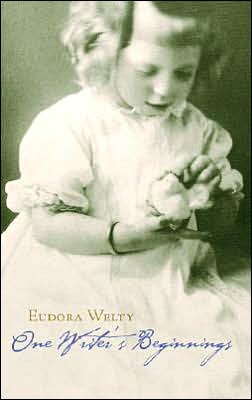
| Eudora Welty One Writer's Beginnings Harvard University Press July 1998 ISBN-13: 9780674639270 128 pp |
Forty-six weeks on the New York Times bestseller list and nominee for the National
Book Critics Award, this incomparable work--part memoir, part essay, and part
autobiography--offers a revealing look into the life of one of America's most acclaimed
writers. 8 pages of photographs.
Now available as an audio CD, in Eudora Welty's own voice, or as a book. Read more.
Book Critics Award, this incomparable work--part memoir, part essay, and part
autobiography--offers a revealing look into the life of one of America's most acclaimed
writers. 8 pages of photographs.
Now available as an audio CD, in Eudora Welty's own voice, or as a book. Read more.

Writers, founded in 1987. In her later life, she lived near
Belhaven College in Jackson, Mississippi, where, despite
her fame, she was still a common sight among the people
of her hometown.
Eudora Welty died of pneumonia in Jackson, Mississippi at
the age of 92, and is buried in Greenwood Cemetery in
Jackson.
Belhaven College in Jackson, Mississippi, where, despite
her fame, she was still a common sight among the people
of her hometown.
Eudora Welty died of pneumonia in Jackson, Mississippi at
the age of 92, and is buried in Greenwood Cemetery in
Jackson.
| For more information on literary works by or about Eudora Welty's, click here. |
| ********** |
| ********** |
Luther B. Sprott was postmaster of the
Sprott, Alabama, Post Office when this
photograph was taken in the summer of
1936. Sprott served as postmaster for
nearly 30 years, from November 1917
until his death in March 1947, having
taken over the office from his uncle,
Thomas W. Sprott. The elder Sprott, the
town’s first postmaster, served for more
than 36 years, beginning in 1881.
Photographer Walker Evans took this
well-known picture of the combination
store/Post Office while working for the
Resettlement Administration during the
Depression. In 2002 Evans was honored
with a 37-cent stamp, one of the Masters
of American Photography issue.
Sprott, Alabama, Post Office when this
photograph was taken in the summer of
1936. Sprott served as postmaster for
nearly 30 years, from November 1917
until his death in March 1947, having
taken over the office from his uncle,
Thomas W. Sprott. The elder Sprott, the
town’s first postmaster, served for more
than 36 years, beginning in 1881.
Photographer Walker Evans took this
well-known picture of the combination
store/Post Office while working for the
Resettlement Administration during the
Depression. In 2002 Evans was honored
with a 37-cent stamp, one of the Masters
of American Photography issue.
| ********** |
| ********** |
For further reading on Eudora Welty, her life, her works, and plans for the
centennial of her birth, please visit the website of Eudora Welty Foundation at
http://www.eudorawelty.org/
centennial of her birth, please visit the website of Eudora Welty Foundation at
http://www.eudorawelty.org/
| Novels |
1942 The Robber Bridegroom
1946 Delta Wedding
1954 The Ponder Heart
1964 The Shoe Bird (juvenile)
1970 Losing Battles
1972 The Optimist's Daughter
1946 Delta Wedding
1954 The Ponder Heart
1964 The Shoe Bird (juvenile)
1970 Losing Battles
1972 The Optimist's Daughter
| Short Stories |
1962 Three Papers on Fiction (criticism)
1978 The Eye of the Story (selected essays and reviews)
1983 One Writer's Beginnings (autobiography)
1991 The Norton Book of Friendship (ed, with Roland A Sharp)
2001 3 Minutes or Less (selected essay)
1978 The Eye of the Story (selected essays and reviews)
1983 One Writer's Beginnings (autobiography)
1991 The Norton Book of Friendship (ed, with Roland A Sharp)
2001 3 Minutes or Less (selected essay)
| Literary Criticism and Non-fiction |


| Steidl, Gerhard Druckerei und Verlag February 2009 ISBN-13: 9783865218292 Order now. |
| Errata Editions February 2009 ISBN-13: 9781935004028 Order now. |
| Houghton Mifflin Harcourt August 2001 ISBN-13: 9780618127498 Order now. |
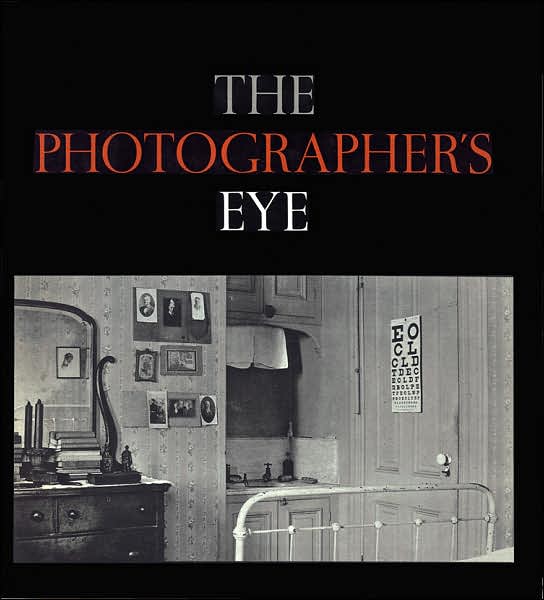
| D.A.P./Distributed Art Publishers March 2007 ISBN-13: 9780870705274 Order now. |
| ********** |
| Books Featuring the Photography of Walker Evans |
b. 1903 St. Louis,
Missouri, d. 1975
New Haven,
Connecticut
photographer
American
Missouri, d. 1975
New Haven,
Connecticut
photographer
American
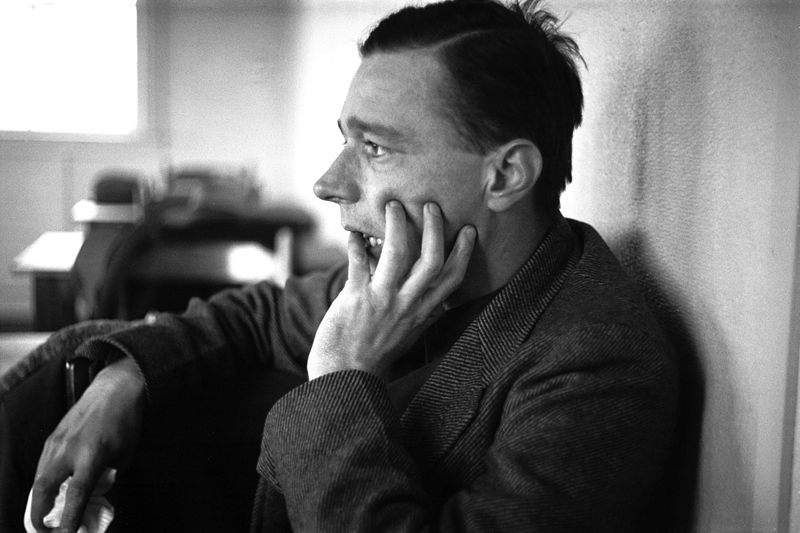
| Walker Evans 1937 |
Born in St. Louis, Missouri, Walker Evans
came from a well off family. He graduated
from Phillips Academy, in Andover, Mass.
He studied French literature for a year at
Williams College, spending much of his
time in the school's library, before dropping
out. After spending a year in Paris, he
returned to the United States to join the
edgy literary and art crowd in New York
City. John Cheever, Hart Crane, and
Lincoln Kirstein were among his friends.
Evans took up photography in 1928 making
came from a well off family. He graduated
from Phillips Academy, in Andover, Mass.
He studied French literature for a year at
Williams College, spending much of his
time in the school's library, before dropping
out. After spending a year in Paris, he
returned to the United States to join the
edgy literary and art crowd in New York
City. John Cheever, Hart Crane, and
Lincoln Kirstein were among his friends.
Evans took up photography in 1928 making

on, he continued to do photographic work for the
RA and later the Farm Security Administration
(FSA), primarily in the Southern states.
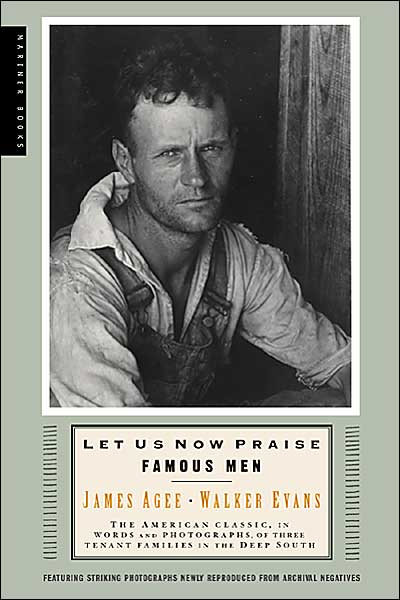
In the summer of 1936, while still working for the
FSA, he and writer James Agee were sent by
Fortune magazine on assignment to Hale County,
Alabama, for a story the magazine subsequently
opted not to run. In 1941, Evans' photographs and
Agee's text detailing the duo's stay with three white
tenant families in southern Alabama during the Great
Depression were published as the groundbreaking
book Let Us Now Praise Famous Men. Its detailed
account of three farming families paints a deeply
moving portrait of rural poverty. Noting a similarity
to the Beals' book, the critic Janet Malcolm, in her
1980 book Diana & Nikon: Essays on the Aesthetic
of Photography, has pointed out the contradiction
between a kind of anguished dissonance in Agee's
prose and the quiet, magisterial beauty of Evans'
RA and later the Farm Security Administration
(FSA), primarily in the Southern states.
In the summer of 1936, while still working for the
FSA, he and writer James Agee were sent by
Fortune magazine on assignment to Hale County,
Alabama, for a story the magazine subsequently
opted not to run. In 1941, Evans' photographs and
Agee's text detailing the duo's stay with three white
tenant families in southern Alabama during the Great
Depression were published as the groundbreaking
book Let Us Now Praise Famous Men. Its detailed
account of three farming families paints a deeply
moving portrait of rural poverty. Noting a similarity
to the Beals' book, the critic Janet Malcolm, in her
1980 book Diana & Nikon: Essays on the Aesthetic
of Photography, has pointed out the contradiction
between a kind of anguished dissonance in Agee's
prose and the quiet, magisterial beauty of Evans'
Walker Evans' Photograph of
Allie Mae Burroughs depicted
the Great Depression during
his assignment for the FWA.
Allie Mae Burroughs depicted
the Great Depression during
his assignment for the FWA.
Many are Called. In 1938 and 1939, Evans worked
with and mentored Helen Levitt.
Throughout his career Evans contributed photographs
to numerous publications, including three devoted
solely to his work. In 1965 he left Fortune, where he
had been a staff photographer for twenty years, to
become a professor of photography and graphic
design at Yale University. He remained in the position
until 1974, a year before his death.
with and mentored Helen Levitt.
Throughout his career Evans contributed photographs
to numerous publications, including three devoted
solely to his work. In 1965 he left Fortune, where he
had been a staff photographer for twenty years, to
become a professor of photography and graphic
design at Yale University. He remained in the position
until 1974, a year before his death.
| Walk Evans Photograph Collection J. Paul Getty Museum Click here. |
| Eudora is an e-mail client used on the Apple Macintosh and Microsoft Windows operating systems.The software was named after Eudora Welty because of her short story "Why I Live at the P.O." Eudora was developed by Steve Dorner in 1988 who worked at the Computer Services Organization of the University of Illinois at Urbana-Champaign. |
| Read Why I Live at the P.O. by Eudora Welty Click here. |
| Eudora the Email Program not the Writer |