| Congratulations to Our Winners Mary Fraser Grace Hertz Mike Dalton Dawn Carlile Debbie Sterbinsky Kelly Fetherlin Elaine Hebert Stan Read Sheri Fenley Ginny Siggia Margaret English Judy Pfaff Dale Niesen Emily Aulicino Kristi Murdock Michael B. Riemer Maureen O'Connor Rolf Parkes Evan Hindman Alice Miles Dorothy Oksner Jim Berry Tom Pincince Ruth Jenkins Rick Mackinney Sue Edminster Wayne Douglas Sandy Thompson Jinny Collins Raymond Cathcart Jim Kiser Sharon Martin Marjorie Wilser Bill Utterback Kitty Huddleston Marty Guidry John Chulick Mary South Rick Norman Fred Stuart Alice Hix Betty Ware Gary Sterne |
I think that Harland Sanders would appreciate your observation. Mike Dalton
*****
Yes, I’m very delighted to know that the K of C is different from the K F C! I am so
glad that I won’t be going to KFC and ordering a bucket of K of C – sounds sort of
similar if said quickly, eh? So funny! I always associated the K of C with the Masons,
in that the K of C is a predominantly Catholic organization, and the Masons seem to be
more Protestant – although, both perform many of the same world wide programs –
good acts, etc. It does seem that so many who might have accomplished so much die
at a young age, before their accomplishments are realized. With some, I think that the
glow more because their lives are cut short, they become tragic figures – and, if they
are murdered, they become martyrs for the cause. For instance, remember the
Kennedy Quiz? I’ll look forward to the next quiz! Kelly Fetherlin
*****
I was familiar with this one too. I had done a lot of cemetery research in symbolism
and had come across this and the K of P. I guess it helps to play in cemeteries
sometimes. Debbie Sterbinsk
*****
When I first saw the quiz (while we were in Houston), I knew immediately that it was
the Knights of Columbus, having grown up with it my whole life. My Daddy is a
charter member of the Marrero Council No. 4222, and was the second Grand Knight of
that council. In fact, he is still very active with it, even though the council didn't "age"
well, and most of the men are all 70+ year-olds.
But, try as I might, I could NOT find out what the letters on the back side of the
pendant meant. I Googled and Yahooed and Wikied to an exhausting level. At which
point, I had decided that it was a phony medallion; that the K.C. never had such a motto
- of course, because I had never heard of it - such egotistic stupidity - tsk, tsk, tsk!!
So, when I got back to Jackson and I had more time on my hands, I decided to go to
the top - yep, I called Daddy. First I had to make general chit-chat and of course, to
tell them all the newest "Caitlin" stories. Then, finally, I decided to admit my lack of
knowledge and ask for his help. I said, "Daddy, I have this quiz ... yadda, yadda, yadda
... the four letters are 'T' for terrific, 'F' for frank ..." He interrupts me at that point and
says, "Tempus fugit memento mori." W-H-A-T!!!! I was flabbergasted and
completely impressed, I might say - what else might my Daddy know? - and then I
remembered why I am a "Daddy's girl"! Thanks for the opportunity!
Elaine C. Hebert
*****
The K of C watchwords "tempus fugit, memento mori" (time flies, remember death)
are reminiscent of some words in Isaac Watts' grand old hymn "Our God, Our Help in
Ages Past" that is a paraphrase of the 90th Psalm.
Time like an ever-rolling stream
Bears all its sons away
They fly forgotten, as a dream
Dies at the opening day.
Stan Read
*****
At first this seemed like another one of your impossible quizzes, but once I got into it, I
found it interesting to learn a bit more about the Knights of Columbus. That discovery
process is what draws me back to these addictive quizzes. I just don't always have time
to get to the computer. Maureen O'Connor
*****
Now this brings back memories-- the men of the Kof C were always prominent in any
Church function- May Day processions,etc., and I remember as a young girl wanting
my Dad to join the KoC so that he could have a big flowy cape and sword, and one of
those feathered hats…
Only as an adult did it occur to me that the KoC was probably formed as a Catholic's
response to the Masons; their own "secret society," since they were not forbidden by
the Church to join the brotherhood of the Masons. Mary Fraser
*****
I know it well, my dad had one. It now belongs to one of my brothers. Betty Ware
*****
Yes, I’m very delighted to know that the K of C is different from the K F C! I am so
glad that I won’t be going to KFC and ordering a bucket of K of C – sounds sort of
similar if said quickly, eh? So funny! I always associated the K of C with the Masons,
in that the K of C is a predominantly Catholic organization, and the Masons seem to be
more Protestant – although, both perform many of the same world wide programs –
good acts, etc. It does seem that so many who might have accomplished so much die
at a young age, before their accomplishments are realized. With some, I think that the
glow more because their lives are cut short, they become tragic figures – and, if they
are murdered, they become martyrs for the cause. For instance, remember the
Kennedy Quiz? I’ll look forward to the next quiz! Kelly Fetherlin
*****
I was familiar with this one too. I had done a lot of cemetery research in symbolism
and had come across this and the K of P. I guess it helps to play in cemeteries
sometimes. Debbie Sterbinsk
*****
When I first saw the quiz (while we were in Houston), I knew immediately that it was
the Knights of Columbus, having grown up with it my whole life. My Daddy is a
charter member of the Marrero Council No. 4222, and was the second Grand Knight of
that council. In fact, he is still very active with it, even though the council didn't "age"
well, and most of the men are all 70+ year-olds.
But, try as I might, I could NOT find out what the letters on the back side of the
pendant meant. I Googled and Yahooed and Wikied to an exhausting level. At which
point, I had decided that it was a phony medallion; that the K.C. never had such a motto
- of course, because I had never heard of it - such egotistic stupidity - tsk, tsk, tsk!!
So, when I got back to Jackson and I had more time on my hands, I decided to go to
the top - yep, I called Daddy. First I had to make general chit-chat and of course, to
tell them all the newest "Caitlin" stories. Then, finally, I decided to admit my lack of
knowledge and ask for his help. I said, "Daddy, I have this quiz ... yadda, yadda, yadda
... the four letters are 'T' for terrific, 'F' for frank ..." He interrupts me at that point and
says, "Tempus fugit memento mori." W-H-A-T!!!! I was flabbergasted and
completely impressed, I might say - what else might my Daddy know? - and then I
remembered why I am a "Daddy's girl"! Thanks for the opportunity!
Elaine C. Hebert
*****
The K of C watchwords "tempus fugit, memento mori" (time flies, remember death)
are reminiscent of some words in Isaac Watts' grand old hymn "Our God, Our Help in
Ages Past" that is a paraphrase of the 90th Psalm.
Time like an ever-rolling stream
Bears all its sons away
They fly forgotten, as a dream
Dies at the opening day.
Stan Read
*****
At first this seemed like another one of your impossible quizzes, but once I got into it, I
found it interesting to learn a bit more about the Knights of Columbus. That discovery
process is what draws me back to these addictive quizzes. I just don't always have time
to get to the computer. Maureen O'Connor
*****
Now this brings back memories-- the men of the Kof C were always prominent in any
Church function- May Day processions,etc., and I remember as a young girl wanting
my Dad to join the KoC so that he could have a big flowy cape and sword, and one of
those feathered hats…
Only as an adult did it occur to me that the KoC was probably formed as a Catholic's
response to the Masons; their own "secret society," since they were not forbidden by
the Church to join the brotherhood of the Masons. Mary Fraser
*****
I know it well, my dad had one. It now belongs to one of my brothers. Betty Ware
The Order is dedicated to the principles of Charity, Unity, Fraternity and Patriotism. A
First Degree exemplification ceremony, by which a man joins the Order, explicates the
virtue of charity. He is then said to be a First Degree Knight of Columbus and after
participating the subsequent degrees, each of which focuses on another virtue, rises to
that status. Upon reaching the Third Degree a gentleman is considered a full member.
Priests do not participate directly in Degree exemplifications as laymen do, but rather
take the degree by observation.
Only Fourth Degree Knights may optionally purchase the full regalia and join the
Assembly’s Color Corps. The Color Corps is the most visible arm of the Knights as
they are often seen in parades and other local events wearing their colorful regalia.
Official dress for the Color Corps is a black tuxedo, baldric, white gloves, cape and
naval chapeau. White tuxedos may also be used on certain occasions. Baldrics are worn
from the right shoulder to left hip and are color specific by nation. In the United States,
baldrics are red, white and blue. Service baldrics include a scabbard for a sword and
are worn over the coat while social baldrics are worn under the coat. The colors on a
Fourth Degree Knight's cape, and chapeau, denote the office he holds within the
Degree. Faithful Navigators and Past Faithful Navigators are permitted to carry a white
handled silver sword. Masters and Vice Supreme Masters, as well as Former Masters
and Former Vice Supreme Masters, are also denoted by their gold swords.
See also http://www.carr.org/~meripper/kofc/assembly/regalia.asp.
First Degree exemplification ceremony, by which a man joins the Order, explicates the
virtue of charity. He is then said to be a First Degree Knight of Columbus and after
participating the subsequent degrees, each of which focuses on another virtue, rises to
that status. Upon reaching the Third Degree a gentleman is considered a full member.
Priests do not participate directly in Degree exemplifications as laymen do, but rather
take the degree by observation.
Only Fourth Degree Knights may optionally purchase the full regalia and join the
Assembly’s Color Corps. The Color Corps is the most visible arm of the Knights as
they are often seen in parades and other local events wearing their colorful regalia.
Official dress for the Color Corps is a black tuxedo, baldric, white gloves, cape and
naval chapeau. White tuxedos may also be used on certain occasions. Baldrics are worn
from the right shoulder to left hip and are color specific by nation. In the United States,
baldrics are red, white and blue. Service baldrics include a scabbard for a sword and
are worn over the coat while social baldrics are worn under the coat. The colors on a
Fourth Degree Knight's cape, and chapeau, denote the office he holds within the
Degree. Faithful Navigators and Past Faithful Navigators are permitted to carry a white
handled silver sword. Masters and Vice Supreme Masters, as well as Former Masters
and Former Vice Supreme Masters, are also denoted by their gold swords.
See also http://www.carr.org/~meripper/kofc/assembly/regalia.asp.

The K of C excludes women, but not non-caucasians as many other fraternal
organizations do. There is no associated women's group, but Daughters of Isabella has
sometimes been considered one. Following the example of Freemasonry, which set the
example for most fraternal orders, it has degree rituals, signs and passwords but no
oath of secrecy. Members are asked to keep the ritual secrets, but to conform to the
opposition of a long series of Popes to secret societies, no oath is required. An
organizations do. There is no associated women's group, but Daughters of Isabella has
sometimes been considered one. Following the example of Freemasonry, which set the
example for most fraternal orders, it has degree rituals, signs and passwords but no
oath of secrecy. Members are asked to keep the ritual secrets, but to conform to the
opposition of a long series of Popes to secret societies, no oath is required. An

 |  |  |  |
| If you enjoy our quizzes, don't forget to order our books! Click here. |
| If you have a picture you'd like us to feature a picture in a future quiz, please email it to us at CFitzp@aol.com. If we use it, you will receive a free analysis of your picture. You will also receive a free Forensic Genealogy CD or a 10% discount towards the purchase of the Forensic Genealogy book. |

| Quiz #114 Results |


 |  |  |  |
| Answers to Quiz #114 June 17, 2007 |


| ********** |
| ********** |
| Click here to see our reader's choice for Best Picture and the results of Survey #3, December 22, 2006. |
| ********** |
| See results of Survey #2 May 12-19, 2006 Click here. |
| See results of Survey #1 December 9-16, 2005 Click here. |
| Dead Horse Update Click HERE to read Part 1 of our analysis of the picture published 4/1/2007 in the Sheboygan Press. Click HERE to read Part II published April 8, 2007 |

| Many thanks to Quizmaster Bill Hurley for submitting these photographs. |
| 1. What organization does this pendant represent? 2. What does the abbreviation TFMM on the back of it stand for? |


| 1. The Knights of Columbus 2. Tempus Fugit Memento Mori Latin for "Time Flies - Remember Death" |
| ********** |
And on the same note, a FUNNY story regarding the splendid Fourth Degree cape,
sword and chapeaux. Since [my Dad] was so involved [with the Knights of
Columbus], he obviously made the Fourth Degree and, of course, decided to deck out
in the fancy get-up! (I used to love go to the church functions and funerals to see all
the men looking so serious and magnificent!) Anyway, not all members could afford
the outfits, so one of Daddy's friends needed an outfit for something, so he borrowed
Daddy's. But, before he could get it back to Daddy, he tragically died of a heart attack
- no warning. Since it was an honor to be in the Fourth Degree, many men opted to be
buried in their outfit - yep, you guessed it. As we approach the casket, Daddy looks
down and quietly says to Mother, "That's my cape." He never told the widow, and
consequently, he doesn't have his own outfit to be buried in when the time comes.
True story. Elaine C. Hebert
sword and chapeaux. Since [my Dad] was so involved [with the Knights of
Columbus], he obviously made the Fourth Degree and, of course, decided to deck out
in the fancy get-up! (I used to love go to the church functions and funerals to see all
the men looking so serious and magnificent!) Anyway, not all members could afford
the outfits, so one of Daddy's friends needed an outfit for something, so he borrowed
Daddy's. But, before he could get it back to Daddy, he tragically died of a heart attack
- no warning. Since it was an honor to be in the Fourth Degree, many men opted to be
buried in their outfit - yep, you guessed it. As we approach the casket, Daddy looks
down and quietly says to Mother, "That's my cape." He never told the widow, and
consequently, he doesn't have his own outfit to be buried in when the time comes.
True story. Elaine C. Hebert
| A Funny Story from Elaine C. Hebert |
The Order of the Knights of Columbus is the world's
largest Catholic fraternal service organization. Founded in
the United States in 1882, it is named in honor of
Christopher Columbus and dedicated to the principles of
Charity, Unity, Fraternity, and Patriotism. There are more
than 1.7 million members in 14,000 councils throughout
the United States, Canada, the Philippines, Mexico, Poland,
the Dominican Republic, Puerto Rico, Panama, the
Bahamas, the Virgin Islands, Guatemala, Guam, Saipan,
and most recently in Poland. Nearly 200 of these councils
are on college campuses. Membership is limited to practical
Catholic men aged 18 or older. The Knight's official junior
organization, the Columbian Squires, has over 5,000
Circles. All the Order's ceremonials and business meetings
are restricted to members though all other events are open
to the public.
largest Catholic fraternal service organization. Founded in
the United States in 1882, it is named in honor of
Christopher Columbus and dedicated to the principles of
Charity, Unity, Fraternity, and Patriotism. There are more
than 1.7 million members in 14,000 councils throughout
the United States, Canada, the Philippines, Mexico, Poland,
the Dominican Republic, Puerto Rico, Panama, the
Bahamas, the Virgin Islands, Guatemala, Guam, Saipan,
and most recently in Poland. Nearly 200 of these councils
are on college campuses. Membership is limited to practical
Catholic men aged 18 or older. The Knight's official junior
organization, the Columbian Squires, has over 5,000
Circles. All the Order's ceremonials and business meetings
are restricted to members though all other events are open
to the public.
| The Knights of Columbus http://en.wikipedia.org/wiki/Knights_of_Columbus http://www.kofc.org/un/about/index.cfm http://www.rootsweb.com/~srgp/flaghold/flag008.htm |
| ********** |


additional clause subordinates the
promise to that Knight's civil and
religious duties.
In the 2005 fraternal year the
Order gave US$136 million
directly to charity and performed
over 63.2 million man hours of
voluntary service. For their
support for the Church and local
communities, as well as for their
philanthropic efforts, the Order
is often referred to as the "strong
right arm of the Church". The
Order's insurance program has
promise to that Knight's civil and
religious duties.
In the 2005 fraternal year the
Order gave US$136 million
directly to charity and performed
over 63.2 million man hours of
voluntary service. For their
support for the Church and local
communities, as well as for their
philanthropic efforts, the Order
is often referred to as the "strong
right arm of the Church". The
Order's insurance program has
more than $60 billion of life insurance policies in force and holds the highest insurance
ratings given by A.M. Best, Standard & Poor's, and the Insurance Marketplace
Standards Association.
ratings given by A.M. Best, Standard & Poor's, and the Insurance Marketplace
Standards Association.
| Knights of Columbus procession at Mater Ecclesiae Church, Berlin, NY. http://www.materecclesiae.org/viewalbum.php?albid=55 |
| The History of the Knights of Columbus |
The Knights of Columbus was founded by a
Catholic priest, Father Michael J. McGivney in
New Haven, Connecticut. He gathered a group of
men from St. Mary's parish for an organizational
meeting on October 2, 1881 and the Order was
incorporated under the laws of the U.S. state of
Connecticut on March 29, 1882. Though the first
councils were all in that state, the Order spread
throughout New England and the United States in
subsequent years.
The primary motivation for the Order was to be a
mutual benefit society. As a parish priest in an
immigrant community, McGivney saw what could
happen to a family when the breadwinner died and
wanted to provide insurance to care for the
widows and orphans left behind. He himself had to
temporarily leave his seminary studies to care for
his family when his father died. In the late 19th
century, Catholics were regularly excluded from
lbaro unions and other organizations that provided
Catholic priest, Father Michael J. McGivney in
New Haven, Connecticut. He gathered a group of
men from St. Mary's parish for an organizational
meeting on October 2, 1881 and the Order was
incorporated under the laws of the U.S. state of
Connecticut on March 29, 1882. Though the first
councils were all in that state, the Order spread
throughout New England and the United States in
subsequent years.
The primary motivation for the Order was to be a
mutual benefit society. As a parish priest in an
immigrant community, McGivney saw what could
happen to a family when the breadwinner died and
wanted to provide insurance to care for the
widows and orphans left behind. He himself had to
temporarily leave his seminary studies to care for
his family when his father died. In the late 19th
century, Catholics were regularly excluded from
lbaro unions and other organizations that provided

| Father Michael J. McGivney Founder of the Knights of Columbus Aug 12, 1852-Aug 14, 1890 http://www.fathermcgivney.org/mcg/faith/index.cfm |
social services. In addition, Catholics were either barred from many of the popular
fraternal organizations, or, as in the case of Freemasonry, forbidden from joining by the
Catholic Church itself. McGivney wished to provide them an alternative. He also
believed that Catholicism and fraternalism were not incompatible and wished to found a
society that would encourage men to be proud of their American-Catholic heritage.
McGivney had originally conceived of the name "Sons of Columbus" but James T.
Mullen, who would become the first Supreme Knight, successfully suggested that
"Knights of Columbus" would better capture the ritualistic nature of the new
organization. The Order was founded 10 years before the 400th anniversary of
Columbus' arrival in the New World and in a time of renewed interest in him. Columbus
was a hero to many American Catholics, and the naming him as patron was partly an
attempt to bridge the division between the Irish-Catholic founders of the Order and
Catholic immigrants of other nationalities living in Connecticut.
http://en.wikipedia.org/wiki/Knights_of_Columbus
fraternal organizations, or, as in the case of Freemasonry, forbidden from joining by the
Catholic Church itself. McGivney wished to provide them an alternative. He also
believed that Catholicism and fraternalism were not incompatible and wished to found a
society that would encourage men to be proud of their American-Catholic heritage.
McGivney had originally conceived of the name "Sons of Columbus" but James T.
Mullen, who would become the first Supreme Knight, successfully suggested that
"Knights of Columbus" would better capture the ritualistic nature of the new
organization. The Order was founded 10 years before the 400th anniversary of
Columbus' arrival in the New World and in a time of renewed interest in him. Columbus
was a hero to many American Catholics, and the naming him as patron was partly an
attempt to bridge the division between the Irish-Catholic founders of the Order and
Catholic immigrants of other nationalities living in Connecticut.
http://en.wikipedia.org/wiki/Knights_of_Columbus
Of the symbols in its
insignia the anchor refers
to Columbus sailing the
seas, while the sword,
axe and armor refer to
the elements of
knighthood.
insignia the anchor refers
to Columbus sailing the
seas, while the sword,
axe and armor refer to
the elements of
knighthood.
| ********** |
| Father Michael McGivney was born in Waterbury on August 12, 1852. His parents, Patrick and Mary (Lynch) McGivney, had arrived in the great 19th century wave of Irish immigration. Patrick McGivney became a molder in the heat and noxious fumes of a Waterbury brass mill. Mary McGivney gave birth to 13 children, six of whom died in infancy or childhood. So the first child, Michael, with four living sisters and two brothers, learned early about sorrow and the harsh grip of poverty. He also learned about the powers of love and faith, and family fortitude. |

| ********** |
He went to the small district schools of Waterbury's working-class neighborhoods. A
good child, he was admired by his school principal for "excellent deportment and
proficiency in his studies." Then, after the Civil War, when Connecticut's metals
industry was booming, he left school at age 13 to go to work. His job in the
spoon-making department of a brass factory provided a few more dollars for family
survival.
When Michael reached the age of 16 in 1868, he left the factory. With the priesthood
clearly in mind, he traveled with his Waterbury pastor to Quebec, Canada. There he
registered at the French-run College of St. Hyacinthe. He worked hard on subjects
which would prepare him to apply for seminary admission. Two academic years
followed at Our Lady of Angels Seminary, attached to Niagara University in Niagara
Falls, New York. Young McGivney moved next to Montreal to attend seminary classes
at the Jesuit-run St. Mary's College. He was there when his father died in June of 1873.
Read more about Father McGivney's life. Click here. Also see
http://en.wikipedia.org/wiki/Father_Michael_J._McGivney and
http://www.fathermcgivney.org/mcg/faith/index.cfm.
good child, he was admired by his school principal for "excellent deportment and
proficiency in his studies." Then, after the Civil War, when Connecticut's metals
industry was booming, he left school at age 13 to go to work. His job in the
spoon-making department of a brass factory provided a few more dollars for family
survival.
When Michael reached the age of 16 in 1868, he left the factory. With the priesthood
clearly in mind, he traveled with his Waterbury pastor to Quebec, Canada. There he
registered at the French-run College of St. Hyacinthe. He worked hard on subjects
which would prepare him to apply for seminary admission. Two academic years
followed at Our Lady of Angels Seminary, attached to Niagara University in Niagara
Falls, New York. Young McGivney moved next to Montreal to attend seminary classes
at the Jesuit-run St. Mary's College. He was there when his father died in June of 1873.
Read more about Father McGivney's life. Click here. Also see
http://en.wikipedia.org/wiki/Father_Michael_J._McGivney and
http://www.fathermcgivney.org/mcg/faith/index.cfm.
| Knights of Columbus Regalia http://en.wikipedia.org/wiki/Knights_of_Columbus |

| The Regalia of the Fourth Degree http://www.indianakofc.org/images/Color_Cor p_Modelblack.jpg |
| ********** |
| ********** |
| Knights of Columbus Memorabilia Available through eBay |
| Knights of Columbus Watch Fob |


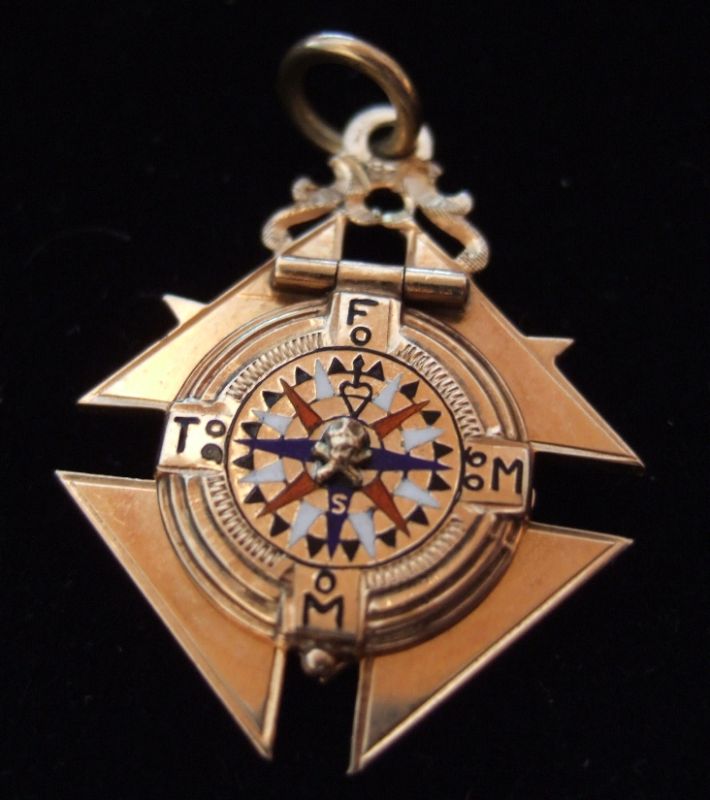

| Knights of Columbus Watch Fob with Hidden Holy Medals |


| Knights of Columbus Stamp Holder |
| ********** |
| Comments from Our Readers Note from the Quizmaster General: K of C is different from KFC. |