On September 28, 1973, a performance of Sergei Prokofiev's War and Peace was
played at the Opera Theatre. On September 29, the first public concert in the Concert
Hall took place. It was performed by the Sydney Symphony Orchestra, conducted by
Charles Mackerras and with accompanying singer Birgit Nilsson.
During the construction of the Opera House, a number of lunchtime performances
were arranged for the workers, with Paul Robeson the first artist to perform at the
(unfinished) Opera House in 1960.
The Opera House is the home to the:
The Mikado © 2004 Viator Musica Viva Australia
The Australian Ballet Opera Sydney
Australian Chamber Orchestra Sydney Festival
The Bell Shakespeare Company Sydney Philharmonica Choirs
Ensemble Theatre Sydney Symphony
Musica Viva Australia Sydney Theatre Company
The Sydney Opera House has been nominated in an election to determine the New
Seven Wonders of the World.
For further information, see http://www.sydney.com.au/operahouse.htm and
http://en.wikipedia.org/wiki/Sydney_opera_house
played at the Opera Theatre. On September 29, the first public concert in the Concert
Hall took place. It was performed by the Sydney Symphony Orchestra, conducted by
Charles Mackerras and with accompanying singer Birgit Nilsson.
During the construction of the Opera House, a number of lunchtime performances
were arranged for the workers, with Paul Robeson the first artist to perform at the
(unfinished) Opera House in 1960.
The Opera House is the home to the:
The Mikado © 2004 Viator Musica Viva Australia
The Australian Ballet Opera Sydney
Australian Chamber Orchestra Sydney Festival
The Bell Shakespeare Company Sydney Philharmonica Choirs
Ensemble Theatre Sydney Symphony
Musica Viva Australia Sydney Theatre Company
The Sydney Opera House has been nominated in an election to determine the New
Seven Wonders of the World.
For further information, see http://www.sydney.com.au/operahouse.htm and
http://en.wikipedia.org/wiki/Sydney_opera_house

 |  |  |  |
| ********** |
| If you enjoy our quizzes, don't forget to order our books! Click here. |
| If you have a picture you'd like us to feature a picture in a future quiz, please email it to us at CFitzp@aol.com. If we use it, you will receive a free analysis of your picture. You will also receive a free Forensic Genealogy CD or a 10% discount towards the purchase of the Forensic Genealogy book. |

| Quiz #98 Results |


 |  |  |  |
| Answers to Quiz #98 February 25, 2007 |


| ********** |
| Name Six of These Eight Skylines For 10 extra points, name all eight. |




| #2 |
| #1 |
| #4 |
| #3 |
| #6 |
| #5 |
| #7 |
| #8 |
| ********** |
| ********** |
| ********** |
| ********** |
| ********** |
| Answers: 1. Sydney, Australia Opera House 2. New York, New York Casino, Las Vegas 3. Sugarloaf Mountain, Rio de Janeiro 4. Petronas Tower, Kuala Lumpur, Malaysia 5. Space Needle, Seattle, Washington 6. CN Skydome and Tower, Toronto, Ontario, Canada 7. Eye of London, Big Ben, Parliament Buildings on the Thames River, London, England 8. Mt. Fuji, Maybe Nagoya* ********** |
| Congratulations to Our Winners! Margaret English Dawn Carlile Linda Patton Karen Petrus John Chulick Rick Norman Alan Cullinan Paula Harris Don Holznagel Debbie Sterbinsky Mike Pfister Andy Wold Evan Hindman Jinny Collins Marjorie Wilser Jim Berry Fred Stuart Marilyn Hamill Ruth Govorchin Stan Read Mary Fraser Bob Witherspoon Anna Farris Robert McKenna Tane Burke Stan Read Mary Fraser Grace Hertz Sandy Thompson |
| The Sydney Opera House |
| Sugarloaf Mountain, Rio de Janiero |
| Petronas Tower, Kuala Lumpur |
| The Space Needle, Seattle, Washington |
| CN Tower and Dome, Toronto, Ontario, Canada |
| The London Eye, London, England |
| Mount Fuji, Tokyo, Japan |
The Sydney Opera House, situated on
Sydney Harbour at Bennelong Point, is
considered by many to be one of the
wonders of the modern world.
Designed by Jørn Utzon and constructed
under some controversy, it was opened in
October 1973.
The Opera House is one of Sydney's most
popular icons with tourists and travellers
from the world over visiting, photographing
and standing in awe of the cultural centre of
Sydney.
The Opera House was formally opened by
Queen Elizabeth II, in her capacity as Queen
of Australia, on October 20, 1973, which
crowds of millions attended. The opening
was televised and included fireworks and a
performance of Beethoven's Symphony No.
9.
Prior to the opening, two performances had
already taken place in the finished building.
Sydney Harbour at Bennelong Point, is
considered by many to be one of the
wonders of the modern world.
Designed by Jørn Utzon and constructed
under some controversy, it was opened in
October 1973.
The Opera House is one of Sydney's most
popular icons with tourists and travellers
from the world over visiting, photographing
and standing in awe of the cultural centre of
Sydney.
The Opera House was formally opened by
Queen Elizabeth II, in her capacity as Queen
of Australia, on October 20, 1973, which
crowds of millions attended. The opening
was televised and included fireworks and a
performance of Beethoven's Symphony No.
9.
Prior to the opening, two performances had
already taken place in the finished building.


| Satellite View of Sydney Opera House |
| The Sydney Opera House at Night http://en.wikipedia.org/wiki/Image:Sydney_Opera_House_by_Lucanos.jpg |

| ********** |


| Satellite View of NY NY Casino |
| NY NY Casino at Night |
| Satellite View of Sugarloaf Mountain |
| Lightning Hits the CN Tower, August 2, 2006 http://upload.wikimedia.org/wikipedia/en/b/bb/CN_Tower_-_Lightning.jpg |

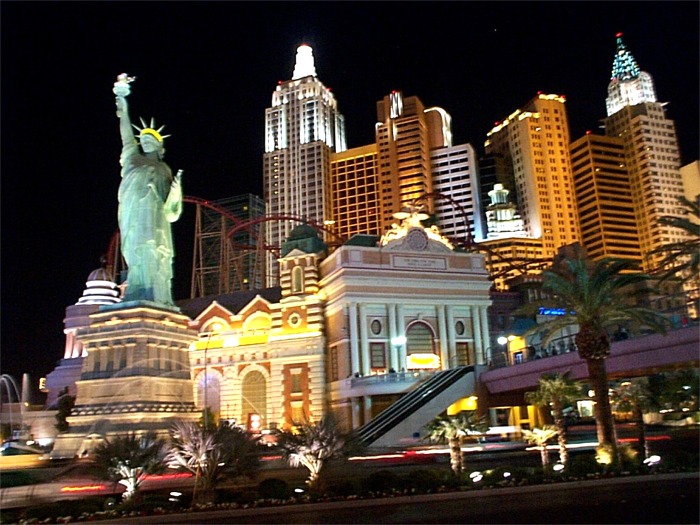
New York-New York Hotel & Casino is a hotel and
casino located on the famed Las Vegas Strip at 3790
Las Vegas Boulevard South, Las Vegas, Nevada. It
is one of the largest casinos owned by MGM
Mirage.
New York-New York uses the New York City
theme of its name in many ways. Its architecture
creates an impression of the New York City skyline;
the hotel includes several towers configured to
resemble New York City skyscrapers, such as the
Empire State Building and the Chrysler Building.
In front of the property is a pool representing New
York Harbor, with a 150 ft (46 m) tall (half-scale)
replica of the Statue of Liberty, a roller coaster, and
replicas of the Brooklyn Bridge, Soldiers and Sailors
Monument, the Whitney Museum of American Art,
and Grand Central Terminal, among other
well-known structures. Within the resort, particular
gambling areas, bars, eating areas and meeting
rooms are named after New York City
neighborhoods or landmarks.
The main casino area, for example, is named after
Central Park, while the "Village Eateries" food court
is modeled after New York City's Greenwich
Village, even including real menus from New York
Chinese takeout restaurants taped to the doors of
the mock apartment buildings. New York-New
casino located on the famed Las Vegas Strip at 3790
Las Vegas Boulevard South, Las Vegas, Nevada. It
is one of the largest casinos owned by MGM
Mirage.
New York-New York uses the New York City
theme of its name in many ways. Its architecture
creates an impression of the New York City skyline;
the hotel includes several towers configured to
resemble New York City skyscrapers, such as the
Empire State Building and the Chrysler Building.
In front of the property is a pool representing New
York Harbor, with a 150 ft (46 m) tall (half-scale)
replica of the Statue of Liberty, a roller coaster, and
replicas of the Brooklyn Bridge, Soldiers and Sailors
Monument, the Whitney Museum of American Art,
and Grand Central Terminal, among other
well-known structures. Within the resort, particular
gambling areas, bars, eating areas and meeting
rooms are named after New York City
neighborhoods or landmarks.
The main casino area, for example, is named after
Central Park, while the "Village Eateries" food court
is modeled after New York City's Greenwich
Village, even including real menus from New York
Chinese takeout restaurants taped to the doors of
the mock apartment buildings. New York-New
| New York New York Casino, Las Vegas, NV |
York uses the trademarked slogan "The Greatest City in Las Vegas".
The property opened on January 3, 1997. The project, which was first announced in
1994, was a joint venture of MGM Grand Inc. and Primadonna Resorts.
After the September 11, 2001 attacks, people spontaneously sent various tributes to
New York-New York, especially T-shirts from police, fire and rescue departments
around the country. These were displayed for some time along the fence in front of the
"Lady Liberty" replica. Eventually, they were replaced by a permanent memorial. The
twin towers of the World Trade Center are not included in the skyscrapers depicted in
its facade.
For more information, see
http://en.wikipedia.org/wiki/New_York-New_York_Hotel_&_Casino. For reservations,
http://www.nynyhotelcasino.com/hotel/
The property opened on January 3, 1997. The project, which was first announced in
1994, was a joint venture of MGM Grand Inc. and Primadonna Resorts.
After the September 11, 2001 attacks, people spontaneously sent various tributes to
New York-New York, especially T-shirts from police, fire and rescue departments
around the country. These were displayed for some time along the fence in front of the
"Lady Liberty" replica. Eventually, they were replaced by a permanent memorial. The
twin towers of the World Trade Center are not included in the skyscrapers depicted in
its facade.
For more information, see
http://en.wikipedia.org/wiki/New_York-New_York_Hotel_&_Casino. For reservations,
http://www.nynyhotelcasino.com/hotel/
| ********** |
Sugarloaf Mountain (in Portuguese, Pão de Açúcar), is a peak situated in Rio de
Janeiro, Brazil, from the mouth of Guanabara Bay on a peninsula that sticks out into the
Atlantic Ocean. Rising 396 meters (1,300 ft) above sea-level, its name is said to refer to
its resemblance to the traditional shape of concentrated refined loaf sugar. This may,
however, be a folk-etymology, since it is believed by some that the name actually
derives from Pau-nh-acuqua (“high hill”) in the Tupi-Guarani language, as used by the
indigenous Tamoios.
Janeiro, Brazil, from the mouth of Guanabara Bay on a peninsula that sticks out into the
Atlantic Ocean. Rising 396 meters (1,300 ft) above sea-level, its name is said to refer to
its resemblance to the traditional shape of concentrated refined loaf sugar. This may,
however, be a folk-etymology, since it is believed by some that the name actually
derives from Pau-nh-acuqua (“high hill”) in the Tupi-Guarani language, as used by the
indigenous Tamoios.


The mountain is only one of several
monolithic morros of granite and quartz
that rise straight from the water's edge
around Rio de Janeiro. A glass-paneled
cable car (in popular Portuguese, bondinho
- more properly called teleférico), capable
of holding 75 passengers, runs along a
1400-metre route between the peaks of
Babilônia and Urca every half hour. The
original cable car line was built in 1912. So
familiar is this peak, the mere sight of it in
a film is sufficient to establish the setting
as Rio.
monolithic morros of granite and quartz
that rise straight from the water's edge
around Rio de Janeiro. A glass-paneled
cable car (in popular Portuguese, bondinho
- more properly called teleférico), capable
of holding 75 passengers, runs along a
1400-metre route between the peaks of
Babilônia and Urca every half hour. The
original cable car line was built in 1912. So
familiar is this peak, the mere sight of it in
a film is sufficient to establish the setting
as Rio.
Petronas took the challenge to develop the
Petronas Twin Towers in 1991.
The project is an integral part of the Kuala
Lumpur City Centre (KLCC), a carefully planned
development to provide the capital city with an
efficient and modern centre for urban activity,
trade and commerce encircling a vast, open green
lung. It brought together the world's leading
practitioners of engineering, building technology
and construction.
Construction planning began in January 1992. By
March 1993, the excavators were hard at work
digging down to 30 metres below the surface of
the site. The extent of excavation required over
500 truck-loads of earth to be moved every night.
The next stage was the single largest and longest
concrete pour in Malaysian history: 13,200 cubic
metres of concrete was continuously poured
through a period of 54 hours for each tower. This
record-breaking slab, together with 104 piles
forms the foundation for each of the towers.
Of particular importance was maintaining the
verticality of the structures throughout the full
height as they were being built. The reason for
this, besides reinforcing the aesthetic design,
were to ensure structural load integrity and the
safe passage of the high-speed double-decker
elevators.
The determination of verticality was monitored by
international specialist surveyors who, with the
aid of global positioning systems, checked
alignments every day and every night. The same
Petronas Twin Towers in 1991.
The project is an integral part of the Kuala
Lumpur City Centre (KLCC), a carefully planned
development to provide the capital city with an
efficient and modern centre for urban activity,
trade and commerce encircling a vast, open green
lung. It brought together the world's leading
practitioners of engineering, building technology
and construction.
Construction planning began in January 1992. By
March 1993, the excavators were hard at work
digging down to 30 metres below the surface of
the site. The extent of excavation required over
500 truck-loads of earth to be moved every night.
The next stage was the single largest and longest
concrete pour in Malaysian history: 13,200 cubic
metres of concrete was continuously poured
through a period of 54 hours for each tower. This
record-breaking slab, together with 104 piles
forms the foundation for each of the towers.
Of particular importance was maintaining the
verticality of the structures throughout the full
height as they were being built. The reason for
this, besides reinforcing the aesthetic design,
were to ensure structural load integrity and the
safe passage of the high-speed double-decker
elevators.
The determination of verticality was monitored by
international specialist surveyors who, with the
aid of global positioning systems, checked
alignments every day and every night. The same
| ********** |

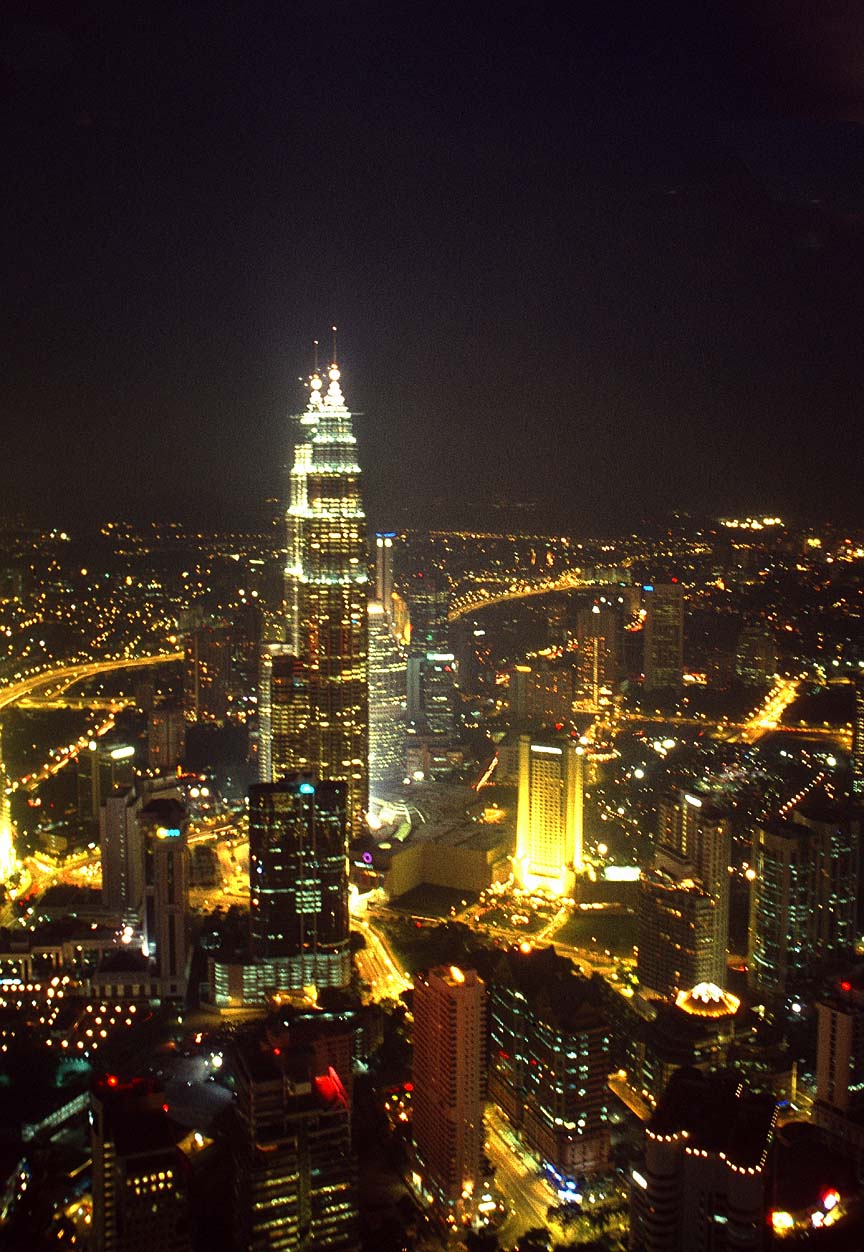
| The Petronas Towers at Sunset http://upload.wikimedia.org/wikipedia/commons/3/30/Twin_Towers_at_sunset.JPG |

| The Petronas Towers at Night http://www.tropicalisland.de/malaysia.html |
surveyor used the same instrument at the same time in every 24 hours, thereby
minimising any element of differences in judgment.
The PETRONAS Twin Towers were finally encased in steel and glass and could be
viewed as complete in June 1996.
For more information, see
http://www.petronastwintowers.com.my/internet/pett/pettweb.nsf/frm_home_hi?OpenFrameset.
minimising any element of differences in judgment.
The PETRONAS Twin Towers were finally encased in steel and glass and could be
viewed as complete in June 1996.
For more information, see
http://www.petronastwintowers.com.my/internet/pett/pettweb.nsf/frm_home_hi?OpenFrameset.

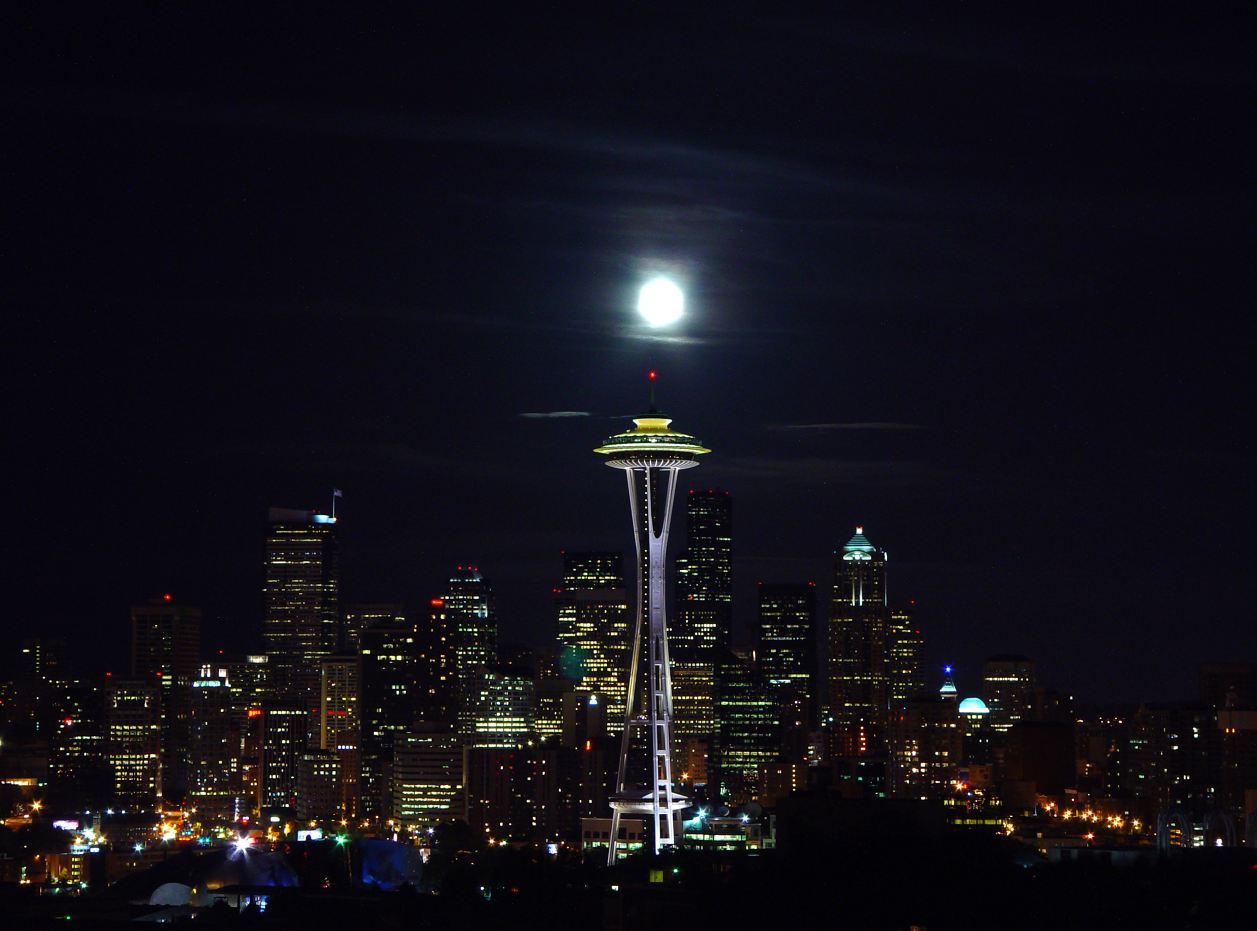
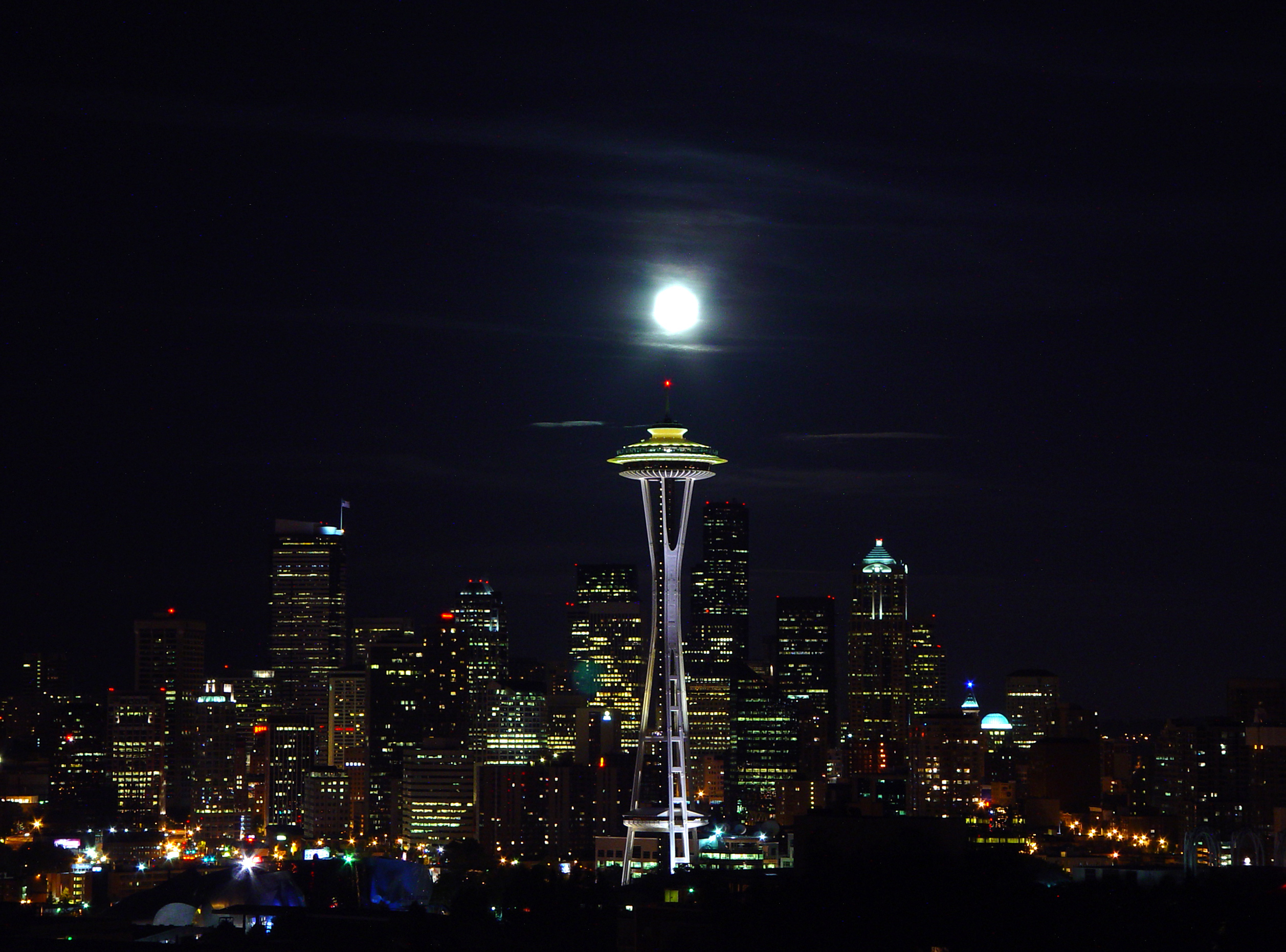
| The Space Needle at Night http://upload.wikimedia.org/wikipedia/commons/1/17/Seattle_skyline_night.jpg |
The Space Needle is a tower in Seattle,
Washington that is a major landmark
of the Pacific Northwest and symbol
of Seattle. Located on the grounds of
Seattle Center, it was built for the
1962 World's Fair, during which time
nearly 20,000 people a day used the
elevators — 2.3 million visitors in all
for the World Fair. The Space Needle
is 605 feet (184 m) high and 138 feet
(42 m) wide at its widest point and
weighs 9,550 tons. When it was
completed it was the tallest building
west of the Mississippi River.[1] It is
built to withstand winds of up to 150
mph (240 km/h) and earthquakes up to
Washington that is a major landmark
of the Pacific Northwest and symbol
of Seattle. Located on the grounds of
Seattle Center, it was built for the
1962 World's Fair, during which time
nearly 20,000 people a day used the
elevators — 2.3 million visitors in all
for the World Fair. The Space Needle
is 605 feet (184 m) high and 138 feet
(42 m) wide at its widest point and
weighs 9,550 tons. When it was
completed it was the tallest building
west of the Mississippi River.[1] It is
built to withstand winds of up to 150
mph (240 km/h) and earthquakes up to
9.5 magnitude (which, by coincidence, was just enough to resist Seattle's later
discovered Cascadia earthquake) and has 25 lightning rods on the roof to prevent
lightning damage.
The Space Needle features an observation deck at 520 feet (158.4 m), the SkyCity
restaurant at 500 feet (152 m), and a gift shop.[1] From the top of it, one can see not
only the Downtown Seattle skyline, but also the Olympic and Cascade Mountains,
Mount Rainier, Elliott Bay and surrounding islands. Photographs of the Seattle skyline
often show the Space Needle in a prominent position, even appearing sometimes to
tower above the rest of the city's skyscrapers. This occurs because the Space Needle
sits roughly four-fifths of a mile northwest of these skyscrapers, and photographers
must capture the city with the Space Needle in the foreground in order to include both
it and the rest of the tall buildings. (This angle offers the added bonus of affording a
view of Mount Rainier in the background.) Many first-time visitors to the city are
therefore surprised to see the Space Needle in its true perspective. At 60 stories it is not
remarkably tall, and it is not as close to the cluster of downtown skyscrapers as one
might think judging only from the typical angle from which the skyline photographs are
taken.
Visitors can reach the top via elevators that travel at 10 mph (16 km/h). This trip takes
43 seconds and some tourists wait in hour-long lines in order to ascend to the top of
the tower. It was designated a historic landmark on April 19, 1999.[2] It is now
privately owned. Read more at http://en.wikipedia.org/wiki/Space_needle
discovered Cascadia earthquake) and has 25 lightning rods on the roof to prevent
lightning damage.
The Space Needle features an observation deck at 520 feet (158.4 m), the SkyCity
restaurant at 500 feet (152 m), and a gift shop.[1] From the top of it, one can see not
only the Downtown Seattle skyline, but also the Olympic and Cascade Mountains,
Mount Rainier, Elliott Bay and surrounding islands. Photographs of the Seattle skyline
often show the Space Needle in a prominent position, even appearing sometimes to
tower above the rest of the city's skyscrapers. This occurs because the Space Needle
sits roughly four-fifths of a mile northwest of these skyscrapers, and photographers
must capture the city with the Space Needle in the foreground in order to include both
it and the rest of the tall buildings. (This angle offers the added bonus of affording a
view of Mount Rainier in the background.) Many first-time visitors to the city are
therefore surprised to see the Space Needle in its true perspective. At 60 stories it is not
remarkably tall, and it is not as close to the cluster of downtown skyscrapers as one
might think judging only from the typical angle from which the skyline photographs are
taken.
Visitors can reach the top via elevators that travel at 10 mph (16 km/h). This trip takes
43 seconds and some tourists wait in hour-long lines in order to ascend to the top of
the tower. It was designated a historic landmark on April 19, 1999.[2] It is now
privately owned. Read more at http://en.wikipedia.org/wiki/Space_needle
| Panorama of Seattle from the Space Needle http://upload.wikimedia.org/wikipedia/commons/d/df/Space_needle_pano.jpg |

The CN Tower was built in 1976
by Canadian National (CN) who
wanted to demonstrate the
strength of Canadian industry by
building a tower taller than any
other in the world. In 1995, the
CN Tower became a public
company and ownership of the
Tower was transferred to Canada
Lands (CLC) Company, a federal
Crown corporation responsible for
real estate development.
Although the CN Tower inspires a
by Canadian National (CN) who
wanted to demonstrate the
strength of Canadian industry by
building a tower taller than any
other in the world. In 1995, the
CN Tower became a public
company and ownership of the
Tower was transferred to Canada
Lands (CLC) Company, a federal
Crown corporation responsible for
real estate development.
Although the CN Tower inspires a


| View from the Tower's Glass Floor http://upload.wikimedia.org/wikipedia/en/8/80/VIEW_FROM_CN_TOWER..JPG |

sense of pride and inspiration for Canadians and a sense of are for tourists, its origins
are firmly rooted in practicality. The construction boom in Toronto in the 1960's
transformed the skyline characterized by relatively low buildings into one dotted with
skyscrapers. These new buildings caused serious communication problems. With its
microwave receptors at 338 m (1,109 ft.) and 553.33m (1,815 ft., 5 inches) antenna,
the CN Tower swiftly solved the communication problems with room to spare. As a
result people living in the Toronto area now enjoy some of the clearest reception in
North America.
are firmly rooted in practicality. The construction boom in Toronto in the 1960's
transformed the skyline characterized by relatively low buildings into one dotted with
skyscrapers. These new buildings caused serious communication problems. With its
microwave receptors at 338 m (1,109 ft.) and 553.33m (1,815 ft., 5 inches) antenna,
the CN Tower swiftly solved the communication problems with room to spare. As a
result people living in the Toronto area now enjoy some of the clearest reception in
North America.
In 1995, the CN Tower was declared one of
the modern Seven Wonders of the World by
the American Society of Civil Engineers. It
also belongs to the World Federation of Great
Towers. The following year, the Guinness
Book of World Records officially changed the
CN Tower's classification to "World's Tallest
Building and Free-Standing Structure". Today,
the Guinness World Records state the CN
Tower as the "Tallest Freestanding Tower".
This is because the Petronius Platform oil rig
in the Gulf of Mexico is taller, yet most of the
rig is underwater.
There are also many guyed towers taller than
the modern Seven Wonders of the World by
the American Society of Civil Engineers. It
also belongs to the World Federation of Great
Towers. The following year, the Guinness
Book of World Records officially changed the
CN Tower's classification to "World's Tallest
Building and Free-Standing Structure". Today,
the Guinness World Records state the CN
Tower as the "Tallest Freestanding Tower".
This is because the Petronius Platform oil rig
in the Gulf of Mexico is taller, yet most of the
rig is underwater.
There are also many guyed towers taller than
the CN Tower, the current tallest being the KVLY-TV tower in North Dakota at 628
metres (2,063 ft) tall (see List of masts), but these are guy-wire supported structures
(which are essentially very tall frameworks that support TV lines) and hence, are not
classified as free-standing.
See http://www.cntower.ca/portal/GetPage.aspx?at=848#The%20Tower and
http://en.wikipedia.org/wiki/CN_Tower for more information.
metres (2,063 ft) tall (see List of masts), but these are guy-wire supported structures
(which are essentially very tall frameworks that support TV lines) and hence, are not
classified as free-standing.
See http://www.cntower.ca/portal/GetPage.aspx?at=848#The%20Tower and
http://en.wikipedia.org/wiki/CN_Tower for more information.
| London Eye at Twilight, April 2006 http://en.wikipedia.org/wiki/Image:London_Eye_Twilight_April_2006.jpg |

The British Airways London Eye, also
known as the Millennium Wheel, opened
in 1999 and is the largest observation
wheel in the world. It stands 135 metres
(443 feet) high on the western end of
Jubilee Gardens, on the South Bank of the
River Thames in Lambeth, London,
England, between Westminster and
Hungerford Bridges (Coordinates: 51°30′
12″N, 00°07′11″W). The wheel is
adjacent to London's County Hall, and
stands opposite the offices of the Ministry
of Defence.
In fact, in its short life, it has become the
most popular paid for UK visitor
attraction, visited by over 3.5 million
people a year (an average of 10,000 a
day). A breathtaking feat of design and
engineering, passengers in the London
Eye's capsules can see up to 40
kilometres in all directions, in complete
comfort and safety.
Designed by architects David Blian, Julia
Barfield, Malcolm Cook, Mark
Sparrowhawk, Steven Chilton and Nic
Bailey, the wheel carries 32 sealed and air-
conditioned passenger capsules attached
known as the Millennium Wheel, opened
in 1999 and is the largest observation
wheel in the world. It stands 135 metres
(443 feet) high on the western end of
Jubilee Gardens, on the South Bank of the
River Thames in Lambeth, London,
England, between Westminster and
Hungerford Bridges (Coordinates: 51°30′
12″N, 00°07′11″W). The wheel is
adjacent to London's County Hall, and
stands opposite the offices of the Ministry
of Defence.
In fact, in its short life, it has become the
most popular paid for UK visitor
attraction, visited by over 3.5 million
people a year (an average of 10,000 a
day). A breathtaking feat of design and
engineering, passengers in the London
Eye's capsules can see up to 40
kilometres in all directions, in complete
comfort and safety.
Designed by architects David Blian, Julia
Barfield, Malcolm Cook, Mark
Sparrowhawk, Steven Chilton and Nic
Bailey, the wheel carries 32 sealed and air-
conditioned passenger capsules attached

| Mount Fuji at Sunrise from Lake Kawaguchiko http://en.wikipedia.org/wiki/Image:FujiSunriseKawaguchiko2025WP.jpg |


| Top of the London Eye Looking East http://www.richard-seaman.com/Travel/UK/London/Highlights/TopOfLondonEyeLookingEast.jpg |
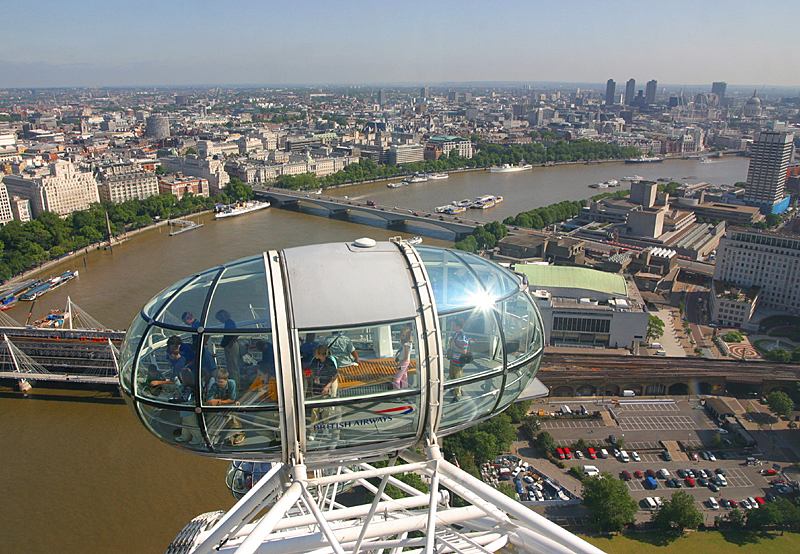
to its external circumference. It rotates at 0.26 metres (0.85 feet) per second (about 0.9
km/h or 0.5 mph) so that one revolution takes about 30 minutes. The wheel does not
usually stop to take on passengers: the rotation rate is so slow that they can easily walk
on and off the moving capsules at ground level. It is, however, stopped to allow
disabled or elderly passengers time to embark and disembark safely.
The wheel was constructed in sections which were floated up the Thames on barges
and assembled lying flat on pontoons. Once the wheel was complete it was raised into
an upright position by cranes, being lifted at 2 degrees an hour until it reached 65
degrees. It was left in that position for a week while engineers prepared for the second
phase of the lift. The total weight of steel in the Eye is 1,700 tonnes.
Although the Eye is listed in the Guinness Book of Records as the tallest observation
wheel in the world, it is unlikely to keep that title for long. Plans have been announced
to build a 170 m wheel on the Las Vegas Strip and a 185 m wheel dubbed "Giant
Wheel" planned to open in 2008 in Berlin. (By comparison, the original Ferris wheel at
the 1893 World's Columbian Exposition was 75 m high).
For the London Eye webcam, go to http://www.camvista.com/england/london/bale.php3
See also http://en.wikipedia.org/wiki/London_Eye and http://www.londoneye.com/.
km/h or 0.5 mph) so that one revolution takes about 30 minutes. The wheel does not
usually stop to take on passengers: the rotation rate is so slow that they can easily walk
on and off the moving capsules at ground level. It is, however, stopped to allow
disabled or elderly passengers time to embark and disembark safely.
The wheel was constructed in sections which were floated up the Thames on barges
and assembled lying flat on pontoons. Once the wheel was complete it was raised into
an upright position by cranes, being lifted at 2 degrees an hour until it reached 65
degrees. It was left in that position for a week while engineers prepared for the second
phase of the lift. The total weight of steel in the Eye is 1,700 tonnes.
Although the Eye is listed in the Guinness Book of Records as the tallest observation
wheel in the world, it is unlikely to keep that title for long. Plans have been announced
to build a 170 m wheel on the Las Vegas Strip and a 185 m wheel dubbed "Giant
Wheel" planned to open in 2008 in Berlin. (By comparison, the original Ferris wheel at
the 1893 World's Columbian Exposition was 75 m high).
For the London Eye webcam, go to http://www.camvista.com/england/london/bale.php3
See also http://en.wikipedia.org/wiki/London_Eye and http://www.londoneye.com/.


| Mount Fuji from Space http://en.wikipedia.org/wiki/Image:MountfujiNASA.jpg |

*Special recognition goes to John Chulick and Don Holznagel, for their
observations that the city at the base of Mt. Fjui could not be Toyko, as I
thought. See map to right. According to John:
I thought that #8 was possibly Tokyo . However, Mt Fuji is south of Tokyo . That
means that the harbor should open to sea on the left not the right. I found a photo
of Nagoya that looked very close, so that’s why I went with Nagoya. -
John
Well, I guess it could be Tokyo, but I couldn't resolve the angle of the photo toward
Fuji to the SW with open water to the right. - - Don
observations that the city at the base of Mt. Fjui could not be Toyko, as I
thought. See map to right. According to John:
I thought that #8 was possibly Tokyo . However, Mt Fuji is south of Tokyo . That
means that the harbor should open to sea on the left not the right. I found a photo
of Nagoya that looked very close, so that’s why I went with Nagoya. -
John
Well, I guess it could be Tokyo, but I couldn't resolve the angle of the photo toward
Fuji to the SW with open water to the right. - - Don
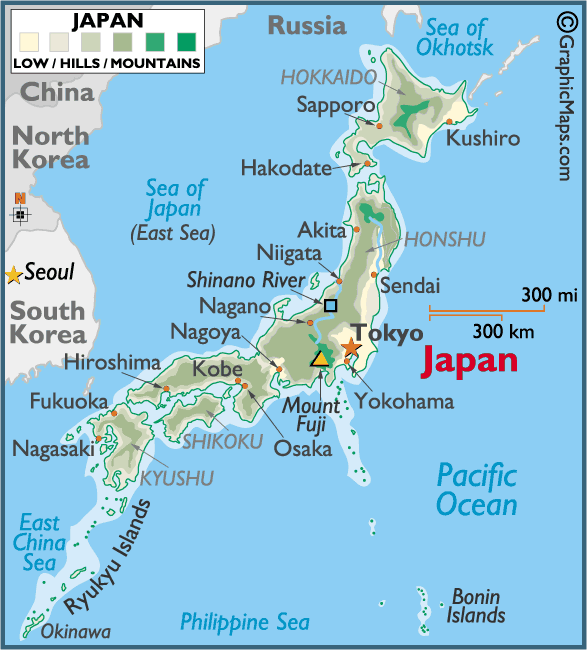
| Map showing relative location of Mt. Fuji, Tokyo, and Nagoya |
Mount Fuji (Fuji-san) is the highest
mountain in Japan. It straddles the
boundary of Shizuoka and Yamanashi
prefectures just west of Tokyo, whence
it can be seen on a clear day. It is located
near the Pacific coast of central Honshū.
Three small cities surround it, they are:
Gotemba (East), Fuji-Yoshida (North)
and Fujinomiya (Southwest).
Mount Fuji is a well-known symbol of
Japan and is frequently depicted in art
and photographs, as well as visited by
sightseers and climbers.
Mt. Fuji stands at 12,388 ft/3,776 m high
and is surrounded by five lakes: Lake
Kawaguchi, Lake Yamanaka, Lake Sai,
Lake Motosu and Lake Shoji. They, and
nearby Lake Ashi, provide excellent
views of the mountain. It is part of the
Fuji-Hakone-Izu National Park. It is also
an active stratovolcano.
It is thought that the first ascent was in
663 by an anonymous monk. The summit
has been thought of sacred since ancient
times and was forbidden to women until
the Meiji Era.
The current kanji for Mount Fuji mean
wealth or abundant and a man with a
certain status respectively, but it is likely
these characters were selected because
mountain in Japan. It straddles the
boundary of Shizuoka and Yamanashi
prefectures just west of Tokyo, whence
it can be seen on a clear day. It is located
near the Pacific coast of central Honshū.
Three small cities surround it, they are:
Gotemba (East), Fuji-Yoshida (North)
and Fujinomiya (Southwest).
Mount Fuji is a well-known symbol of
Japan and is frequently depicted in art
and photographs, as well as visited by
sightseers and climbers.
Mt. Fuji stands at 12,388 ft/3,776 m high
and is surrounded by five lakes: Lake
Kawaguchi, Lake Yamanaka, Lake Sai,
Lake Motosu and Lake Shoji. They, and
nearby Lake Ashi, provide excellent
views of the mountain. It is part of the
Fuji-Hakone-Izu National Park. It is also
an active stratovolcano.
It is thought that the first ascent was in
663 by an anonymous monk. The summit
has been thought of sacred since ancient
times and was forbidden to women until
the Meiji Era.
The current kanji for Mount Fuji mean
wealth or abundant and a man with a
certain status respectively, but it is likely
these characters were selected because
their pronunciations match the syllables of the name. They do not indicate the meaning
of the name.
The origin of the name Fuji is unclear. An early folk etymology claims that Fuji came
from [words] meaning without equal or nonpareil. Another claims that it came from
[the word for] neverending. A Japanese toponymist Kanji Kagami argued that the name
has the same root as 'wisteria' (fuji) and 'rainbow' (niji, but with an alternative word
fuji), and came from its "long well-shaped slope". A text of the Tale of the Bamboo
Cutter says that the name came from "immortal" (fushi, fuji?) and also from the
[kanji]image of abundant (fu) soldiers (shi, ji) ascending the slopes of the mountain.
of the name.
The origin of the name Fuji is unclear. An early folk etymology claims that Fuji came
from [words] meaning without equal or nonpareil. Another claims that it came from
[the word for] neverending. A Japanese toponymist Kanji Kagami argued that the name
has the same root as 'wisteria' (fuji) and 'rainbow' (niji, but with an alternative word
fuji), and came from its "long well-shaped slope". A text of the Tale of the Bamboo
Cutter says that the name came from "immortal" (fushi, fuji?) and also from the
[kanji]image of abundant (fu) soldiers (shi, ji) ascending the slopes of the mountain.