Like many other unbelievable stories from World War II, such as Japanese holdouts
being found in the 1970s I find the story fascinating. However, I am reluctant to believe
it. As stated in a Library Journal review of his sons book by Frederic Krome of the
University of Cincinnati; His son's discovery of documents, photographs, and even his
father's role in a Nazi propaganda film are quite compelling. The text, however,
contains reconstructions of conversations that could only be so detailed and historically
accurate if they had been recorded, which does not seem to be the case. The book's
historical accuracy is further open to question by the author's opening statements that
he "altered various names and identifying details" and condensed the chronology.
Jim Baker
*****
I'm not sure that I believe his story. Five year old is awfully young to have survived
alone for that length of time over the winter. His story has been accepted by the
Jewish courts, so supposedly it has been checked out. Diane Burkett
*****
It's certainly plausible, especially since he strongly resembles the photo of a man from
the same village who was slaughtered & whose life details match those of Alex's. I will
believe (or not) when Colleen runs the DNA! Susan Fortune
*****
According to a Sixty Minutes story the Jewish Claims organization believes it. Hard to
think of such a young child enduring and surviving those circumstances, but a lot of
unbelievable things were happening in that part of the world during WWII. A
fascinating story. I was so happy to see that he found his way back to his village.
Mary Osmar
*****
I have no information that would lead me to doubt his story other than what has been
described as his Aryan appearance. I don’t know how thoroughly they conducted the
research, which may have been difficult if records were destroyed in the war. Simply
going by his appearance I might ask, and seek if there is any evidence - “Was he not
born to Jewish parents but adopted by a Jewish family as a baby?” I have no doubt that
he has seen many atrocities. I haven’t read much about the Latvian family which gave
him a home after the war. I guess I’ll have to scan the biography for those details.
Don Draper
*****
Just out of curiosity, do you believe his story? The details don't add up from Alex's
story. I have some troubling issues over a boy of 6 being able to know the details of
the events that surrounded his life at that time. I think back about my life and I
remember details because I had adults around me who reminded me of them and
photos. This man had no constant family reminding him of the details. I think his mind
may have these memories, but that these memories may not have happened in the way
he thinks they did. Judy Pfaff
*****
I tend to disagree with the thesis of the book. Marty Guidry
*****
I'm not sure if I believe the story or not. Because several of these stories have turned
out to be hoaxes, I think it influences opinions about new stories. The fact that those
other stories turned out to be hoaxes makes one question whether such a fantastic story
could be true but it is also possible that it is completely true. It sounds a bit fantastic
that a child that young could live on his own and could keep such a secret so well for
so long. I work with children that age - they aren't very good at hiding secrets,
although they also have less disciple and dramatic stakes than in this story.
Brian Kemp
*****
Maybe I'm too naive, believing, trusting or optimistic to believe otherwise, and I haven't
read the story, but I could absolutely believe it! My son Matthew can remember quite
clearly things that happened when he was 3 years old, so this child was 5 and
remembered some very traumatic events - not such a stretch to believe!!
Elaine C. Hebert
*****
It's a good story but I understand that some think it's a hoax. Mary South
*****
Since I haven't read the biography, I have no strong belief one way or another, but the
premise seems a little far-fetched. Daniel E. Jolley
*****
Implausible story but great for book sales about WWII. Stan Read
N.B. It's also great for book sales about The Mascot.
*****
There are many tales of the improbable to come out of WWII, and this is not the least
likely. Based on the little I've read in the last twenty minutes I'm provisionally accepting
it as true, pending further evidence. I don't see any flat-out impossibilities on the face of
it, but I certainly don't know much. Peter Norton
*****
I have no clear reason *not* to believe his story but it does almost seem surreal. One
comment on a website that I read mentioned the man's story's resemblance to the film
'Europa Europa' and it does seem somewhat similar. Still, I would err on the side of
believing this man unless a great deal of evidence would prove him false.
Nicole Blank
*****
I have doubts from the beginning that a 5 year old was able to survive in the forest in
the dead of winter. I think its part fact and part fiction. Patricia Frazier
*****
Sounds like it's a hodge podge of half truths, half fiction, sewn together with a bit of
romantic fiction thanks to Alex's son Mark -- the author of the biography..
Karen Petrus
*****
I haven't read the book myself, so I really couldn't say. However, similar memoirs I've
read have had a small kernel of truth heavily larded over with drama.
Margaret Paxton
*****
It is strange enough to be true. An amazing story. Shirley Ferguson and Nan Ross
*****
I'm not entirely sure I believe his story. In researching him, I found too many
discrepancies and not enough specifics. Also his thinking seems to be conveniently
fuzzy on some very important facts. Mary Mauldin
*****
Yes I do. The survival instinct allows one to do whatever it takes to live. As a boy, I
can only imagine what he saw and how he processed it. Jim Kiser
*****
If it weren't for this picture, I might blow off the story, plus, how is he so sure this is
actually him? Can a child of 5 really remember this much after seeing so many things?
If it is true, it's an amazing story. I want to believe it is true! Debbie Sterbinsky
*****
Don't know if it is true or not. One place I read that Penguin books, which published
two other "hoax" books in the recent past, doesn't want to talk about it maybe being yet
another. Marilyn Hamill
N.B. This is Penguin's fourth non-fiction fraud in the last 18 months.
being found in the 1970s I find the story fascinating. However, I am reluctant to believe
it. As stated in a Library Journal review of his sons book by Frederic Krome of the
University of Cincinnati; His son's discovery of documents, photographs, and even his
father's role in a Nazi propaganda film are quite compelling. The text, however,
contains reconstructions of conversations that could only be so detailed and historically
accurate if they had been recorded, which does not seem to be the case. The book's
historical accuracy is further open to question by the author's opening statements that
he "altered various names and identifying details" and condensed the chronology.
Jim Baker
*****
I'm not sure that I believe his story. Five year old is awfully young to have survived
alone for that length of time over the winter. His story has been accepted by the
Jewish courts, so supposedly it has been checked out. Diane Burkett
*****
It's certainly plausible, especially since he strongly resembles the photo of a man from
the same village who was slaughtered & whose life details match those of Alex's. I will
believe (or not) when Colleen runs the DNA! Susan Fortune
*****
According to a Sixty Minutes story the Jewish Claims organization believes it. Hard to
think of such a young child enduring and surviving those circumstances, but a lot of
unbelievable things were happening in that part of the world during WWII. A
fascinating story. I was so happy to see that he found his way back to his village.
Mary Osmar
*****
I have no information that would lead me to doubt his story other than what has been
described as his Aryan appearance. I don’t know how thoroughly they conducted the
research, which may have been difficult if records were destroyed in the war. Simply
going by his appearance I might ask, and seek if there is any evidence - “Was he not
born to Jewish parents but adopted by a Jewish family as a baby?” I have no doubt that
he has seen many atrocities. I haven’t read much about the Latvian family which gave
him a home after the war. I guess I’ll have to scan the biography for those details.
Don Draper
*****
Just out of curiosity, do you believe his story? The details don't add up from Alex's
story. I have some troubling issues over a boy of 6 being able to know the details of
the events that surrounded his life at that time. I think back about my life and I
remember details because I had adults around me who reminded me of them and
photos. This man had no constant family reminding him of the details. I think his mind
may have these memories, but that these memories may not have happened in the way
he thinks they did. Judy Pfaff
*****
I tend to disagree with the thesis of the book. Marty Guidry
*****
I'm not sure if I believe the story or not. Because several of these stories have turned
out to be hoaxes, I think it influences opinions about new stories. The fact that those
other stories turned out to be hoaxes makes one question whether such a fantastic story
could be true but it is also possible that it is completely true. It sounds a bit fantastic
that a child that young could live on his own and could keep such a secret so well for
so long. I work with children that age - they aren't very good at hiding secrets,
although they also have less disciple and dramatic stakes than in this story.
Brian Kemp
*****
Maybe I'm too naive, believing, trusting or optimistic to believe otherwise, and I haven't
read the story, but I could absolutely believe it! My son Matthew can remember quite
clearly things that happened when he was 3 years old, so this child was 5 and
remembered some very traumatic events - not such a stretch to believe!!
Elaine C. Hebert
*****
It's a good story but I understand that some think it's a hoax. Mary South
*****
Since I haven't read the biography, I have no strong belief one way or another, but the
premise seems a little far-fetched. Daniel E. Jolley
*****
Implausible story but great for book sales about WWII. Stan Read
N.B. It's also great for book sales about The Mascot.
*****
There are many tales of the improbable to come out of WWII, and this is not the least
likely. Based on the little I've read in the last twenty minutes I'm provisionally accepting
it as true, pending further evidence. I don't see any flat-out impossibilities on the face of
it, but I certainly don't know much. Peter Norton
*****
I have no clear reason *not* to believe his story but it does almost seem surreal. One
comment on a website that I read mentioned the man's story's resemblance to the film
'Europa Europa' and it does seem somewhat similar. Still, I would err on the side of
believing this man unless a great deal of evidence would prove him false.
Nicole Blank
*****
I have doubts from the beginning that a 5 year old was able to survive in the forest in
the dead of winter. I think its part fact and part fiction. Patricia Frazier
*****
Sounds like it's a hodge podge of half truths, half fiction, sewn together with a bit of
romantic fiction thanks to Alex's son Mark -- the author of the biography..
Karen Petrus
*****
I haven't read the book myself, so I really couldn't say. However, similar memoirs I've
read have had a small kernel of truth heavily larded over with drama.
Margaret Paxton
*****
It is strange enough to be true. An amazing story. Shirley Ferguson and Nan Ross
*****
I'm not entirely sure I believe his story. In researching him, I found too many
discrepancies and not enough specifics. Also his thinking seems to be conveniently
fuzzy on some very important facts. Mary Mauldin
*****
Yes I do. The survival instinct allows one to do whatever it takes to live. As a boy, I
can only imagine what he saw and how he processed it. Jim Kiser
*****
If it weren't for this picture, I might blow off the story, plus, how is he so sure this is
actually him? Can a child of 5 really remember this much after seeing so many things?
If it is true, it's an amazing story. I want to believe it is true! Debbie Sterbinsky
*****
Don't know if it is true or not. One place I read that Penguin books, which published
two other "hoax" books in the recent past, doesn't want to talk about it maybe being yet
another. Marilyn Hamill
N.B. This is Penguin's fourth non-fiction fraud in the last 18 months.

 |  |  |  |
| If you have a picture you'd like us to feature a picture in a future quiz, please email it to us at CFitzp@aol.com. If we use it, you will receive a free analysis of your picture. You will also receive a free Forensic Genealogy CD or a 10% discount towards the purchase of the Forensic Genealogy book. |


 |  |  |  |
| ********** |

| If you enjoy our quizzes, don't forget to order our books! Click here. |

| Quiz #236 Results |
"The Mascot" by Mark Kurzem tells the story of Mark's
father, Alex Kurzem. In the book, Alex claims that he
fled his village in Belarus after his family was murdered
by a Nazi death squad, and later was picked up by
soldiers from the 18th Latvian Police Batallion. They
named him Uldis Kurzemieks because he was picked up
close to St. Uldis' feast day and they originated from the
Kurzeme area of Latvia. They adopted him as the
"mascot" for the brigade, giving him a uniform and
military papers designating him as Private First Class.
As the war became too dangerous for him to accompany
them, the soldiers brought him to the Laima Chocolate
Factory in Riga, where he was taken in as a foster
father, Alex Kurzem. In the book, Alex claims that he
fled his village in Belarus after his family was murdered
by a Nazi death squad, and later was picked up by
soldiers from the 18th Latvian Police Batallion. They
named him Uldis Kurzemieks because he was picked up
close to St. Uldis' feast day and they originated from the
Kurzeme area of Latvia. They adopted him as the
"mascot" for the brigade, giving him a uniform and
military papers designating him as Private First Class.
As the war became too dangerous for him to accompany
them, the soldiers brought him to the Laima Chocolate
Factory in Riga, where he was taken in as a foster
child by Jekabs Dzenis, the Director of the factory. Dzenis was familiar with the
factory, as it had sponsored the battalion by sending the men cards and gifts during
their deployment. Uldis received a good education and care from his family.
After the war, Uldis accompanied the Dzenis family as they emigrated first to a
Displaced Persons Camp in Germany, finally settling in Australia in November 1949.
Uldis, now known as Alex, married Patricia Powers and had three sons.
In the 1990s, Kurzem decided to disclose the secret to his family that he had hidden his
whole life that he was Jewish. He also decided to find his original family in Belarus.
Kurzem gave two video testimonies about his Holocaust experiences at the Holocaust
Center in Melbourne. With the help of a volunteer at the Center named Alice Plesser, he
meanwhile made contact with the Holocaust Center in Minsk. Alex claimed he could
only remember two words from his youth - "Koidanov" and "Panok" and that his father
was a tanner. Based on this information, the Center was able to locate his half brother
Erick Galperin, who coincidentally worked as a contractor, supplying printed materials
to the Center.
Over the next few months, Kurzem told the story that his family was massacred on 21
October 1941 in the village of Koidanov by an SS extermination squad that included the
same soldiers who rescued him. He said that he was able to escape the massacre, and
that from a nearby hillside, he watched his family being murdered. He wandered alone
through the forest, begging food from farmhouses, until he was recognized as a Jew by
a local farmer and brought to a schoolyard to be executed. Kurzem says that one of the
factory, as it had sponsored the battalion by sending the men cards and gifts during
their deployment. Uldis received a good education and care from his family.
After the war, Uldis accompanied the Dzenis family as they emigrated first to a
Displaced Persons Camp in Germany, finally settling in Australia in November 1949.
Uldis, now known as Alex, married Patricia Powers and had three sons.
In the 1990s, Kurzem decided to disclose the secret to his family that he had hidden his
whole life that he was Jewish. He also decided to find his original family in Belarus.
Kurzem gave two video testimonies about his Holocaust experiences at the Holocaust
Center in Melbourne. With the help of a volunteer at the Center named Alice Plesser, he
meanwhile made contact with the Holocaust Center in Minsk. Alex claimed he could
only remember two words from his youth - "Koidanov" and "Panok" and that his father
was a tanner. Based on this information, the Center was able to locate his half brother
Erick Galperin, who coincidentally worked as a contractor, supplying printed materials
to the Center.
Over the next few months, Kurzem told the story that his family was massacred on 21
October 1941 in the village of Koidanov by an SS extermination squad that included the
same soldiers who rescued him. He said that he was able to escape the massacre, and
that from a nearby hillside, he watched his family being murdered. He wandered alone
through the forest, begging food from farmhouses, until he was recognized as a Jew by
a local farmer and brought to a schoolyard to be executed. Kurzem says that one of the
soldiers took pity on him when he requested a piece
of bread before he died. Discovering the child was
Jewish, the soldier took precautions to hide the
boy's identity, saving his life.
An award-winning documentary on The Mascot
story was funded by the Australian Broadcast Corp.
in the late 1990s. This was followed by the book
version, which has become an international
bestseller in Poland, Russia, Belarus, the US,
Australia, the UK, Spain, and South America. Alex
has made numerous public appearances worldwide,
including one in February 2009 on the CBS
television program 60 Minutes.
The film rights have recently sold to in France.
of bread before he died. Discovering the child was
Jewish, the soldier took precautions to hide the
boy's identity, saving his life.
An award-winning documentary on The Mascot
story was funded by the Australian Broadcast Corp.
in the late 1990s. This was followed by the book
version, which has become an international
bestseller in Poland, Russia, Belarus, the US,
Australia, the UK, Spain, and South America. Alex
has made numerous public appearances worldwide,
including one in February 2009 on the CBS
television program 60 Minutes.
The film rights have recently sold to in France.
| ********** |
Left to right: Mark Kurzem, Erick Galperin, Alex Kurzem, with Galperin family members in Belarus, July 1998. |
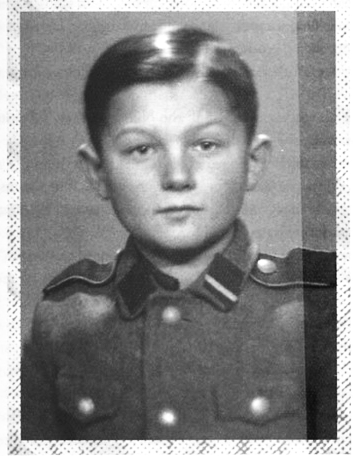
| Young Alex Kurzem |
| Doubts about the Story |
On the surface, The Mascot is a heart-warming account of the
survival of a Jewish boy in the midst of wholesale slaughter of the
Holocaust. Just the appeal of the story has been a deterrent to
suspicion that the story is not true. There are countless blogs and
website that express admiration and respect for Alex for his
courage and will to survive, with only a small minority of
respondents expressing their doubts and pointing out glaring
contradictions in the narrative. It is also hardly recognized that
different versions of the book vary widely in their accounts of
events in the story.
survival of a Jewish boy in the midst of wholesale slaughter of the
Holocaust. Just the appeal of the story has been a deterrent to
suspicion that the story is not true. There are countless blogs and
website that express admiration and respect for Alex for his
courage and will to survive, with only a small minority of
respondents expressing their doubts and pointing out glaring
contradictions in the narrative. It is also hardly recognized that
different versions of the book vary widely in their accounts of
events in the story.
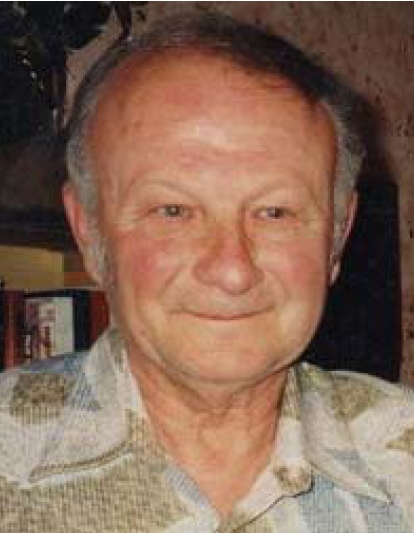
| Alex Kurzem Today |
Yet doubts linger. Alex has been called upon to produce evidence supporting the fact
that he is Jewish and that The Mascot story is true. Several items are of primary
interest.
1. The Testimonies at the Holocaust Center in Melbourne, Australia
Alex gave two testimonies at the Holocaust Center in Melbourne in the late 1990s. The
first one was before he had been introduced to Alice Plesser, and she had made any
attempts to contact the Center in Minsk. The second one was after Alice had
exchanged letters or telegrams with the Minsk Center, with information about Erick his
half-brother.
Alex has been asked to release these tapes to researchers; however, he has not been
willing to produce them. In response to our last request, he said he would release them
as soon as he could dub them. This is confusing since they are in English. Alex placed
an embargo on these testimonies, asking that they not be made public until after his
death. The Holocaust Center has honored this request.
2. Application to the Jewish Claims Conference for Reparations
In the late 1990s. Alex applied to the Jewish Claims Conference in New York, asking
for reparations due for suffering he experienced in the Holocaust. At first there was
much doubt at the Claims Conference about Alex's story and they denied the claim.
After the claim was endorsed by Frida Reizman, the Director of the Holocaust Center in
Minsk, the Claims Conference reversed its decision and Alex was awarded reparations.
Alex has been asked for copies of his application to the Claims Conference, and for the
material he submitted to Frida Reizman that lead to her endorsement. He has so far not
complied with this request.
3. Evidence that He has been Circumcised
Alex has been requested for a medical certificate to confirm that he has been
circumcised. He has refused to do so. Note, however, that even if he is circumcised, it
does not mean he is a Galperin.
| Alex and Mark at the Galperin house in Koidanov. |
4. A DNA Test
If Erick Galperin is indeed Alex's
half-brother, that is, if they are both sons of
Solomon Galperin, they should share the
same Y-chromosome. A simple DNA test
could be arranged to check their
relationship. Alex has refused such a test,
commenting that he does not need a DNA
test to confirm his relationship to Erick, he
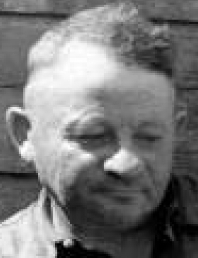
has the photograph of his father Solomon
that proves it, since they resemble each
other so strongly.
If Erick Galperin is indeed Alex's
half-brother, that is, if they are both sons of
Solomon Galperin, they should share the
same Y-chromosome. A simple DNA test
could be arranged to check their
relationship. Alex has refused such a test,
commenting that he does not need a DNA
test to confirm his relationship to Erick, he
has the photograph of his father Solomon
that proves it, since they resemble each
other so strongly.
| ********** |
After several hours thinking about it, I have concluded it would be impossible to list the
numerous discrepancies between the documentary and the various versions of the
book. I give you only one minor example.
In the documentary, there is a woman who speaks English very well who is identified
as Cousin Luba. The narrator explains that Luba's mother and Solomon Galperin, Alex's
alleged father, are cousins.
Cousin Luba played a significant role in Alex's visit to his ancestral village of Koidanov–
identifying the house on October St. where his family lived, raising questions about his
surviving on his own after the shooting, describes rooms in the house, indicates where
the Jewish ghetto was, leads them to the memorial of the Koidanov massacre, and
questions Alex's survival. She says that she could not imagine her 10 year old grandson
doing what Alex did to survive.
In the book, however, Luba is only mentioned once, when she meets them at the
airport and is described as an English teacher. Her relationship is described as "your
father's wife's cousin's daughter". Luba does not appear again.
There are other major changes between the documentary and the book, including a
much expanded role for Jekabs Kulis, and a very different description of the massacre.
****
numerous discrepancies between the documentary and the various versions of the
book. I give you only one minor example.
In the documentary, there is a woman who speaks English very well who is identified
as Cousin Luba. The narrator explains that Luba's mother and Solomon Galperin, Alex's
alleged father, are cousins.
Cousin Luba played a significant role in Alex's visit to his ancestral village of Koidanov–
identifying the house on October St. where his family lived, raising questions about his
surviving on his own after the shooting, describes rooms in the house, indicates where
the Jewish ghetto was, leads them to the memorial of the Koidanov massacre, and
questions Alex's survival. She says that she could not imagine her 10 year old grandson
doing what Alex did to survive.
In the book, however, Luba is only mentioned once, when she meets them at the
airport and is described as an English teacher. Her relationship is described as "your
father's wife's cousin's daughter". Luba does not appear again.
There are other major changes between the documentary and the book, including a
much expanded role for Jekabs Kulis, and a very different description of the massacre.
****
| Left: Alex Kurzem Right: Solomon Galperin |
| Open Questions |
| ********** |
| Answer to Quiz #236 December 6, 2009 |
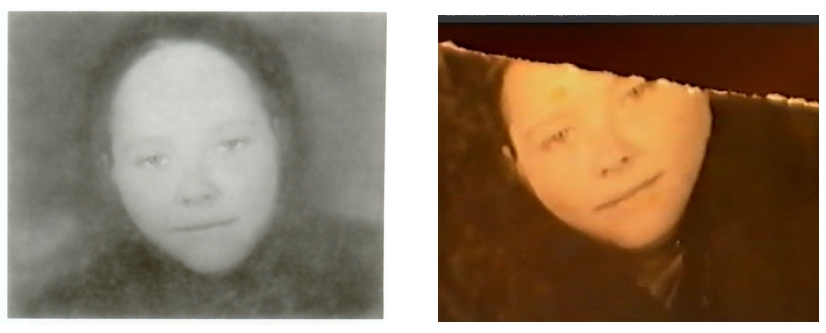
| of lines later, the guess is somehow transformed into proof that Alex is Ilya Galperin, Hana's oldest son. As it is described in the book on p. 339-341: Erick shook his head, as did Dina, but suddenly her expression changed. "One moment. There is something...." Dina crossed the divan and began to rummage underneath it. She dusted off a plastic bag and held it aloft. "Old photos," she declared. "I don't know who the people are. You are welcome to look." [Several paragraphs later] I returned the photographs to the bag and removed another handful, which I began to go through before passing them on to my father. Suddenly I stopped, transfixed. The photogarph I held had been partly torn so that its top right corner was missing, but one side of the face of another young woman was still clearly visible. It's Krystal," I gasped. Whoever this woman staring intently into the camera was, she was identical to my niece, my brother Andrew's daughter. My father reached across for the photograph. I was still dazed but I heard him say, "Oh my God, " and then pass it to my mother, who similarly exclaimed, wanting to know what a photograph of her teenage granddaughter ws doing among these faces fro mthe past. We were silent, overwlemled by what we'd just seen. My mother spoke first, clearing her throat. "The eyes," she said. "And the shape of the face. She's so like Krystal, isn't she?" "Uncanny," my father replied. "She must be related to us somehow," I said. "Who is she?" I passed the photograph to Erick. He examined it closely. "It might be Hana, your mother," he replied. "But I'm not certain. I only saw one photograph of her one time," Erick returned the picture to my father. "Do you remember this face?" my mother asked gently, looking over her husband's shoulder. "No," he answered. "But its so like Krystal, it must be someone close to me. My mother? I must be Ilya Galperin. I believe it." He shook his head. **** After close examination, we have concluded that this photograph has been photoshopped. The picture presented in the book has been repaired and massaged. |
| The Photographs |
It is possible, however, to discuss the
problems we have with the photographs in
the book.
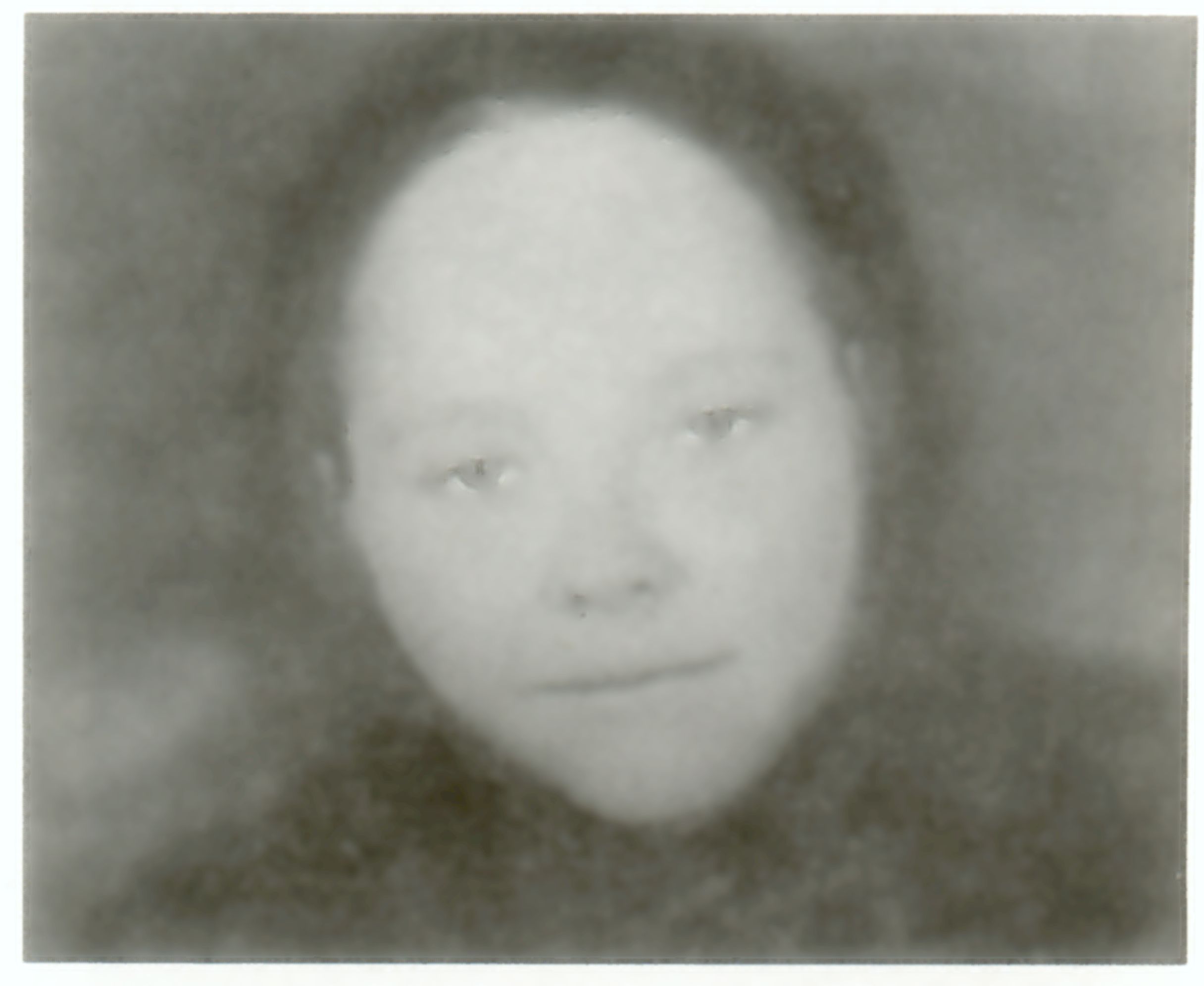
The picture at the left is said to be Hana
Galperin, Alex's mother who was killed in
the Koidanov massacre 21 October 1941.
The book describes the picture as
resembling Alex's granddaughter Crystal,
and a guess made that the woman might
be Alex's mother Hana Galperin. A couple
problems we have with the photographs in
the book.
The picture at the left is said to be Hana
Galperin, Alex's mother who was killed in
the Koidanov massacre 21 October 1941.
The book describes the picture as
resembling Alex's granddaughter Crystal,
and a guess made that the woman might
be Alex's mother Hana Galperin. A couple
| Hana Galperin? |
| See 60 Minutes interview with Alex Kurzem. Click here. |
Closeup of Hana's left eye, as shown in
the book.
the book.
| ********** |
| Orphan from Country A grows up in County B, then emigrates to Country C where he lives as an elderly man today. 1. What is his name? 2. What is the name of his biography? Just out of curiosity, do you believe his story? |
| Left: Photo of Hana as shown in American edition of the book; Right: Photo of Hana as seen in the documentary. |
| The Quizmasters Weigh in on The Mascot |
| ********** |
| Congratulations to Our Winners Mr. Rick and Quizmaster Fred! Mike Swierczewski Tanura Jones Jim Baker Diane Burkett Susan Fortune Beth Long Jerry Vergeront Dave Doucette Mary Osmar Betty Chambers Anne Alves Don Draper Judy Pfaff Marty Guidry Brian Kemp Elaine C. Hebert Gary Sterne Roy Skinner Mary South Daniel E. Jolley Stan Read Janice M. Sellers Peter Norton Mike Dalton Karen Kay Bunting Nicole Blank Patricia Frazier Karen Petrus Margaret Paxton Mary Mauldin Shirley Ferguson and Nan Ross Jim Kiser Carl Blessing Debbie Sterbinsky Dennis Brann Milene Rawlinson Marilyn Hamill Carolyn Cornelius Robert W. Steinmann, Jr. Jocelyn Thayer |


| Answers: 1. Alex Kurzem 2. The Mascot You shouldn't. It's probably not true. |
| ********** |

| The Mascot |




An intentional alteration of Hana's
eye that looks just like the strokes
already there.
eye that looks just like the strokes
already there.


| The picture of Solomon from the book is on the left. The picture on the right is supposed to be Solomon and his friend Volodya before they joined the partisans. Note however, that this man has his hair parted on the right and Solomon has his hair parted on the left. The picture has been confirmed as Solomon by Galperin family members. |
| I received your letter today. Grateful thanks from the bottom of my heart for your caring for us. It is hard to write about and to remember our dear and beloved ones who perished in Koidanov in 1941. The whole Shtetl was destroyed by fire except Wilno Street. The Ghetto was in Wilno Street. The young people were murdered in the first 3-4 days after the Germans arrived. Yoshka Kimyevisch (Krupinski’ s son from old Minska St.) jumped from a truck when he was being taken to be shot. The murderers followed him with the truck and shot him in the middle of a field. Then, on 21st October 1941, followed the shooting of the women, children and old people. The first to go to their graves were old people wearing Tallesim and Tefillim, including Hershell the Schoket, Mordechai and Ishta Frynd. 30-40 people walked to their graves, they were shot and on top of them another 30-40 people fell. When the grave was filled with innocent lives we discovered 2 women, Bielka Shlonski and Chaya Feigel’s Malka , were only wounded and covered with soil. After some time, with great difficulty, they crawled out from the grave, but again the murderers returned and shot them. Brayndal Ashkas, who moved during the shooting, and he himself choked his two sons to death . It is hard to write about it. You could hear the screams from the women, children and old people. With the grace of God, if some of you could come to Koidanov, we will tell you about it. I fulfill your wish and I give you the address of the people from Koidanov that you asked for. |
| At the base of the hill, the Jews were put into groups of about ten or twelve. Soldiers forced them to undress and then lined them up in front of the pit. Then another group of soldiers - with rifles- stepped forward... The soldiers raised their rifles and fired into the line so that the people feel backward into the hole... This was repeated several times," he continued. "A new group was shot and shoved into the pit. Like clockwork... "It ws then that the strangest thing happened." His hand trembled as he raised his arm to the sky. "Without any warning at all, I swear, the sky turned black and the heavens opened. Not just rain, but a deluge. A flood of such power. "In seconds the square turned into a muddy mess. The soldiers and the Jews were drenched and slipping all over the place. The Jews began to panic. I could understand why-I did, too, from the safety of my house. It was mayhem. I could see the officers giving orders for the soldiers to control the crowd. "And then the thunder began, and bolts of lightning began striking so close to the ground. It was an if God himself had descended and was going to destroy us all." The man crossed himself before continuing. :Wven the soldeirs became spooked: some of the firing squad had put down their rigles. They didn't want to continue the killings. The commanding officer must've made the decision to step because next thing the Jews were being forced back up the hill and into their houses. Even the ones who were already naked and about to die were forced to dress - they gradded at any piece of clothing from the pile that had been dumped by the pit from the previous victims - and then ordered up the hill. |
| Eyewitness of Koidanov massacre as recorded in the Koidanov Yizkor book |
| Account of the Koidanov massacre as recorded in The Mascot |