I found this research fascinating. Is history repeating itself? All the financial press
need do today is cut and paste the headlines and change the names in the text.
Ferdinand Percora was a former New York prosecutor who revealed in unearthing the
business practices of the Wall Street elite. He exposed outrageous salaries and bonuses
as well as unpaid taxes and a host of other wrongdoings. Sound familiar?
Jocelyn Thayer
*****
I've not been able to find this and have run out of time to look. I think the man is Henry
Ford and the woman is a midget named Mary Ann Robinson. They were both at the
Chicago World's Fair in 1934 so maybe that's when the picture was taken. Will be
interested in the answer. Carolyn Cornelius
*****
I think Mr. Morgan was set up by the press. A press agent and a reporter were
instrumental in arranging for Lya Graf to get close to J.P. Morgan. I think it is Charles
Leef, the press agent, who is holding Lya’s right arm and who placed her on Morgan’s
lap, much to his surprise. What ensued was a photo-frenzy. I read that some
newspapers backed by Morgan money were reluctant to publish the photo but this had
to be recognized by most as the stuff that sells newspapers. Several days earlier, a
senator supportive of Morgan described the hearing as a “circus” and I believe the
media people, who attended, were thrilled to see it become like one for a brief moment.
I wonder if attendance at the Ringling Brothers circus skyrocketed in the next few
weeks? If so, hopefully Lya was not short-changed with bonus pay! The account in
Time magazine on June 12, 1933 was quite interesting.
http://www.time.com/time/magazine/article/0,9171,745668-2,00.html Don Draper
*****
Could not come up with a short answer on such a tall question. The photo is dated
1940s or before.It looks like it is that of a middleaged tall white man and a middleaged
short asian woman. Anyway the quiz reminds me of the love affair between Jaws and
Dolly, in the James Bond Movie "Moonraker." Mike Dalton
*****
Had time to do an early bird on this one! If Jack pulled this stunt today, he probably
wouldn't be just going to the slammer for money problems. Rick Mackinney
*****
What a timely puzzle. Doesn't history repeat itself? I feel for poor Lya, as she returned
to Germany a few years later. Being Jewish she went back directly into the arms of the
Hitler regime. Mary Osmar
*****
This quiz threw me off a bit because I first thought the man might be John D.
Rockefeller. (I went through all of the Google images for Rockefeller without
success.) Finally hit paydirt when I found a reference to the Pecora hearings which
mentioned Rockefeller, J.P. Morgan and Lya Graf the world;s smallest woman.
Diane Burkett
*****
Yes! Our Gini coefficient is rising to the point where, if things don't level off, there
may be a revolution. There were signs after the last financial collapse which said
"Jump, You Bastards!" I don't understand the enormous greed that grips our country.
I'm very sad. Mike Swierczewski
*****
The whole fiasco today echoes what I read about those 1933 hearings. Why don't we
learn from our past?? I guess greed will ever be with us. The saddest thing, for me,
about this photo is that Lia Schwarz "after returning to her homeland of Germany...
apparently was sent to Auschwitz and died." One quote I found said this photo is "a
scene that lives on in pictorial infamy to this day" That may be but I had the devil's
own time finding this and I finally had to resort to "cheating" by asking for a hint which
Colleen graciously sent me. Milene Rawlinson
need do today is cut and paste the headlines and change the names in the text.
Ferdinand Percora was a former New York prosecutor who revealed in unearthing the
business practices of the Wall Street elite. He exposed outrageous salaries and bonuses
as well as unpaid taxes and a host of other wrongdoings. Sound familiar?
Jocelyn Thayer
*****
I've not been able to find this and have run out of time to look. I think the man is Henry
Ford and the woman is a midget named Mary Ann Robinson. They were both at the
Chicago World's Fair in 1934 so maybe that's when the picture was taken. Will be
interested in the answer. Carolyn Cornelius
*****
I think Mr. Morgan was set up by the press. A press agent and a reporter were
instrumental in arranging for Lya Graf to get close to J.P. Morgan. I think it is Charles
Leef, the press agent, who is holding Lya’s right arm and who placed her on Morgan’s
lap, much to his surprise. What ensued was a photo-frenzy. I read that some
newspapers backed by Morgan money were reluctant to publish the photo but this had
to be recognized by most as the stuff that sells newspapers. Several days earlier, a
senator supportive of Morgan described the hearing as a “circus” and I believe the
media people, who attended, were thrilled to see it become like one for a brief moment.
I wonder if attendance at the Ringling Brothers circus skyrocketed in the next few
weeks? If so, hopefully Lya was not short-changed with bonus pay! The account in
Time magazine on June 12, 1933 was quite interesting.
http://www.time.com/time/magazine/article/0,9171,745668-2,00.html Don Draper
*****
Could not come up with a short answer on such a tall question. The photo is dated
1940s or before.It looks like it is that of a middleaged tall white man and a middleaged
short asian woman. Anyway the quiz reminds me of the love affair between Jaws and
Dolly, in the James Bond Movie "Moonraker." Mike Dalton
*****
Had time to do an early bird on this one! If Jack pulled this stunt today, he probably
wouldn't be just going to the slammer for money problems. Rick Mackinney
*****
What a timely puzzle. Doesn't history repeat itself? I feel for poor Lya, as she returned
to Germany a few years later. Being Jewish she went back directly into the arms of the
Hitler regime. Mary Osmar
*****
This quiz threw me off a bit because I first thought the man might be John D.
Rockefeller. (I went through all of the Google images for Rockefeller without
success.) Finally hit paydirt when I found a reference to the Pecora hearings which
mentioned Rockefeller, J.P. Morgan and Lya Graf the world;s smallest woman.
Diane Burkett
*****
Yes! Our Gini coefficient is rising to the point where, if things don't level off, there
may be a revolution. There were signs after the last financial collapse which said
"Jump, You Bastards!" I don't understand the enormous greed that grips our country.
I'm very sad. Mike Swierczewski
*****
The whole fiasco today echoes what I read about those 1933 hearings. Why don't we
learn from our past?? I guess greed will ever be with us. The saddest thing, for me,
about this photo is that Lia Schwarz "after returning to her homeland of Germany...
apparently was sent to Auschwitz and died." One quote I found said this photo is "a
scene that lives on in pictorial infamy to this day" That may be but I had the devil's
own time finding this and I finally had to resort to "cheating" by asking for a hint which
Colleen graciously sent me. Milene Rawlinson
The Circus happened to be in town at the same time. It was a Wednesday morning and
Lya and her sister Lotte decided to take in the sights as they were wont to do at every
stop. They made their way to the Capitol and perhaps hearing and seeing all the hubbub
went to investigate what all the fuss was about.
When Scripps-Howard reporter Ray Tucker heard she was in the corridor he managed
to get Lya in and had her meet the financier. Morgan stood up, shook her hand and
made her acquaintance. But when he sat down, someone (some say a circus press
agent) sat her upon Morgan's lap and photographers fell over themselves to get the
picture.
With the unscheduled photo-op over, Lya and sister were on their merry way to do
more sight-seeing. For J.P. Morgan, his image as a curmudgeon was effectively ended.
Lya continued on with the Circus. It is not clear if the Circus itself exploited her
fifteen-minutes-of-fame. It is recorded, however, that when she appeared at Coney
Island she would charge patrons 25¢ to hear the story of her Washington encounter
Lya and her sister Lotte decided to take in the sights as they were wont to do at every
stop. They made their way to the Capitol and perhaps hearing and seeing all the hubbub
went to investigate what all the fuss was about.
When Scripps-Howard reporter Ray Tucker heard she was in the corridor he managed
to get Lya in and had her meet the financier. Morgan stood up, shook her hand and
made her acquaintance. But when he sat down, someone (some say a circus press
agent) sat her upon Morgan's lap and photographers fell over themselves to get the
picture.
With the unscheduled photo-op over, Lya and sister were on their merry way to do
more sight-seeing. For J.P. Morgan, his image as a curmudgeon was effectively ended.
Lya continued on with the Circus. It is not clear if the Circus itself exploited her
fifteen-minutes-of-fame. It is recorded, however, that when she appeared at Coney
Island she would charge patrons 25¢ to hear the story of her Washington encounter
It was June 1st, 1933. The Senate Banking
Committee, after a four-day Memorial Day
recess, was set to resume hearings focusing
on the financial practices of JPMorgan - the
empire and the person.
With the 1929 stock market crash fresh in
everyone's memory, an effort was underway
to regulate the industry. President Roosevelt,
still in the first 100 days of his presidency was
looking for national support for his "New
Deal" and supposedly, at his behest, Morgan, a
political enemy, was called before the
Committee.
Committee, after a four-day Memorial Day
recess, was set to resume hearings focusing
on the financial practices of JPMorgan - the
empire and the person.
With the 1929 stock market crash fresh in
everyone's memory, an effort was underway
to regulate the industry. President Roosevelt,
still in the first 100 days of his presidency was
looking for national support for his "New
Deal" and supposedly, at his behest, Morgan, a
political enemy, was called before the
Committee.
| How Topical ! ! ! Interestingly, the topic of midgets/dwarves & this specific incident recently came up in response to the New York Times article "Financial Fraud Is Focus of Attack By Prosecuters" by David Segal (11 March 2009) with regard to the Bernard Maddoff conviction in New York City. In the article, he states "The most indelible image of the commission’s hearings was a photo of J. P. Morgan Jr. with |
them about his bloodstone watch charm, joked about his own importance but firmly
refused to break his life-long rule against interviews.
One day while the committee was holding an executive session in another room, a
female midget, Lya Graf of Ringling Bros. Circus, wriggled through the waiting crowd
and headed straight for Banker Morgan. Leading the 21-in., 22-lb. creature in her gaudy
blue satin dress was Charles Leef, assistant to famed Press-agent Dexter Fellows.
"Gangway!" Leef cried. "The smallest lady in the world wants to meet the richest man
in the world." Before Banker Morgan knew it, Leef had plunked Lya Graf down on his
lap. Newscameras went into frantic action. The spectators roared with amazed
amusement. Banker Morgan grinned diffidently as he went through the act.
Morgan: Why, I've got a grandson bigger than you.
Midget: But I'm older.
Morgan: How old are you?
Midget: Twenty.
Pressagent: She's 32. Midget: I'm only 20.
Morgan: Well, you certainly don't look it. Where do you live?
Midget: In a tent. sir.
Lya Graf slid off the banker's knee. Pressagent Leef plunked her back again as the
photographers yammered for more. "Lya, take off your hat," he commanded. She did
not want to. Mr. Morgan backed her up: "No, don't take it off. I think it's pretty."
Her little voice shrilling with delight, the midget was finally escorted back to her own
circus and the Senate's great side-show went on. Banker Morgan's partners stared in
astonishment at their friend who up to last fortnight would only rarely suffer himself to
refused to break his life-long rule against interviews.
One day while the committee was holding an executive session in another room, a
female midget, Lya Graf of Ringling Bros. Circus, wriggled through the waiting crowd
and headed straight for Banker Morgan. Leading the 21-in., 22-lb. creature in her gaudy
blue satin dress was Charles Leef, assistant to famed Press-agent Dexter Fellows.
"Gangway!" Leef cried. "The smallest lady in the world wants to meet the richest man
in the world." Before Banker Morgan knew it, Leef had plunked Lya Graf down on his
lap. Newscameras went into frantic action. The spectators roared with amazed
amusement. Banker Morgan grinned diffidently as he went through the act.
Morgan: Why, I've got a grandson bigger than you.
Midget: But I'm older.
Morgan: How old are you?
Midget: Twenty.
Pressagent: She's 32. Midget: I'm only 20.
Morgan: Well, you certainly don't look it. Where do you live?
Midget: In a tent. sir.
Lya Graf slid off the banker's knee. Pressagent Leef plunked her back again as the
photographers yammered for more. "Lya, take off your hat," he commanded. She did
not want to. Mr. Morgan backed her up: "No, don't take it off. I think it's pretty."
Her little voice shrilling with delight, the midget was finally escorted back to her own
circus and the Senate's great side-show went on. Banker Morgan's partners stared in
astonishment at their friend who up to last fortnight would only rarely suffer himself to
| Time Magazine National Affairs: Wealth on Trial June 12, 1933 http://www.time.com/time/magazine/article/0,9171,745668-2,00.html |
| How Dan Solved the Puzzle |
| I found your site several months back after reading about it in my Genealogy magazine. As for how I solved the puzzle, it mainly hinged on the 'est' clue associated with the man. He didn't look to be the oldest or tallest or heaviest so I guessed that he might be the richest although I didn't recognize him as J. P. Morgan. I Google searched on "richest man shortest woman" and saw a reference "Congress Looks to Investigate Wallstreet." When I clicked on the link, the picture in your puzzle was there with the names of the two individuals involved. After reading the article, I did a search for "Pecora Hearings Lya Graf" and found an article that gave the exact date of the picture. You have an intering site. Keep up the good work. Dan Jolley |
| The Story Behind the Picture http://www.quasi-modo.net/Lya_Graf_2.html |
Still spotlighted throughout the investigation's second week was
big-bodied John Pierpont Morgan, though he was not again called
to the witness stand. Hour after hour he sat to one side in a spindly
little chair watching the proceedings. Clustered about him were his
partners. Not a day passed but the country was told the pattern of
his suit, the color of his tie. When the afternoon session was over
Mr. Morgan would return to the Carlton Hotel, opposite the White
House, where he and his friends were paying $2,000 per day for
five floors. There he would dress, dine quietly, go early to bed. He
made no off-stage appearances about Washington in the evening. In
the committee room Senators found him an easy, pleasant
gentleman who could give them cigars without mak-ing them feel
under obligation to him. His partners' testimony he followed as
closely as if he were hearing things about his own business for the
first time. From Senatorial wisecracks he often got large belly
laughs, with his narrow blue eyes wrinkling up out of sight under
bushy grey brows. With newsmen he gossiped good-naturedly, told
big-bodied John Pierpont Morgan, though he was not again called
to the witness stand. Hour after hour he sat to one side in a spindly
little chair watching the proceedings. Clustered about him were his
partners. Not a day passed but the country was told the pattern of
his suit, the color of his tie. When the afternoon session was over
Mr. Morgan would return to the Carlton Hotel, opposite the White
House, where he and his friends were paying $2,000 per day for
five floors. There he would dress, dine quietly, go early to bed. He
made no off-stage appearances about Washington in the evening. In
the committee room Senators found him an easy, pleasant
gentleman who could give them cigars without mak-ing them feel
under obligation to him. His partners' testimony he followed as
closely as if he were hearing things about his own business for the
first time. From Senatorial wisecracks he often got large belly
laughs, with his narrow blue eyes wrinkling up out of sight under
bushy grey brows. With newsmen he gossiped good-naturedly, told
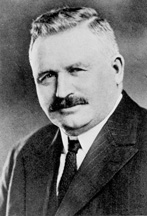
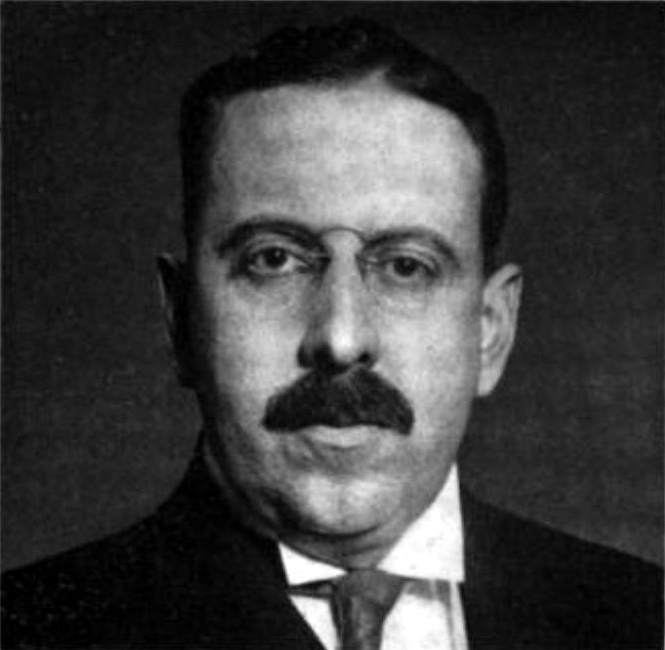
| Ferninand Pecora www.total-banker.com/... |

 |  |  |  |
| Lya Graf www.quasi-modo.net/Lya_Graf... |
| If you have a picture you'd like us to feature a picture in a future quiz, please email it to us at CFitzp@aol.com. If we use it, you will receive a free analysis of your picture. You will also receive a free Forensic Genealogy CD or a 10% discount towards the purchase of the Forensic Genealogy book. |


be photographed. When Senator Fletcher,
committee chairman, heard what had happened, he
denounced it as a ''damned outrage," ordered the
Morgan-midget films suppressed, telegraphed
newspapers not to use them. When few obeyed, he
barred cameramen from the committee room. The
week prior Senator Glass, denouncing the
committee's helter-skelter procedure, had declared:
"We're having a circus here and the only things
lacking are peanuts and colored lemonade." When
told of Lya Graf, the peppery little Virginian sniffed
a contemptuous "I-told-you-so."
committee chairman, heard what had happened, he
denounced it as a ''damned outrage," ordered the
Morgan-midget films suppressed, telegraphed
newspapers not to use them. When few obeyed, he
barred cameramen from the committee room. The
week prior Senator Glass, denouncing the
committee's helter-skelter procedure, had declared:
"We're having a circus here and the only things
lacking are peanuts and colored lemonade." When
told of Lya Graf, the peppery little Virginian sniffed
a contemptuous "I-told-you-so."
 |  |  |  |
| Answers: 1. J. P. Morgan Jr., the richest man in America 2. Lya Graf (Lia Sxhwartz), one of the smallest women in the world 3. Senate Banking Committee hearings (The Pecora Hearings) led by chief counsel Ferdinand Pecora, June 1, 1933 |
| ********** |
| Click here to see results of 5th occasional photoquiz survey. |
from her own mouth.
After two years Lya returned home. But it was to a different
Germany. The concentration camp at Dachau had been established to
house political prisoners. Hitler's grip was tightened over the country
with the banning of all political parties other than the Nazi party. Lya's
home country had become a dictatorship. But worst of all and of
most concern to Lya and her family was the passing of the
Nuremburg laws depriving Jews of German citizenship. You see,
Lya's true name was Margaret Furthmann. Lya was half-Jewish.
Dwarves in Hitler's Germany were tolerated if show-people. But a
midget Jew was something else - showperson or not.
The Furthmann family were sent to a concentration camp. Many
surmise it was to Poland at Auschwitz/Birkenau but that camp was
not established till 1940. It is more likely they were taken to
Germany's camps of Dachau or Buchenwald where Lya would have
perished of malnourishment and forced labor.
After two years Lya returned home. But it was to a different
Germany. The concentration camp at Dachau had been established to
house political prisoners. Hitler's grip was tightened over the country
with the banning of all political parties other than the Nazi party. Lya's
home country had become a dictatorship. But worst of all and of
most concern to Lya and her family was the passing of the
Nuremburg laws depriving Jews of German citizenship. You see,
Lya's true name was Margaret Furthmann. Lya was half-Jewish.
Dwarves in Hitler's Germany were tolerated if show-people. But a
midget Jew was something else - showperson or not.
The Furthmann family were sent to a concentration camp. Many
surmise it was to Poland at Auschwitz/Birkenau but that camp was
not established till 1940. It is more likely they were taken to
Germany's camps of Dachau or Buchenwald where Lya would have
perished of malnourishment and forced labor.
| Answer to Quiz #219 - July 27, 2009 |
| ********** |
| ********** |
The Pecora Investigation is the name commonly used to
describe the inquiry begun on March 4, 1932 by the United
States Senate Committee on Banking and Currency to
investigate the causes of the Wall Street Crash of 1929. The
name refers to the fourth and final chief counsel for the
investigation, Ferdinand Pecora.
The investigation was launched by a majority-Republican
Senate, under the Banking Committee's chairman, Senator Peter
Norbeck. Hearings began on April 11, 1932, but were criticized
by Democratic Party members and their supporters as being
little more than an attempt by the Republicans to appease the
growing demands of an angry American public suffering
through the Great Depression. Two chief counsels were fired
for ineffectiveness, and a third resigned after the committee
refused to give him broad subpoena power.
In January 1933, Ferdinand Pecora, an assistant district
attorney for New York County was hired to write the final
report. Discovering that the investigation was incomplete,
Pecora requested permission to hold an additional month of
hearings. His exposé of the National City Bank (now Citibank)
made banner headlines and caused the bank's president to
resign. Democrats had won the majority in the Senate, and the
new President, Franklin D. Roosevelt, urged the new
Democratic chairman of the Banking Committee, Senator
Duncan U. Fletcher, to let Pecora continue the probe. So
actively did Pecora pursue the investigation that his name
became publicly identified with it, rather than the committee's
chairman.
Following the Wall Street Crash, the U.S. economy had gone
into a depression, and a large number of banks failed. The
Pecora Investigation sought to uncover the causes of the
financial collapse. As chief counsel, Ferdinand Pecora
personally examined many high-profile witnesses, who included
some of the nation's most influential bankers and stockbrokers.
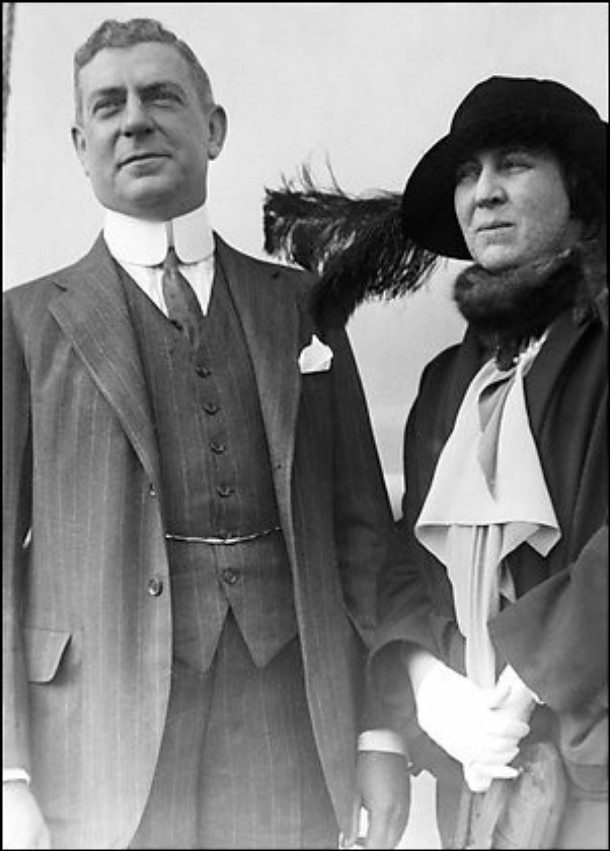
Among these witnesses were Richard Whitney, president of the
New York Stock Exchange, investment bankers Otto H. Kahn,
Charles E. Mitchell, Thomas W. Lamont, and Albert H. Wiggin,
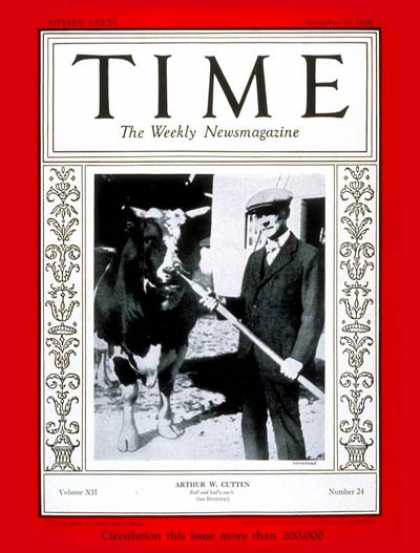
plus celebrated commodity market speculators such as Arthur
W. Cutten. Given wide media coverage, the testimony of the
powerful banker J.P. Morgan, Jr. caused a public outcry after
he admitted under examination that he and many of his partners
had not paid any income taxes in 1931 and 1932.
As reiterated by SEC Chairman Arthur Levitt during his 1995
testimony before the United States House of Representatives,
the Pecora Investigation uncovered a wide range of abusive
practices on the part of banks and bank affiliates. These
included a variety of conflicts of interest such as the
underwriting of unsound securities in order to pay off bad bank
loans as well as "pool operations" to support the price of bank
stocks.
Pecora's investigation unearthed evidence of irregular practices
in the financial markets that benefited the rich at the expense of
ordinary investors, including exposure of Morgan’s “preferred
list” by which the bank’s influential friends, including Calvin
Coolidge, the former president, and Owen J. Roberts, a justice
of Supreme Court of the United States, participated in stock
offerings at steeply discounted rates. He also revealed that
National City sold off bad loans to Latin American countries by
packing them into securities and selling them to unsuspecting
investors, Wiggin had shorted Chase shares during the crash,
profiting from falling prices and Mitchell and top officers at
National City had helped themselves to $2.4 million in interest-
free loans from the bank’s coffers.
The Banking Committee's hearings ended on May 4, 1934. The
hearings galvanized broad public support for new banking and
securities laws. As a result of the Pecora Commission's
findings, the United States Congress passed the Glass-Steagall
Banking Act of 1933 to separate commercial and investment
banking, the Securities Act of 1933 to set penalties for filing
false information about stock offerings, and the Securities
Exchange Act of 1934, which formed the SEC to regulate the
stock exchanges, with Pecora appointed as one of its first
commissioners.
With the United States in the grips of the Great Depression,
Pecora's investigations highlighted the contrast between the
lives of millions of Americans in abject poverty and the high-
rolling lives of such financiers as J.P. Morgan, Jr.; under
Pecora's insistent questioning, Morgan and many of his partners
admitted that they had paid no income tax in 1931 and 1932;
they explained their failure to pay taxes by reference to their
losses in the stock market's decline, but this explanation won
them no sympathy.
In 1939 Ferdinand Pecora published a memoir that recounted
details of the investigations, Wall Street Under Oath. Pecora
wrote: "Bitterly hostile was Wall Street to the enactment of the
regulatory legislation." As to disclosure rules, he stated that
"Had there been full disclosure of what was being done in
furtherance of these schemes, they could not long have
survived the fierce light of publicity and criticism. Legal
chicanery and pitch darkness were the banker's stoutest allies."
http://en.wikipedia.org/wiki/Pecora_Commission
http://en.wikipedia.org/wiki/Ferdinand_Pecora
describe the inquiry begun on March 4, 1932 by the United
States Senate Committee on Banking and Currency to
investigate the causes of the Wall Street Crash of 1929. The
name refers to the fourth and final chief counsel for the
investigation, Ferdinand Pecora.
The investigation was launched by a majority-Republican
Senate, under the Banking Committee's chairman, Senator Peter
Norbeck. Hearings began on April 11, 1932, but were criticized
by Democratic Party members and their supporters as being
little more than an attempt by the Republicans to appease the
growing demands of an angry American public suffering
through the Great Depression. Two chief counsels were fired
for ineffectiveness, and a third resigned after the committee
refused to give him broad subpoena power.
In January 1933, Ferdinand Pecora, an assistant district
attorney for New York County was hired to write the final
report. Discovering that the investigation was incomplete,
Pecora requested permission to hold an additional month of
hearings. His exposé of the National City Bank (now Citibank)
made banner headlines and caused the bank's president to
resign. Democrats had won the majority in the Senate, and the
new President, Franklin D. Roosevelt, urged the new
Democratic chairman of the Banking Committee, Senator
Duncan U. Fletcher, to let Pecora continue the probe. So
actively did Pecora pursue the investigation that his name
became publicly identified with it, rather than the committee's
chairman.
Following the Wall Street Crash, the U.S. economy had gone
into a depression, and a large number of banks failed. The
Pecora Investigation sought to uncover the causes of the
financial collapse. As chief counsel, Ferdinand Pecora
personally examined many high-profile witnesses, who included
some of the nation's most influential bankers and stockbrokers.
Among these witnesses were Richard Whitney, president of the
New York Stock Exchange, investment bankers Otto H. Kahn,
Charles E. Mitchell, Thomas W. Lamont, and Albert H. Wiggin,
plus celebrated commodity market speculators such as Arthur
W. Cutten. Given wide media coverage, the testimony of the
powerful banker J.P. Morgan, Jr. caused a public outcry after
he admitted under examination that he and many of his partners
had not paid any income taxes in 1931 and 1932.
As reiterated by SEC Chairman Arthur Levitt during his 1995
testimony before the United States House of Representatives,
the Pecora Investigation uncovered a wide range of abusive
practices on the part of banks and bank affiliates. These
included a variety of conflicts of interest such as the
underwriting of unsound securities in order to pay off bad bank
loans as well as "pool operations" to support the price of bank
stocks.
Pecora's investigation unearthed evidence of irregular practices
in the financial markets that benefited the rich at the expense of
ordinary investors, including exposure of Morgan’s “preferred
list” by which the bank’s influential friends, including Calvin
Coolidge, the former president, and Owen J. Roberts, a justice
of Supreme Court of the United States, participated in stock
offerings at steeply discounted rates. He also revealed that
National City sold off bad loans to Latin American countries by
packing them into securities and selling them to unsuspecting
investors, Wiggin had shorted Chase shares during the crash,
profiting from falling prices and Mitchell and top officers at
National City had helped themselves to $2.4 million in interest-
free loans from the bank’s coffers.
The Banking Committee's hearings ended on May 4, 1934. The
hearings galvanized broad public support for new banking and
securities laws. As a result of the Pecora Commission's
findings, the United States Congress passed the Glass-Steagall
Banking Act of 1933 to separate commercial and investment
banking, the Securities Act of 1933 to set penalties for filing
false information about stock offerings, and the Securities
Exchange Act of 1934, which formed the SEC to regulate the
stock exchanges, with Pecora appointed as one of its first
commissioners.
With the United States in the grips of the Great Depression,
Pecora's investigations highlighted the contrast between the
lives of millions of Americans in abject poverty and the high-
rolling lives of such financiers as J.P. Morgan, Jr.; under
Pecora's insistent questioning, Morgan and many of his partners
admitted that they had paid no income tax in 1931 and 1932;
they explained their failure to pay taxes by reference to their
losses in the stock market's decline, but this explanation won
them no sympathy.
In 1939 Ferdinand Pecora published a memoir that recounted
details of the investigations, Wall Street Under Oath. Pecora
wrote: "Bitterly hostile was Wall Street to the enactment of the
regulatory legislation." As to disclosure rules, he stated that
"Had there been full disclosure of what was being done in
furtherance of these schemes, they could not long have
survived the fierce light of publicity and criticism. Legal
chicanery and pitch darkness were the banker's stoutest allies."
http://en.wikipedia.org/wiki/Pecora_Commission
http://en.wikipedia.org/wiki/Ferdinand_Pecora
| ********** |


| If you enjoy our quizzes, don't forget to order our books! Click here. |
| Quiz Number 219 - 27 July 2009 TWO SHIPS ON A TROUBLED SEA The picture presented shows two vastly diverse persons, J. P. (Jack) Morgan Jr. at the time, Americas richest man, And Lea (Lya) Grarf, a dwarf performing in the Ringling Circus. On 1 June 1933 they disrupted the Pecora Commission plan The dwarf was plopped onto Morgan's lap, By an opportunist circus publicist, by intent. Unplanned by either Graf nor Morgan, Newspaper headlines trumpeted the event. Robert Edward McKenna Quiz Poet Laureate |


| Charles Mitchell www.daylife.com/photo... |
| Click thumbnail to read article. File will open in pdf format. |
| Charles W Lamont www.condenaststore.com... |
| Quiz #219 Results |
| Visit our blog at www.forensicgenealogy.info/blog. |
| Comments by Robert W. Steinmann, Jr. |
| Otto H Kahn en.wikipedia.org/wiki/... |
| Peter Norbeck upload.wikimedia.org/wikip |

| a midget who had been plopped in his lap by an opportunistic publicist." This caused an uproar & Clark Hoyt, public editor of the New York Times, says the organization’s style manual now decrees that the word “dwarf”—not “midget” should be used to refer to people with a genetic condition resulting in unusually short stature. This recent change came about after a public outcry was raised over the use of the word “midget” in the article. Hoyt said Segal had “no idea” he was using an objectionable term when referring to a 1930’s-era “Midget, once used to describe dwarfs of otherwise normal proportions, is now widely considered offensive and should be avoided,” [the style guide] says. (Manual changes are made only five or six times a year, according to a spokesperson.) Betty Adelson, a psychologist who has written two books on dwarfs and is the mother of one, said midget has become anathema in the United States because it is derived from the name of an insect (midge), is associated with circus spectacles and is flung as an epithet on the street (“Look at the midget!”). Besides this causing the New York Times to rewrite it's style manual, the Little People of America (LPA) have filed a formal complaint with the FCC with regard to the "Jesse James Dirty With Midgets" TV show and are calling for an official FCC ban on the word for broadcast TV. The incident was described briefly in TIME Magazine on Monday 14 May 1934 in a book review of a book called IT'S A SMALL WORLD by—Walter Bodin & Burnet Hershey—Coward-McCann (Books: Mites) ($3 in 1934), & Ferdinand Pecora was on the cover of Time Magazine in June of 1933. TIMES CHANGE--> REALLY INTERESTINGLY & IRONICALLY IS |
| THAT THE 1934 ARTICLE STATES * "that midgets bitterly resent being miscalled dwarfs". NOW I'M REALLY CONFUSED ! ! ! ! Maybe I'm wrong but I was always taught that dwarfism (The syndrome, as we know, is most commonly achondroplasia [~70%] but could be caused by well over 200 distinct medical conditions) and midgets (proportionally small-statured persons) were two different things. Oh Well ! The J. P. Morgan/Lya Graf incident is also mentioned in a 1993 Tom waits song called "Lucky Day Overture". |
| Richard Whitney Leaving Sing Sing www.newsweek.com |
| Arthur W. Cutten www.coverbrowser.com... |
| Comments from Our Readers |
| Albert H. Wiggins en.wikipedia.org/wiki/... |
| ********** |
| Congratulations to Our Winners! Daniel E. Jolley Jocelyn Thayer Joe McCabe Robert W. Steinmann, Jr. Don Draper Marilyn Hamill Janice M. Sellers Joshua Kreitzer Rick Mackinney Mary Osmar Tamura Jones Diane Burkett Tamura Jones Mike Swierczewski Milene Rawlinson Mike Dalton Robert E. McKenna, QPL |
| The ___est man in America meets one of the ___ women in the world. 1. Who is the man? 2. Who is the woman? 3. On what date and occasion was the photograph taken? |
| ********** |

| Thanks to Quizmaster Stan Read for suggesting this quiz. |
| The Pecora Hearings http://en.wikipedia.org/wiki/Pecora_Commission |









| ********** |