training as the monopoly of no caste or race, full male suffrage, a belief in the dignity of
labor, and a united effort to realize such ideals under sound leadership.
The alliance between Du Bois and Trotter was, however, shortlived, as they had a
dispute over whether or not white people should be included in the organization and in
the struggle for Civil Rights. Du Bois felt that they should, and with a group of
like-minded supporters, he helped found the National Association for the Advancement
of Colored People (NAACP) in 1909. Read
more...
labor, and a united effort to realize such ideals under sound leadership.
The alliance between Du Bois and Trotter was, however, shortlived, as they had a
dispute over whether or not white people should be included in the organization and in
the struggle for Civil Rights. Du Bois felt that they should, and with a group of
like-minded supporters, he helped found the National Association for the Advancement
of Colored People (NAACP) in 1909. Read
more...
Read George Washington Carver's own brief history of his life. See
http://www.nps.gov/archive/gwca/expanded/auto_bio.htm.
http://www.nps.gov/archive/gwca/expanded/auto_bio.htm.
today's distance, possibly the most amazing facet of the life of this gentle genius is the
manner in which he overcame enormous prejudices and poverty in his struggle from
nameless black boy to George Washington Carver, B.S., M.S., D.Sc., Ph.D., Fellow of
the Royal Society of Arts, London, and Director of Research and Experiment at
Tuskegee Institute, Alabama -- all without a trace of bitterness, with total indifference
to personal fortune, and thought only to make the world, and America in particular, a
better place for all mankind.
George Washington Carver did not know the exact date of his birth, but he thought it
was in January, 1864 (some evidence indicates July, 1861, but not conclusively). He
knew it was sometime before slavery was abolished in Missouri , which occurred in
manner in which he overcame enormous prejudices and poverty in his struggle from
nameless black boy to George Washington Carver, B.S., M.S., D.Sc., Ph.D., Fellow of
the Royal Society of Arts, London, and Director of Research and Experiment at
Tuskegee Institute, Alabama -- all without a trace of bitterness, with total indifference
to personal fortune, and thought only to make the world, and America in particular, a
better place for all mankind.
George Washington Carver did not know the exact date of his birth, but he thought it
was in January, 1864 (some evidence indicates July, 1861, but not conclusively). He
knew it was sometime before slavery was abolished in Missouri , which occurred in
Woodson, Carter G., House (added 1976 - Building - #76002135)
District of Columbia County - 1538 9th St., NW, Washington (< 1 acre, 1 building)
Historic Significance: Person
Historic Person: Woodson,Carter G.
Significant Year: 1915, 1950
Area of Significance: Education, Black
Period of Significance: 1900-1924, 1925-1949, 1950-1974
Owner: Private
Historic Function: Domestic
Historic Sub-function: Single Dwelling
Current Function: Vacant/Not In Use

 |  |  |  |
| If you enjoy our quizzes, don't forget to order our books! Click here. |
| If you have a picture you'd like us to feature a picture in a future quiz, please email it to us at CFitzp@aol.com. If we use it, you will receive a free analysis of your picture. You will also receive a free Forensic Genealogy CD or a 10% discount towards the purchase of the Forensic Genealogy book. |

| Quiz #148 Results |


 |  |  |  |
| ********** |
| Answer: Dr. Carter Goodwin Woodson (1975-1950) Father of African-American History Founder of Black History Month |
| ********** |
| Quiz #148 - February 17, 2008 |
| ********** |
Carter G. Woodson believed that Blacks should know their
past in order to participate intelligently in the affairs in our
country. He strongly believed that Black history - which others
have tried so diligently to erase - is a firm foundation for
young Black Americans to build on in order to become
productive citizens of our society.
Known as the "Father of Black History," Carter G. Woodson
holds an outstanding position in early 20th century American
history. Woodson authored numerous scholarly books on the
positive contributions of Blacks to the development of
America. He also published many magazine articles analyzing
past in order to participate intelligently in the affairs in our
country. He strongly believed that Black history - which others
have tried so diligently to erase - is a firm foundation for
young Black Americans to build on in order to become
productive citizens of our society.
Known as the "Father of Black History," Carter G. Woodson
holds an outstanding position in early 20th century American
history. Woodson authored numerous scholarly books on the
positive contributions of Blacks to the development of
America. He also published many magazine articles analyzing
The house featured in this week’s photo quiz is located in the northwest section of
Washington, D. C. Dr. Carter G. Woodson owned the house, which is now listed as a
National Historic Site. It is located a 1538 9th. Street. Dr. Woodson, the Harvard
educated son of slaves, is revered as the “Father of Black History”. Dr. Woodson
taught himself to read and write, and obtained a bachelor’s degree from the University
of Chicago in 907. He also attended the Sorbonne University in Paris, and received his
doctorate in history from Harvard in 1912.
The plaque located near the front door in the picture reads: “This site possesses
national significance in commemorating the history of the United States of America”.
The plaque was affixed in 1976 by the National Park Service as a National Historic
Landmark. Congress upgraded it to a National Historic Site in November 2003.
Washington, D. C. Dr. Carter G. Woodson owned the house, which is now listed as a
National Historic Site. It is located a 1538 9th. Street. Dr. Woodson, the Harvard
educated son of slaves, is revered as the “Father of Black History”. Dr. Woodson
taught himself to read and write, and obtained a bachelor’s degree from the University
of Chicago in 907. He also attended the Sorbonne University in Paris, and received his
doctorate in history from Harvard in 1912.
The plaque located near the front door in the picture reads: “This site possesses
national significance in commemorating the history of the United States of America”.
The plaque was affixed in 1976 by the National Park Service as a National Historic
Landmark. Congress upgraded it to a National Historic Site in November 2003.
For a chronology of Woodson's life, a list of books, periodical articles, and
newspaper articles he wrote, and books and articles about him, see
http://www.chipublib.org/002branches/woodson/woodsonbib.html
newspaper articles he wrote, and books and articles about him, see
http://www.chipublib.org/002branches/woodson/woodsonbib.html
| Roadside Bio of Dr. Woodson |
- I chose Washington DC as there is a great presence of row houses still standing and a large Negro population. Lucky guess. A different view of the house--- Robert Edward McKenna |
| Dr. Carter Woodson |
Carter G. Woodson (1875-1950), a
Harvard-trained historian and DC Public
Schools teacher, founded the Association for
the Study of Negro Life and History. In
1922, he moved his operations to 1538 9th
Street, NW, living and working in that row
house until his death. In the intervening
years, Woodson successfully established
Black history as an academic discipline and
fought to counter the commonly held belief
that African Americans had made little or no
contribution to the development of the
American nation. In 1926, Woodson
established Negro History Week (now Black
History Month). This row house is where it
all began. Although the Association for the
Study of African American Life and History
still owns the house, it moved out in 1971.
Empty for over a decade, the house where
the father of African American history
worked for 38 years has a leaking roof,
broken windows, and other interior damage.
Harvard-trained historian and DC Public
Schools teacher, founded the Association for
the Study of Negro Life and History. In
1922, he moved his operations to 1538 9th
Street, NW, living and working in that row
house until his death. In the intervening
years, Woodson successfully established
Black history as an academic discipline and
fought to counter the commonly held belief
that African Americans had made little or no
contribution to the development of the
American nation. In 1926, Woodson
established Negro History Week (now Black
History Month). This row house is where it
all began. Although the Association for the
Study of African American Life and History
still owns the house, it moved out in 1971.
Empty for over a decade, the house where
the father of African American history
worked for 38 years has a leaking roof,
broken windows, and other interior damage.
| How Bob and Deb Solved the Puzzle |
| The clues that I followed were: - The address of 9th Street shown on the house - The picture of an early row houses, with marble front entrance steps and marble lintels. - Such row houses were built mainly in Boston , New York City, Philadelphia and Washington DC . - The hint of parents being “owned” indicated someone of Negro heritage. |
the contributions and role of Black Americans. He reached out to schools and the
general public through the establishment of several key organizations and founded
Negro History Week (precursor to Black History Month). His message was that Blacks
should be proud of their heritage and that other Americans should also understand it.
Carter Godwin Woodson was born on December 19, 1875, in New Canton,
Buckingham County, Virginia, was an African American historian, author, journalist and
the founder of Black History Month. He is considered the first to conduct a scholarly
effort to popularize the value of Black History. He recognized and acted upon the
importance of a people having an awareness and knowledge of their contributions to
humanity and left behind an impressive legacy. He was a member of the first black
fraternity Sigma Pi Phi and a member of Omega Psi Phi as well.
Woodson was the son of former slaves James and Eliza Riddle Woodson. His father
had helped the Union soldiers during the Civil War, and afterwards moved his family to
West Virginia when he heard they were building a high school for blacks in Huntington.
Coming from a large, poor family, Carter could not regularly attend such schools, but
through self-instruction he was able to master the fundamentals of common school
subjects by the time he was 17.
Ambitious for more education, Woodson went to Fayette County to earn a living as a
miner in the coal fields, but was only able to devote a few months each year to his
schooling. In 1895 at the age of twenty, Carter entered Douglass High School where he
received his diploma in less than two years. From 1897 to 1900, Carter G. Woodson
began teaching in Fayette County, and in 1900, he became the principal of Douglass
High School. Woodson finally received his Bachelor of Literature degree from Berea
College in Kentucky. From 1903 to 1907 he was a school supervisor in the Philippines.
general public through the establishment of several key organizations and founded
Negro History Week (precursor to Black History Month). His message was that Blacks
should be proud of their heritage and that other Americans should also understand it.
Carter Godwin Woodson was born on December 19, 1875, in New Canton,
Buckingham County, Virginia, was an African American historian, author, journalist and
the founder of Black History Month. He is considered the first to conduct a scholarly
effort to popularize the value of Black History. He recognized and acted upon the
importance of a people having an awareness and knowledge of their contributions to
humanity and left behind an impressive legacy. He was a member of the first black
fraternity Sigma Pi Phi and a member of Omega Psi Phi as well.
Woodson was the son of former slaves James and Eliza Riddle Woodson. His father
had helped the Union soldiers during the Civil War, and afterwards moved his family to
West Virginia when he heard they were building a high school for blacks in Huntington.
Coming from a large, poor family, Carter could not regularly attend such schools, but
through self-instruction he was able to master the fundamentals of common school
subjects by the time he was 17.
Ambitious for more education, Woodson went to Fayette County to earn a living as a
miner in the coal fields, but was only able to devote a few months each year to his
schooling. In 1895 at the age of twenty, Carter entered Douglass High School where he
received his diploma in less than two years. From 1897 to 1900, Carter G. Woodson
began teaching in Fayette County, and in 1900, he became the principal of Douglass
High School. Woodson finally received his Bachelor of Literature degree from Berea
College in Kentucky. From 1903 to 1907 he was a school supervisor in the Philippines.
| Someone owned my parents. I studied at Harvard. My house was put on the National Register of Historic Sites 1976. Who am I? |
Sylvia Cyrus-Albritton, interim executive
director of The Association for the Study
of African American Life and History,
poses in front of the Carter G. Woodson
house at 1538 9th St. in northwest
Washington, D.C. Congress designated
the house a National Historic Site in
November. Photo by Rudi Williams
http://www.defenselink.mil/news/newsarticle.aspx?id=27385
director of The Association for the Study
of African American Life and History,
poses in front of the Carter G. Woodson
house at 1538 9th St. in northwest
Washington, D.C. Congress designated
the house a National Historic Site in
November. Photo by Rudi Williams
http://www.defenselink.mil/news/newsarticle.aspx?id=27385
| ********** |
Those who have no record of what their forebears have accomplished lose
the inspiration which comes from the teaching of biography and history.
- Carter Godwin Woodson
the inspiration which comes from the teaching of biography and history.
- Carter Godwin Woodson
| Carter Woodson House 1538 9th Street, NW, Washington DC Most Endangered Places for 2002 http://www.dcpreservation.org/endangered/2002... http://www.nationalregisterofhistoric... |
I finally made progress on this one once I enlarged the photo. I saw the 9th St. Market
next door, the house numbers 1536 and 1538 (on the house with the broken out
window). A google search led me to the Carter Woodson House at 1538 9th St. NW in
Washington D.C. When I got stumped, I thought, "How would Colleen solve this?"!
I thought the house photo might have been an "archive" photo. Is it recent? It is
amazing how DuBois and Woodson pulled themselves out of their respective situations.
I work at an HBCU, and I see some of the same motivation, and some apathy, too. Not
sure what inspires that motivation. Perhaps the severe degree of oppression was such
that that was the only way to a better existance. Am I remembering correctly that
Woodson learned to read later in life (~ 20 yo ) or was that DuBois? Deb Pritchard
*****
Carter Godwin Woodson. How appropriate -- founder of Negro History Week which
evolved into February's Black History Month. He was not my first "guess"... I thought
it might be someone originally from Chicago, so I went to check out my suspect house
downtown, and -- naturally -- i was wrong. But it sure was a good excuse for a quick
little outing downtown. Got back home and found the true answer within minutes, after
searching on "1536 9th street", from the market next door! Karen Petrus
*****
I would have guessed the home or office of W.E.B. DuBois at first, given the month,
since he was the founder of the NAACP. But, after a little digging, I think it is the office
of Dr. Carter G. Woodson, the SECOND Negro to graduate from Harvard.
Jinny Collins
*****
When I first saw the picture, I said, "That has to be Baltimore". I wasn't too far off!!
Pinky Palladino
*****
I just finished a class at the local Senior College ( $50 no credit classes taught by
volunteers with free books for us old folks over 50!) called Black Maine History which
was fascinating and included a lot of background on other black American
achievements. The instructor was Robert Greene, who retired from UPI as the world
wide tennis reporter for 30 years. Fred Stuart
*****
I couldn't agree more with your thoughts of those that pull themselves up and those
that don't. Maybe it's the way we are hard wired. Phyllis Barattia
*****
It is interesting to see people break free of their unfortunate lots in life to go on to great
things. Dr. Ben Carson who is chief neurosurgeon at Johns Hopkins is such an
example. He's a very interesting man.... and when he was a teenager he nearly went
into the gang/prison route instead. Now he's truly a great man and sponsors a lot of
inner city scholars. Judy Pfaff
*****
I absolutely agree! It would seem to me to be so demeaning to be so dependent on
others that I would want to do anything to make it on my own. I really thought that the
displacement by Katrina was going to be the impetus to get people started on a better
path in life, but it appears that I was mistaken!! Perfect quiz for this month!
Elaine C. Hebert
*****
Funny you mention that, I've often wondered the same thing. I've even noticed it in
kids, some have the drive even with bad parents. Maybe it's that they are so down they
are determined to make something of themselves. I've seen kids that have great parents
not want to do a thing! Debbie Sterbinsky
*****
This was an especially interesting quiz. My wife has been wanting to have a recording
of Paul Robeson in Showboat. Looking for the answer to the quiz led me to www.
criterion.com/asp/boxed_set.asp?id=369. She had heard him years ago sing in Ft.
Collins, CO in a field house. No mike or powerful amps, yet he filled that field house
with his powerful voice. He had to be the best basso of all time! He was such a great
man in many other ways but was just beaten down by racism and political views.
Bill Burrows
*****
As a child, I can remember seeing many row houses much like the one in the photo
quiz. Unfortunately, they were all razed to make way for some road project. These
were the remains of “ Manchester ” which became part of Allegheny City , and finally
Pittsburgh in 1911. It was an historic area which had fallen on some very hard times.
We used to go through that area when we would visit my grandmother, it was all very
interesting, especially the architecture, etc. I always wondered what I might be like to
be inside one of those home with all the fancy woodwork, and all those colors. Who
knows?
Yes, I am always a little curious to know why some people succeed and others fail. I
am inclined to think that it is within the person to make things work – you know, there
are some who always have a little black cloud, and others who always seem to float
past everything bad. I don’t like to think that it’s the intellect which permits some to
avoid the pitfalls as they tend to ‘see’ them coming, but, that may be true. It might
make an interesting study, eh? Kelly Fetherlin
*****
It certainly sounds as though his home has fallen into disrepair over the years. His home
is in the historic neighborhood of Washington, D.C. What a man he was! So many
outstanding accomplishments!!!!!!! Grace Hertz
next door, the house numbers 1536 and 1538 (on the house with the broken out
window). A google search led me to the Carter Woodson House at 1538 9th St. NW in
Washington D.C. When I got stumped, I thought, "How would Colleen solve this?"!
I thought the house photo might have been an "archive" photo. Is it recent? It is
amazing how DuBois and Woodson pulled themselves out of their respective situations.
I work at an HBCU, and I see some of the same motivation, and some apathy, too. Not
sure what inspires that motivation. Perhaps the severe degree of oppression was such
that that was the only way to a better existance. Am I remembering correctly that
Woodson learned to read later in life (~ 20 yo ) or was that DuBois? Deb Pritchard
*****
Carter Godwin Woodson. How appropriate -- founder of Negro History Week which
evolved into February's Black History Month. He was not my first "guess"... I thought
it might be someone originally from Chicago, so I went to check out my suspect house
downtown, and -- naturally -- i was wrong. But it sure was a good excuse for a quick
little outing downtown. Got back home and found the true answer within minutes, after
searching on "1536 9th street", from the market next door! Karen Petrus
*****
I would have guessed the home or office of W.E.B. DuBois at first, given the month,
since he was the founder of the NAACP. But, after a little digging, I think it is the office
of Dr. Carter G. Woodson, the SECOND Negro to graduate from Harvard.
Jinny Collins
*****
When I first saw the picture, I said, "That has to be Baltimore". I wasn't too far off!!
Pinky Palladino
*****
I just finished a class at the local Senior College ( $50 no credit classes taught by
volunteers with free books for us old folks over 50!) called Black Maine History which
was fascinating and included a lot of background on other black American
achievements. The instructor was Robert Greene, who retired from UPI as the world
wide tennis reporter for 30 years. Fred Stuart
*****
I couldn't agree more with your thoughts of those that pull themselves up and those
that don't. Maybe it's the way we are hard wired. Phyllis Barattia
*****
It is interesting to see people break free of their unfortunate lots in life to go on to great
things. Dr. Ben Carson who is chief neurosurgeon at Johns Hopkins is such an
example. He's a very interesting man.... and when he was a teenager he nearly went
into the gang/prison route instead. Now he's truly a great man and sponsors a lot of
inner city scholars. Judy Pfaff
*****
I absolutely agree! It would seem to me to be so demeaning to be so dependent on
others that I would want to do anything to make it on my own. I really thought that the
displacement by Katrina was going to be the impetus to get people started on a better
path in life, but it appears that I was mistaken!! Perfect quiz for this month!
Elaine C. Hebert
*****
Funny you mention that, I've often wondered the same thing. I've even noticed it in
kids, some have the drive even with bad parents. Maybe it's that they are so down they
are determined to make something of themselves. I've seen kids that have great parents
not want to do a thing! Debbie Sterbinsky
*****
This was an especially interesting quiz. My wife has been wanting to have a recording
of Paul Robeson in Showboat. Looking for the answer to the quiz led me to www.
criterion.com/asp/boxed_set.asp?id=369. She had heard him years ago sing in Ft.
Collins, CO in a field house. No mike or powerful amps, yet he filled that field house
with his powerful voice. He had to be the best basso of all time! He was such a great
man in many other ways but was just beaten down by racism and political views.
Bill Burrows
*****
As a child, I can remember seeing many row houses much like the one in the photo
quiz. Unfortunately, they were all razed to make way for some road project. These
were the remains of “ Manchester ” which became part of Allegheny City , and finally
Pittsburgh in 1911. It was an historic area which had fallen on some very hard times.
We used to go through that area when we would visit my grandmother, it was all very
interesting, especially the architecture, etc. I always wondered what I might be like to
be inside one of those home with all the fancy woodwork, and all those colors. Who
knows?
Yes, I am always a little curious to know why some people succeed and others fail. I
am inclined to think that it is within the person to make things work – you know, there
are some who always have a little black cloud, and others who always seem to float
past everything bad. I don’t like to think that it’s the intellect which permits some to
avoid the pitfalls as they tend to ‘see’ them coming, but, that may be true. It might
make an interesting study, eh? Kelly Fetherlin
*****
It certainly sounds as though his home has fallen into disrepair over the years. His home
is in the historic neighborhood of Washington, D.C. What a man he was! So many
outstanding accomplishments!!!!!!! Grace Hertz
| Comments from Our Readers |
| Congratulations to Our Winners Elaine C. Hebert Anna Farris Karen Petrus Alan Cullinan Susan Roberts Karen Kay Bunting Dennis Brann Pinky Palladino Tom Tollefsen Brian Kemp Wayne Douglas Debbie Sterbinsky Milene Rawlinson Gary Sterne Charles Minchew Joshua Kreitzer Phyllis Barattia Kelly Fetherlin Judy Pfaff Sandy Thompson Judy Swierczewski Dave Richardson Mike Swierczewski Pamela Hoffman Mary South Beth Long Mark Ream Fred Stuart Margaret Waterman Jinny Collins Edee Scott Sheri Fenley Charles Minchew Erica Augustine Pinky Palladino Milene Rawlinson Susan Roberts Diane Burkett Lexie Condit Kitty Huddleston Robert E. McKenna Sharon Martin Grace Hertz Bill Burrows Charles Wayne Deb Pritchard Andy Hoh Marilyn Hamill Bob Craig Theresa Yu Dave Doucette Dave Town Dawn Carlile Claudio Trapote N. B. Spickard Dan Schlesinger Charlotte Fouck Mary Osmar Corey Condit Dawn Colket |

| Thanks to Stan Read for suggesting this quiz. |
If you have trouble submitting your
answer through the form below, please
send it to me directly at:
colleen@forensicgenealogy.info.
answer through the form below, please
send it to me directly at:
colleen@forensicgenealogy.info.

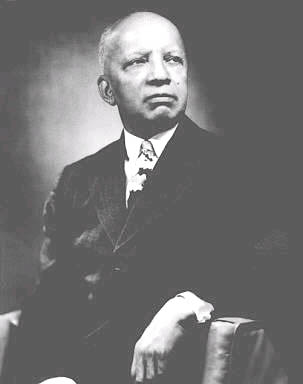
| Dr. Carter Godwin Goodson http://en.wikipedia.org/wiki/Carter_Woodson http://www.dcshawcommunity.org/ http://www.chipublib.org/002branches/woodson/woodsonbib.html |


| He then attended the University of Chicago where he received his M.A. in 1908, and in 1912 he received his Ph.D. in history from Harvard University. His doctoral dissertation, based on his research at the Library of Congress while teaching high school in Washington, was entitled The Disruption of Virginia. In 1915, Woodson and Jesse E. Moorland co-founded the Association for the Study of African American Life and History. Dr. Woodson made his home and office in the Shaw Community at 1538 9th Street, NW, Washington DC from |
| 1922 until his death on April 3, 1950. A Shaw businessman and property owner, Dr. Woodson, working in this 9th Street rowhouse established the study of Black history and encouraged all African Americans to learn about their contributions to the founding and progress of this nation. Without Dr. Woodson, there would be no Black History Month to honor such individuals as Benjamin Banneker, Frederick Douglass, and countless other African Americans who have made significant contributions to both our city and our nation. The fact that Dr. Woodson, son of former slaves, went from working as a coal miner in his youth to becoming the second African American to earn a doctoral degree from Harvard University is a great history lesson, and embodies the professional standards of excellence that members of our Association aspire to achieve, maintain and pass on. Read more.. |

| ********** |
| ********** |
| ********** |
| ********** |
| ********** |
| Notable African Americans of Achievement http://www.nps.gov/archive/gwca/expanded/gwc.htm |

George Washington Carver was born into slavery during the Civil
War, in the midst of bloody guerrilla warfare in Missouri . A tiny,
sickly baby, he was soon orphaned, and his very survival beyond
infancy was against the laws of nature.
That he, a Negro, became the first and greatest chemurgist,
almost single-handedly revolutionized Southern agriculture, and
received world acclaim for his contributions to agricultural
chemistry was against all accepted patterns. But seen from
War, in the midst of bloody guerrilla warfare in Missouri . A tiny,
sickly baby, he was soon orphaned, and his very survival beyond
infancy was against the laws of nature.
That he, a Negro, became the first and greatest chemurgist,
almost single-handedly revolutionized Southern agriculture, and
received world acclaim for his contributions to agricultural
chemistry was against all accepted patterns. But seen from
| ********** |
| W. E. B. Dubois February 23, 1868–August 27, 1963 http://en.wikipedia.org/wiki/WEB_Dubois |
| George Washington Carver c. 1864-1943 |

| George Washington Carver |

January, 1865. (The Emancipation Proclamation freed only those
slaves whose masters were "in rebellion against the United States,"
which was not the case in Missouri, where slaves were finally
freed by state action.)
George grew up on the farmlands of Missouri, reared by his
mother until her seizure by a band of raiders; and then by Moses
and Susan Carver, his mother's former owners, who had a
homestead near Diamond Grove. Because the frail little boy was
not required to help with the heavy farm chores, he had many free
slaves whose masters were "in rebellion against the United States,"
which was not the case in Missouri, where slaves were finally
freed by state action.)
George grew up on the farmlands of Missouri, reared by his
mother until her seizure by a band of raiders; and then by Moses
and Susan Carver, his mother's former owners, who had a
homestead near Diamond Grove. Because the frail little boy was
not required to help with the heavy farm chores, he had many free
daylight hours in which to do exactly as he chose, and he chose to explore the wonders of
nature. He talked to the wildflowers, asking why some of them required sunlight and some
didn't, and how roots that looked exactly alike produced different-colored blossoms, and, he
said many years later, the flowers answered him as best they could. He investigated
insects, tree bark, leaves, ferns, seeds, and the like and made all of them his precious
playthings. He tended the roses, sweet peas, and geraniums around the Carver house,
and they flourished so strikingly a visitor asked him what she might do to make her
flowers prettier. "Love them" the boy answered.
Word spread around Diamond Grove that "Carver's George" had a magic way with
growing things, and people began calling him the Plant Doctor. He made house calls,
either prescribing remedies for ailing plants or taking them to his secret garden in the
nature. He talked to the wildflowers, asking why some of them required sunlight and some
didn't, and how roots that looked exactly alike produced different-colored blossoms, and, he
said many years later, the flowers answered him as best they could. He investigated
insects, tree bark, leaves, ferns, seeds, and the like and made all of them his precious
playthings. He tended the roses, sweet peas, and geraniums around the Carver house,
and they flourished so strikingly a visitor asked him what she might do to make her
flowers prettier. "Love them" the boy answered.
Word spread around Diamond Grove that "Carver's George" had a magic way with
growing things, and people began calling him the Plant Doctor. He made house calls,
either prescribing remedies for ailing plants or taking them to his secret garden in the
woods where he tenderly nursed them. His "magic" with growing
things was largely the result of his patient testing of different
combinations of sand, loam and clay as potting soil for various
plants, his experimentation with different amounts of sunlight and
water, and his tracking down of damaging insects and the like.
When the Carver's finest apple tree began withering, George crawled
along its limbs until he found some on which colonies of codling
moths had taken up residence. "Saw off those branches," he told
Moses Carver, "and the tree will get well." And it did.
things was largely the result of his patient testing of different
combinations of sand, loam and clay as potting soil for various
plants, his experimentation with different amounts of sunlight and
water, and his tracking down of damaging insects and the like.
When the Carver's finest apple tree began withering, George crawled
along its limbs until he found some on which colonies of codling
moths had taken up residence. "Saw off those branches," he told
Moses Carver, "and the tree will get well." And it did.


| W.E.B. Du Bois c. 1904 |
W. E. B. Du Bois was born on Church Street on February 23, 1868,
in Great Barrington, at the southwestern edge of Massachusetts, to
Alfred Du Bois and Mary Silvina Burghardt Du Bois, whose
February 5, 1867, wedding had been announced in the Berkshire
Courier. Alfred Du Bois had been born in Haiti. W. E. B. Du Bois
detailed his French Haitian background in his autobiography:
Of grandfather's life in Haiti from about 1821 to 1830, I know few
details. From his 18th to his 27th year he formed acquaintanceships,
earned a living, married and had a son, my
in Great Barrington, at the southwestern edge of Massachusetts, to
Alfred Du Bois and Mary Silvina Burghardt Du Bois, whose
February 5, 1867, wedding had been announced in the Berkshire
Courier. Alfred Du Bois had been born in Haiti. W. E. B. Du Bois
detailed his French Haitian background in his autobiography:
Of grandfather's life in Haiti from about 1821 to 1830, I know few
details. From his 18th to his 27th year he formed acquaintanceships,
earned a living, married and had a son, my
father, Alfred, born in 1825. I do not know what work grandfather did, but probably he
ran a plantation and engaged in the growing shipping trade to the United States. Who he
married I do not know, nor her relatives. He may have married into the family of Elie
Du Bois, the great Haitian educator. Also why he left Haiti in 1830 is not clear. It may
have been because of the threat of war with France during the Revolution of 1830 and
the fall of Charles X.
Their son was born 5 months before the Fourteenth Amendment was ratified, and
added to the U.S. Constitution. Alfred Du Bois was descended from free people of
color, including the slave-holding Dr. James Du Bois of Poughkeepsie, New York, a
physician. In the Bahamas, James Du Bois had fathered three sons, including Alfred,
and a daughter, by his slave mistress. Du Bois was also the great-grandson of Elizabeth
Freeman (“Mum Bett”), a slave who successfully sued for her freedom, laying the
groundwork for the eventual abolition of slavery in Massachusetts.
ran a plantation and engaged in the growing shipping trade to the United States. Who he
married I do not know, nor her relatives. He may have married into the family of Elie
Du Bois, the great Haitian educator. Also why he left Haiti in 1830 is not clear. It may
have been because of the threat of war with France during the Revolution of 1830 and
the fall of Charles X.
Their son was born 5 months before the Fourteenth Amendment was ratified, and
added to the U.S. Constitution. Alfred Du Bois was descended from free people of
color, including the slave-holding Dr. James Du Bois of Poughkeepsie, New York, a
physician. In the Bahamas, James Du Bois had fathered three sons, including Alfred,
and a daughter, by his slave mistress. Du Bois was also the great-grandson of Elizabeth
Freeman (“Mum Bett”), a slave who successfully sued for her freedom, laying the
groundwork for the eventual abolition of slavery in Massachusetts.
Du Bois was born free and did not have contact with his
biological father. He blamed his maternal grandparents for his
father’s leaving because they did not take kindly to him. Du Bois
was very close to his mother Mary, who was from
Massachusetts. Du Bois moved frequently when he was young,
after Mary suffered a stroke which left her unable to work. They
survived on money from family members and Du Bois' after-
school jobs. Du Bois wanted to help his mother as much as
possible and believed he could improve their lives through
education. Some of the neighborhood whites noticed him, and
one allowed Du Bois and his mother to rent a house from him in
Great Barrington.
While living there, Du Bois performed chores and worked odd jobs. Du Bois did not
feel differently because of his skin color while he was in school. In fact, the only times
he felt out of place were when out-of-towners would visit Great Barrington. One such
incident occurred when a white girl who was new in school refused to take one of his
fake calling cards during a game. The girl told him she would not accept it because he
was black. He then realized that there would always be some kind of barrier between
whites and others.
Young Du Bois may have been an outsider because of his status, being poor, not having
a father and being extremely intellectual for his age; however, he was very comfortable
academically. Many around him recognized his intelligence and encouraged him to
further his education with college preparatory courses while in high school. This
academic confidence led him to believe that he could use his knowledge to empower
African Americans.
Du Bois was awarded a degree from Fisk University in 1888. He entered Harvard
College in the fall of 1888, having received a $250 scholarship. He earned a bachelor's
degree cum laude from Harvard in 1890. In 1892, received a stipend to attend the


| W.E.B. Du Bois c. 1918 |
University of Berlin. While a student in Berlin, he travelled
extensively throughout Europe, and came of age
intellectually while studying with some of the most
prominent social scientists in the German capital, such as
Gustav von Schmoller. In 1895, Du Bois became the first
African American to receive a Ph.D from Harvard
University. After teaching at Wilberforce University in Ohio
and the University of Pennsylvania, he established the
department of sociology at Atlanta University (now Clark
Atlanta University).
In 1905, Du Bois along with Minnesota attorney Fredrick
L. McGhee[19] and others helped to found the Niagara
Movement with William Monroe Trotter. The Movement
championed, among other things, freedom of speech and
criticism, the recognition of the highest and best human
extensively throughout Europe, and came of age
intellectually while studying with some of the most
prominent social scientists in the German capital, such as
Gustav von Schmoller. In 1895, Du Bois became the first
African American to receive a Ph.D from Harvard
University. After teaching at Wilberforce University in Ohio
and the University of Pennsylvania, he established the
department of sociology at Atlanta University (now Clark
Atlanta University).
In 1905, Du Bois along with Minnesota attorney Fredrick
L. McGhee[19] and others helped to found the Niagara
Movement with William Monroe Trotter. The Movement
championed, among other things, freedom of speech and
criticism, the recognition of the highest and best human
| W.E.B. Du Bois c. 1946 |
| I finally made progress on this one once I enlarged the photo. I saw the 9th St. Market next door, the house numbers 1536 and 1538 (on the house with the broken out window). A google search led me to the Carter Woodson House at 1538 9th St. NW in Washington D.C. When I got stumped, I thought, "How would Colleen solve this?"! Deb Pritchard |


| Tribute to W. E. B. Dubois & Mary white Ovington Founders of the NAACP |
